


Italy with Antonio. Honest guides for moving to, traveling in, and understanding Italy from a native Italian. Three articles a week, with deeper resources for paid members. Join 1,500+ subscribers.
If you are trying to learn Italian, one of the best tools at your disposal is comprehensible input or something not too far from it. Without getting fancy with definitions, this means reading and listening to Italian content you mostly understand, but not quite 100%.
That’s how learning and all growth happen. One foot and a half in the known, half foot in the unknown.
So the fastest way from A2 to C1, and even C1 to C2 in Italian, is reading lots. Reading books, essays, news; the stuff Italians actually read. And doing the same with audio and video. Italian immersion in your own living room.
In this article, we’ll talk about the reading part. Specifically, how to get Italian books from abroad and which device to read them on. And, in next week’s follow-up, which books to actually read and in what order, using a framework you won’t find on the usual lists.
Buying Italian books from abroad is not so simple
You might think it’s easy to buy Italian books from, say, North America or Australia. It’s not.
Here are some of the issues you’ll run into:
Locally, you’ll find very few Italian books available. Even major book chains in large cities will have few Italian titles.
Many sites will not ship abroad or accept foreign credit cards.
Those that do ship to you will often charge excessively.
Local digital catalogs have little Italian inventory.
Buying digital books abroad often runs into geo-blocks and payment issues.
So let’s see how to approach this and get you some Italian books.
Buying physical Italian books abroad
The most obvious choice you might think of is Amazon.it. It can work. However, shipping to North America tends to be very expensive.
For example, I added 7 books (novels, paperbacks) to my cart and shipping to Canada would have cost me close to $100 CAD. That’s $14+ per book. You’re doubling the cost of each book. Plus, whatever import charges your country imposes on books from Italy.
The better site, I found, is Libraccio. Their shipping costs are much more reasonable. Their selection and prices are better as well, and they carry used books, which in itself can offer you real savings.
Libraccio ships the same 7-book order for 11.60 euros (about $19 CAD). A fraction of Amazon’s shipping cost. For these specific books, they even throw in a free bag from the publisher. Plus, they give you reward points you can use for free books in the future.
For in-stock books, they arrive quickly via courier. Think a week, two max, not a month.
After trying several Italian alternatives over the years, for the paper route, Libraccio is my recommendation.
And here’s my take on paper. It has its place: illustrated editions, art books, photography tomes, specific titles you want on the shelf, or books that you can’t find digitally.
For everything else, digital is faster and cheaper. And getting to C1 is a volume game.
Why going digital
Digital is indeed faster. You can have books on your e-reader within minutes. That’s an advantage.
An even greater advantage is the built-in dictionary. You can hold a word on the screen and have it translated into your language.
I got my English foundation that way. I had a desktop version of software that would allow me to highlight words in English, and it would tell me what they meant in Italian. It was called Babylon. I probably learned my first 10,000 English words that way.
However, digital also means more complications, so I’m going to spend some time making recommendations that simplify the process for you.
Can you use an iPad or your phone to read? Absolutely. But an e-ink device is vastly better for your eyes and sleep. Plus, a device that buzzes every ninety seconds is the enemy of the deep reading that actually moves your level. Get e-ink.
Of course, you do you, but know this: reading a book on an iPad is screen time. Reading the same book on an e-reader is far closer to paper than to screen time.
Black and white or colored e-reader?
If you are in the market for an e-reader, I highly encourage you to buy the black-and-white version of whatever device you choose. I compared color and black-and-white devices extensively, and in exchange for some muted colors, you get blurrier text that is not as enjoyable to read. Almost headache-inducing to me. For books, as opposed to comics, the better device is actually the cheaper one that only has black and white.
Kindle vs Kobo for Italian books

Both ecosystems are fine. Both devices are great. However, in my opinion, Kobo has the better software, and Kindle has the better hardware.
By better software, I mean that Kobo gives you more options. Their devices are more open, philosophically speaking.
You can rent books from the library; on Kindle you can’t. You can read Adobe DRM ePub books on it (more on this below); on Kindle you can’t.
Instapaper is built-in on Kobo (it replaced Pocket in 2025), allowing you to add articles as you browse the web (like my own articles) and then read them in batch on your e-reader. For free. You can do that with Kindle, but it requires paying for Instapaper Premium each month in order to use their send to Kindle feature.
Kobo Plus has a subscription option that includes unlimited audiobooks as well. Connect Bluetooth earbuds or headphones, and you can listen to them from your Kobo device or the Kobo app on your phone. A great choice to double down on your Italian immersion.
The catalog is not huge, but it includes Italian books simplified for foreign learners as well as many classics from literature giants such as Cesare Pavese, Italo Svevo, Leonardo Sciascia, Umberto Eco, and so on. Amazon has Audible, and you’re paying by the book.
Where Kindle has the edge is in the device itself. Even though they use the same technology, Kindle manages to deliver a slightly sharper, crisper text with more even lighting.
If you already have one of these, or a more niche alternative like Boox or PocketBook, keep what you have.
If you don’t have one or wish to get a more modern version, opt for the Kobo Clara BW, or if available in your market, PocketBook Era for its larger screen.
PocketBook is a legitimate third option, with the widest format support of any device, including native reading of Adobe-DRM files. The problem is getting one. In Canada, at least, they’re harder to find and usually pricier than the equivalent Kobo.
Kindle can work; I own two, but the ability to read Adobe DRM ebooks present on other devices gives you a degree of flexibility not (legally) available on Kindle.
Acquiring Italian ebooks legally
You can be a pirate... arr... and get ebooks for free from various illicit sources, but you shouldn’t.
Thankfully, there are legitimate ways to buy Italian ebooks from abroad.
Being lazy, the most convenient place to look is the regular digital marketplace you use to buy ebooks in English (or whatever native language you speak).
If you use Kobo, the Kobo store in your country will have some Italian books. If you use Kindle, your localized Amazon site will offer some Italian digital books as well.
The problem is that it’s usually a fairly limited catalog. If you just want to read something in Italian, it’s convenient. Even Kobo Plus and Kindle Unlimited, the respective all-you-can-read monthly subscriptions, include several Italian titles.
But at some point, you’ll want specific books. You’ll hear a recommendation from me or a friend, and you’ll want to read that one. That’s when Kobo and Kindle’s native catalog for your region will likely fail you.
If you’re thinking of setting your device country to Italy to access Italian ebooks, it won’t work because both Kobo and Kindle have ways to check. It’s not even something you can easily solve with a VPN, because they require a credit card with Italian billing. I’m not saying a workaround is impossible, but it’s likely not worth your trouble, and it sits in a gray area legally.
If you have a Kobo device and a library card, you’re likely able to rent ebooks from the library as well via OverDrive. Again, you won’t generally find a ton of Italian titles, but it adds to the ones your local digital marketplace already offers you. For free.
Plus, classic Italian books are often available through projects such as Liber Liber and Project Gutenberg. Their copyright has expired, so they are legally available for download for free. The Italian within classics tends to be high-sounding by modern standards and antiquated at times, but it’s a free option.
The real bounty of Italian ebooks, however, comes from Italian bookstores.
Where to buy Italian ebooks abroad
There are plenty of Italian ebook stores. The challenge is getting them to accept your money.
Most geo-block you. You can use a VPN to appear as if you visited from Italy and still get rejected on account of your credit card’s foreign billing address.
I’ll mention three bookstores that should accept your hard-earned money.
By the way, I too accept your hard-earned money; subscribe if you enjoy what you’re reading. And if you already subscribe, thank you very much.
My pick is Librerie.coop. It’s a popular chain of bookstores in Italy, and their ebook store accepts PayPal and most credit cards.
Then there’s IBS.it and Feltrinelli, giants who will happily accept your foreign card (though not Amex). They’re perfectly fine, but there is a catch: the type of files they issue. Which brings us to an important point about ePub formats.
Social DRM vs Adobe DRM
DRM is the lock a store puts on a file to ensure you don’t distribute it freely.
The two main types are Social DRM and Adobe DRM.
Social DRM is not really a lock. The files embed your name and email in subtle ways to ensure you don’t spread the ebook around. It keeps you honest but doesn’t impose any practical limit on the file. Any reader, software, or app will read it. You can freely transfer it from device to device, upload to Kindle to convert it, and so on.
It’s a gray ethical area, but in practice, you can pass it along to your spouse or kids as well with zero repercussions.
Where DRM gets really serious is Adobe DRM. Technically, you’re not even buying an ebook. You’re buying a license and downloading a .acsm file. You then need to install special software on your computer (Adobe Digital Editions), create an ID account, and authorize both the computer and the specific device you want to transfer the book to.
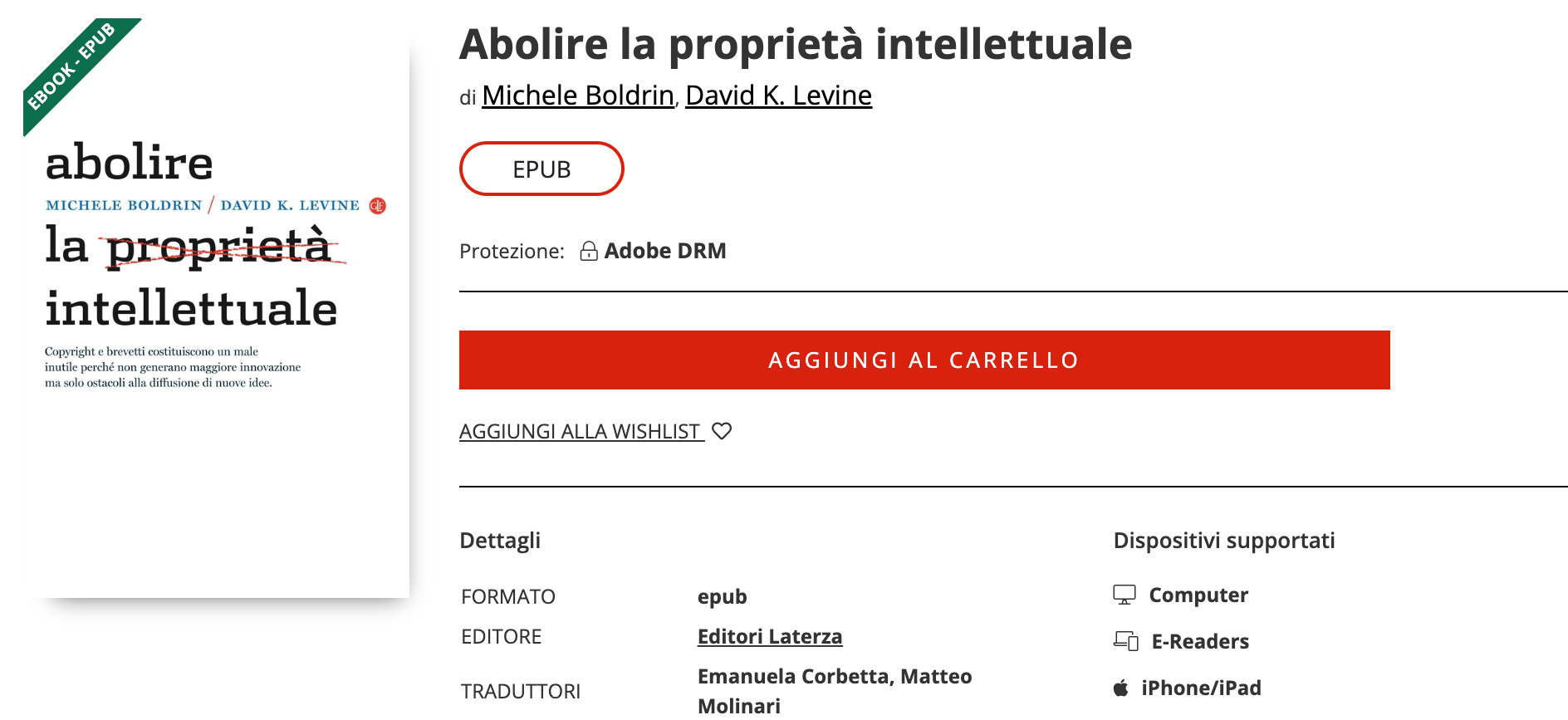
So Adobe DRM is actually locked, and the road to reading these ebooks is often peppered with obstacles. Let’s start with the fact that Adobe is offloading their ebook operation to a Wipro-run outfit called ByteBooks, so we are in transition.
Adobe IDs are actively migrating to ByteBooks accounts as of mid-2026, and new installs or device authorizations now require one. The software itself is being retired in favor of something that will replace it, at some point.
Users constantly report issues with the software failing to authorize computers, devices refusing to read the books, licenses appearing invalid when they shouldn’t, and so on. Adobe DRM can work fine, but far too often it’s a pain to deal with.
Kobo will generally work with Adobe DRM if you go through the song and dance of transferring the ebooks via the Adobe software and you don’t run into issues. PocketBook devices do an even better job, since they have built-in support for Adobe DRM. Kindle is out.
I’m aware that there are ways to strip Adobe DRM books and convert them to Kindle’s format via Calibre and the DeDRM plugin. However, at that point, depending on your jurisdiction, you’re in “piracy with extra steps” territory.
One concrete example. La volpe che amava i libri by Nicola Pesce, a short, modern novel, costs €3,49 on Librerie.coop with Social DRM. The same book, for the same price on IBS, is wrapped in Adobe DRM.
Here’s the annoying part: most recent, popular titles are Adobe DRM. The big publishing houses (e.g., Mondadori, Einaudi, Rizzoli) mandate Adobe to protect their intellectual property, and the stores simply oblige.
If the publisher is okay with Social DRM, it then comes down to the store preference. Take Amélie Nothomb’s Stupore e tremori: Social DRM on Librerie.coop and directly from the publisher Voland. It sells as Adobe DRM on IBS and Feltrinelli. The two big chains wrap everything in Adobe.
Librerie.coop honors the publisher’s lighter protection and prints the DRM type on every book page.
So the rule is simple. Buy Social DRM whenever the book offers it, which in practice means selected books on Librerie.coop or straight from reader-friendly publishers. Save the Adobe acrobatics for a title you genuinely can’t find any other way, and go in knowing what you signed up for. And if you read on a Kindle, skip Adobe altogether. Buy the paper copy instead.
In summary
In short, here is what I recommend you do:
Look in the native catalog for your device and hook up your local library to see what it has in Italian. (Skip the library for Kindle.)
If a title you want isn’t there, search Librerie.coop and other Italian ebook stores, and opt for a Social DRM copy whenever it’s offered.
If a title exists only as Adobe DRM, do the song and dance to transfer it to your Kobo or similar device. If you read on a Kindle, skip Adobe and buy the paper copy from Libraccio instead.
Use Instapaper to read online articles as if they were a book. With Calibre, you can even fetch Italian news and transfer the resulting ePub to your device.
Reading is still the work. Rewarding work, but still work. Nobody will transfer the book into your head. Access alone won’t make you C1. The reading will. But the excuse of not having access to Italian books is gone, and the work can begin.
Do this enough, and your reading comprehension will climb to C1.
Next week, I will publish a ladder of Italian books I recommend to my students. When you reach its last ranks, you’ll be able to reach past any vocabulary or complexity wall.
Understand Italy before you arrive.
New posts every Monday, Wednesday, and Friday: cultural pieces and step-by-step guides for people planning a move or simply in love with Italy.
Paid subscribers get every post; free subscribers get a large selection.
Very helpful and timely advice.
I started teaching myself italian from pop music in the ‘80’s. Il Poo, Riccardo Cocciante, anything from San Remo.
Thanks for the link to paper books!! I am at an age where i like to hold the book in my hand.
You have the best content, Antonio. Mille grazie.