


A quick note before today's interview: starting next week, I'm moving from three posts a week to two, published every Monday and Thursday.
I've published three articles every week since April, and for six months now, my goal has been to dedicate 20 hours a week to the project. Three articles a week at the depth and research level these pieces often require don't fit that budget, and I'd rather not cut corners just to hit a quota.
Monday will typically have the heavier, paid piece. Thursday, the free, lighter one. If you'd like to get the most out of Italy with Antonio, a paid subscription gives you access to every single article, the WhatsApp group, Substack Chat, priority on topic requests, PDF and ePub versions of recent and new articles, extra resources and appendices in data-heavy articles, Linguetto Pro, and the full archive.
Thank you for reading. It means a lot.
Every year hundreds of books are published about Italy. Most of them are about its churches, its paintings, its cities, and of course, its food.
Edward Cutler’s This Beautiful Country: How Italy’s Nature Shaped Its Culture and Civilisation is about the land that made it all possible and the creatures that were there long before everything else arrived.
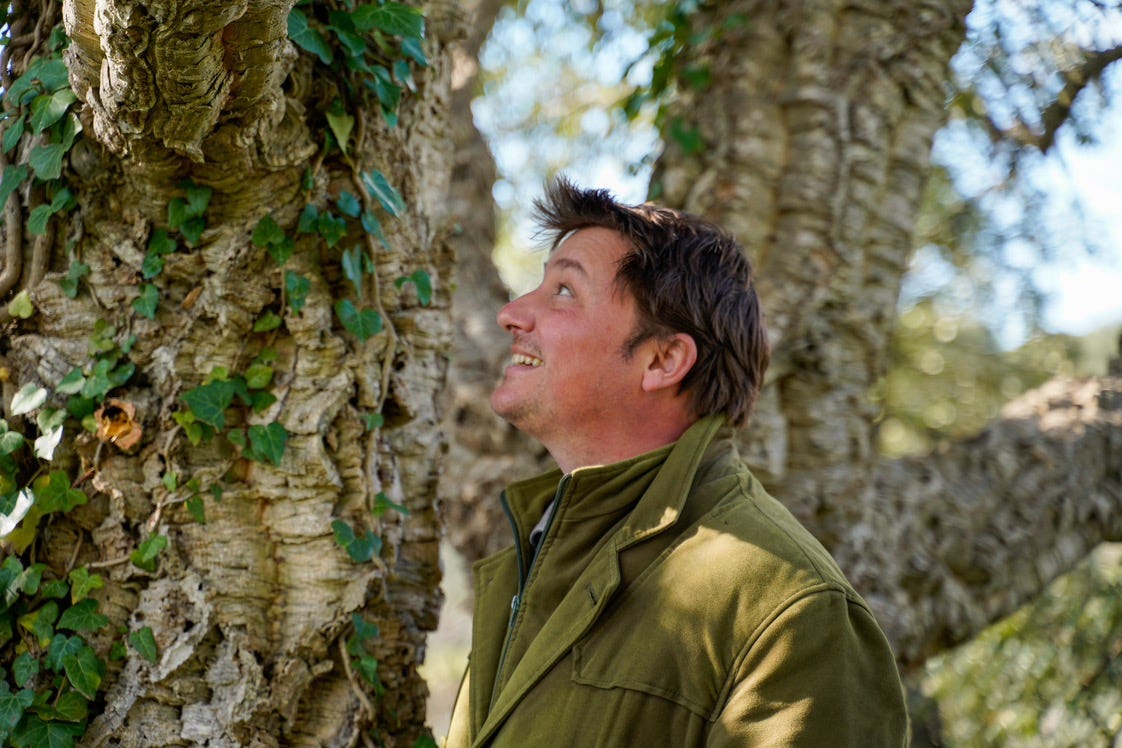
Edward is a British art historian and author who settled in Italy. Specifically, in Pereta, in southern Tuscany, on an olive farm. He co-founded the Tuscany Environment Foundation, a non-profit organization with the goal of protecting and restoring the natural environment and biodiversity of Tuscany.
In April 2020, his young son spotted a spectacled salamander in a stream below the village. It was a pivotal moment. That’s a species found nowhere outside the Apennines. It was the rabbit hole that led Edward to something neither he nor his Italian friends knew at the time: Italy is the most biodiverse country in Europe.
His book follows that thread. His main argument is that Italy’s geodiversity produced its biodiversity and shaped agriculture, and ultimately human culture, including dialects, customs, and food. The deep roots of Italian regionalism are explained through a geological and biodiversity lens. Along the way, you’ll meet the pygmy elephants, giant hedgehogs, and vampire-toothed deer that once lived in Italy.
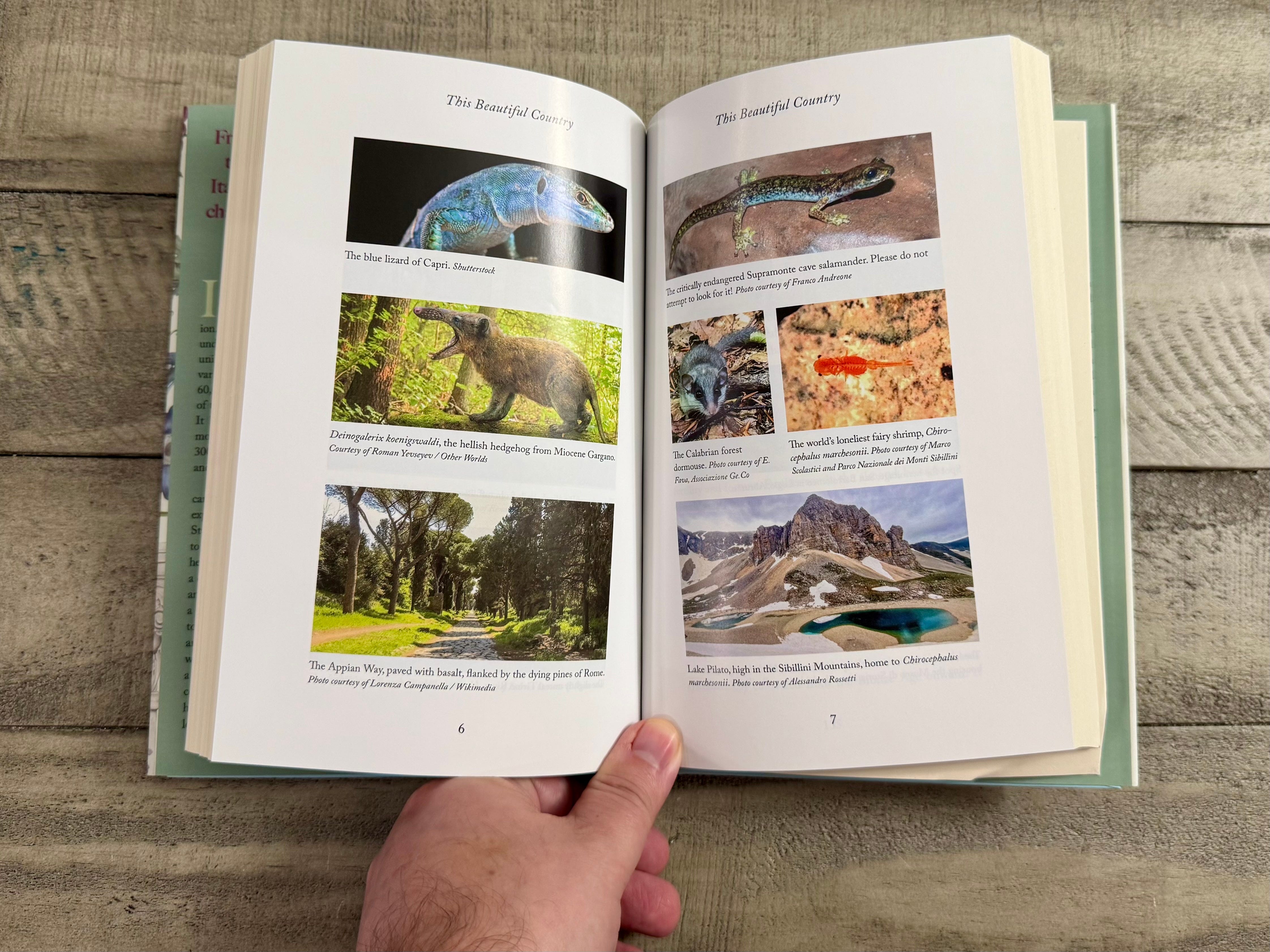
It’s a different instrument through which to look at a country we all think we know. And if you’re Italian (or prefer to read in Italian), the Italian edition L’Italia Nascosta, published by Mondadori, will be out on October 1, 2026.
I asked Edward about the geology beneath Italian art, how Italian scientists received a curious outsider, what Italy taught him, and the fieldwork moment that scared him most. Here’s our conversation.
You’re trained as an art historian, and researching this book took you into the geology sitting underneath the art itself. Green from Monte Baldo, ochres from the Tuscan iron hills, vermilion from cinnabar in the magmatic belt, white from Carrara lime. How has that changed the way you see Italian art?
I think quite often as art historians we tend to look exclusively at the finished product to inspire our thoughts — the varnished painting, the framed altarpiece, the gleaming sculpture — and we launch into our descriptions and the significance of the composition, the novel tricks deployed or the historical context in which it was made, and we lack the sense of the raw materials from which the artist first crafted it. If we aren’t artists ourselves, and are unfamiliar with the smells and surroundings of the workshops where art is made, we are often divorced from the physical process itself, which I believe is essential for truly appreciating the skill and brilliance of the great master artists. By delving into the geology of Italy, it really brought into focus the purest state of raw materials that artists started with — no ready-made oil paints in tubes or perfect pastels and pencils — the great artists of the past had to be part chemist, part geologist, and part geographer to know where to find the materials. Of course the really great artists had workshops full of assistants preparing the materials and there also emerged a specialist industry to supply the raw materials prepared specifically for artists, but it’s easy to forget how much work went into even just preparing a canvas or the plaster for a fresco. Furthermore, given the mind-blowing geodiversity of Italy, it just reinforced how blessed the country was with these materials and that it was no accident that, after Greece, it became the most important and significant location for the development of Western art.
Is there a specific work you look at differently now than you did before?
Not really — I think possibly more the buildings, now that I know more about their stones!
You mention in the acknowledgements that you’re not a trained geologist or palaeontologist, so you arrived as a curious amateur among specialists. How were you received? Luigi Boitani clearly backed the premise, writing to you that few people look at Italy from the point of view of biodiversity. But did anyone push back, either on the angle you took or on a foreign writer telling the story of the Italy they know best?
Probably the greatest pleasure in writing this book was the warmth, enthusiasm and generosity shown to me by the Italian scientific community when I came to them with questions. I can’t recall a single scientist, conservationist or naturalist who didn’t reply to my enquiries within a day or so of writing to them out of the blue. Many of them replied within minutes (unlike literary agents who never reply). I found that biologists who spend their lives researching a single species, or academics who toil away with their research, often underfunded and underappreciated outside of their peers, are naturally disposed to share their knowledge when a curious outsider comes to them with questions. I was genuinely moved at times by their kindness and encouragement, and they undoubtedly sustained my own enthusiasm to see the project through. Besides my parents, it is to them that the book is dedicated — they are amongst the best of all Italians I have come to know. The inevitable question is why it should take an Englishman to write this book. To which I’d reply that firstly, this is in no way an academically complete natural history of Italy, and we definitely need better scientists and academics than I to continue telling this incredible story of the country with greater detail and accuracy. And secondly, this book is very much formed from my own unique experience as an art historian and outsider living in the country for twenty years; someone who is constantly astonished by the surroundings, and someone perhaps with a perspective and eyes that see the country in a different light to someone who has lived here all their life… someone who perhaps can no longer see the wood for the trees!
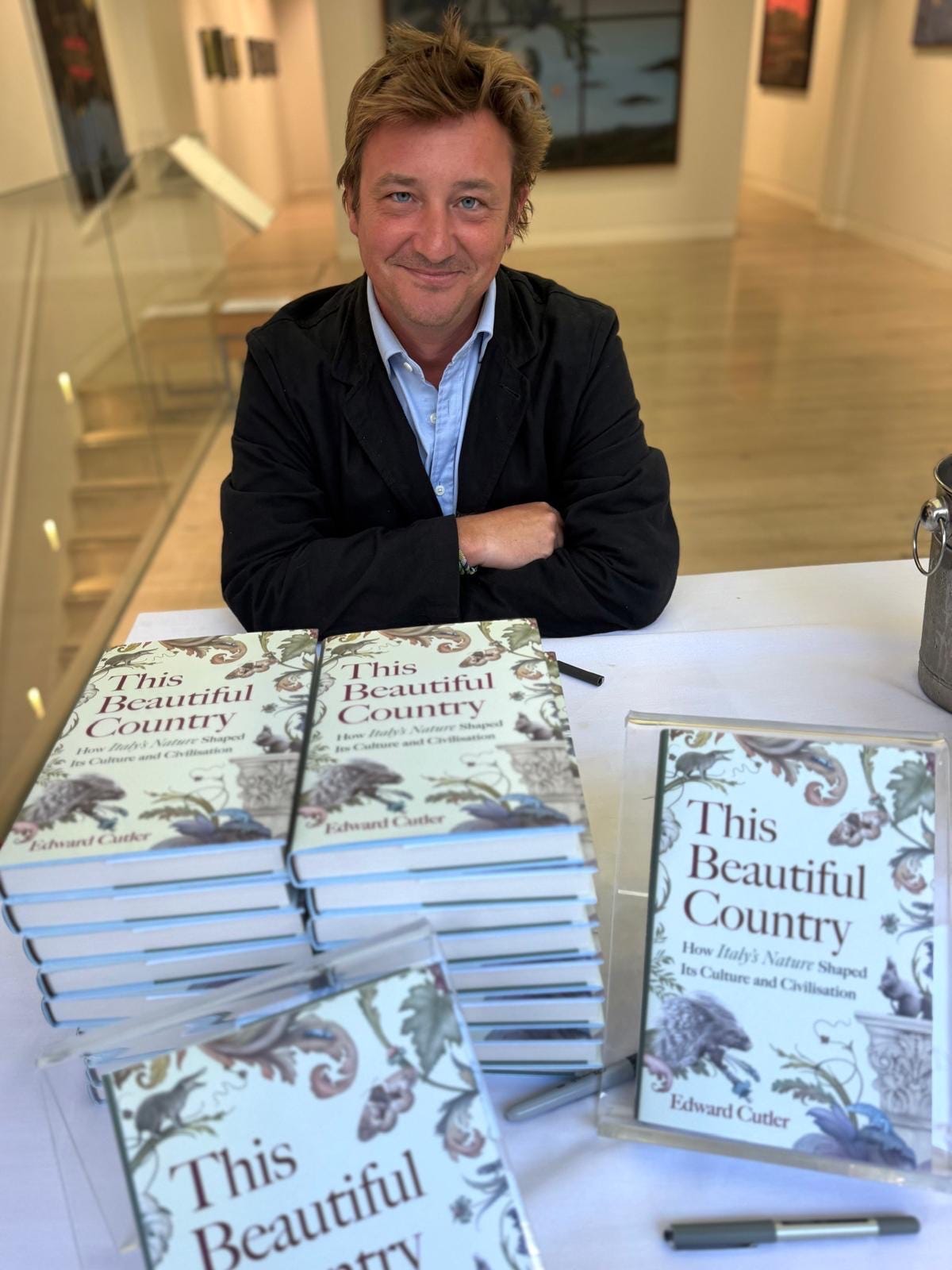
Did the “why an Englishman” question ever actually get put to you, or is it one you’ve mostly anticipated?
It’s been brought up in conversation, but I’m anticipating more occasions when the Italian edition is out.
You arrived as an art historian and ended up an olive farmer in Pereta. What did Italy teach you that no amount of reading could have prepared you for?
Italy taught me that I can only rely on myself, no-one else. She is a beautiful but cruel mistress and uninterested in whether I succeed or not, so you can never rely on her to help out or do the right thing!
You make the argument that geodiversity leads to biodiversity, agrodiversity, and ultimately even anthrodiversity. It’s a compelling case for geography affecting customs, cuisine, and even dialects. It implies that Italian regionalism is geological before it is historical. How far does it actually extend?
I believe the geology underpins everything and the resulting topography defines the entire history that played out across the landscape since being defined. Isolation in turn gives rise to evolution and complexity, and that is played out in different ways across every region in Italy.
A lighter question to close: you climbed an abandoned cable car pylon on a stranger’s recommendation and got a bat in the face for it. Which fieldwork moment frightened you the most?
Well that was definitely one of them, but I didn’t regret the view from the top. One of the archeological sites I discuss in the book was actually closed the day I visited it (no mention online) but I’d come so far that I decided to climb the fence and visit it anyway. My heart was beating so fast throughout, I was terrified of being caught. Luckily it was a Sunday, around lunchtime so no one saw me. Italy has a habit of just closing stuff without mention, even important tourist attractions!
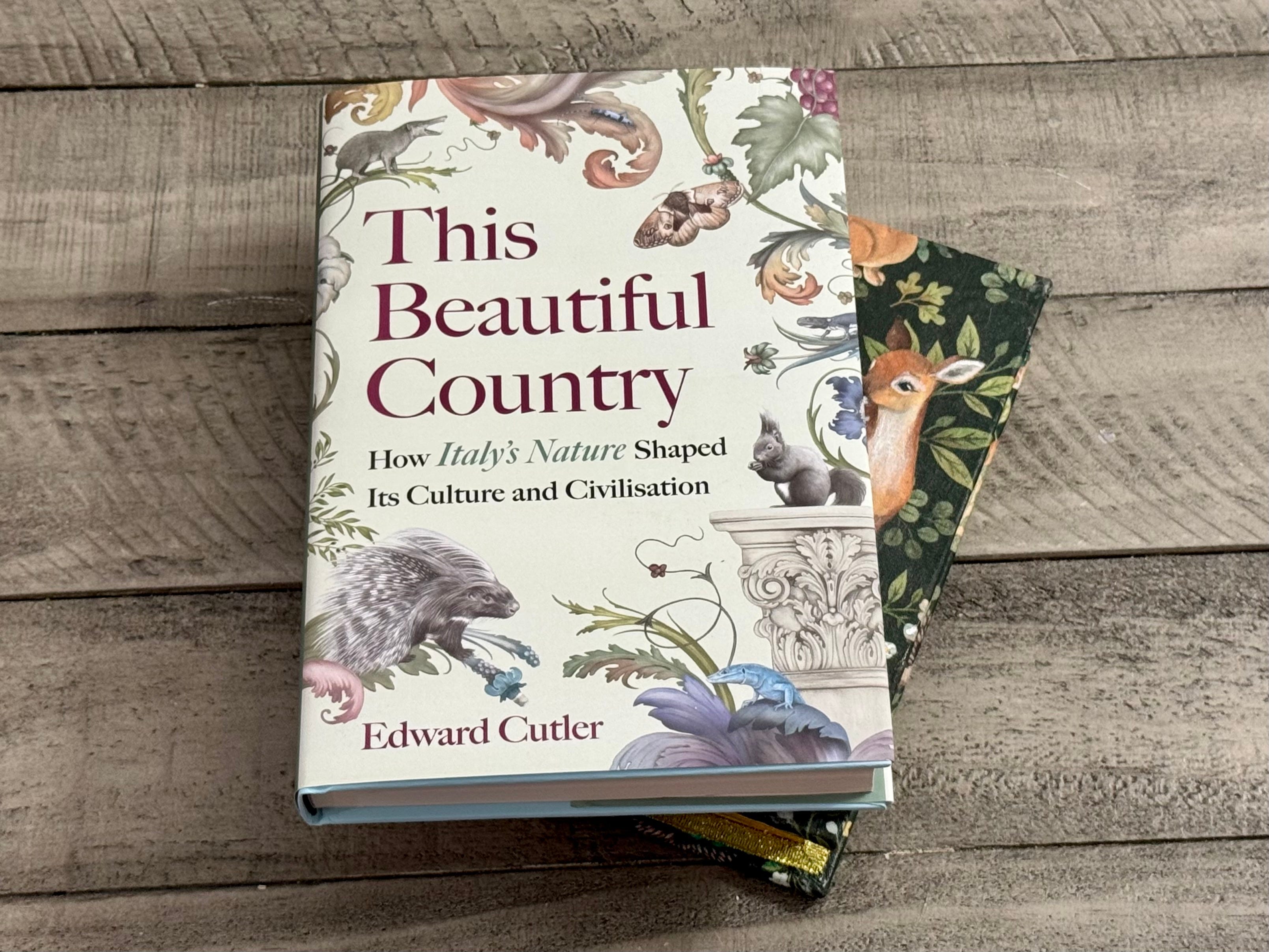
I found Edward’s book to be rather fascinating and well written. It makes its case with rigor without ever becoming boring. I recommend it to anyone interested in a unique perspective on Italy.
Disclaimer: As an Amazon Associate, I earn from qualifying purchases.