


Italy with Antonio. Honest guides for moving to, traveling in, and understanding Italy from a native Italian. Three articles a week, with deeper resources for paid subscribers. Join 1,000+ subscribers.
The Canadian healthcare system is in disarray. “La sanità canadese è allo sbando,” is what I told an Italian friend.
Canada does urgent care well. You get a heart attack, they’ll likely save you.
But at least in British Columbia, people sometimes go years without a general practitioner. The waiting times are horrific, even for potentially serious conditions.
Case in point, my doctor looked at the back of my hand and said, “that mole could be cancerous. I’m not sure. I’m sending you to a dermatologist.”
I’ve been waiting ten months. No news.
I call. The receptionist tells me, with the calm of someone reading off a weather forecast, that current waits for a dermatologist are one to two years.
Annamo bene, annamo, as we say in Rome. Going great.
This is the starting point for understanding how healthcare in Italy actually works. Not a theoretical comparison. A real one.
Italian vs. Canadian healthcare
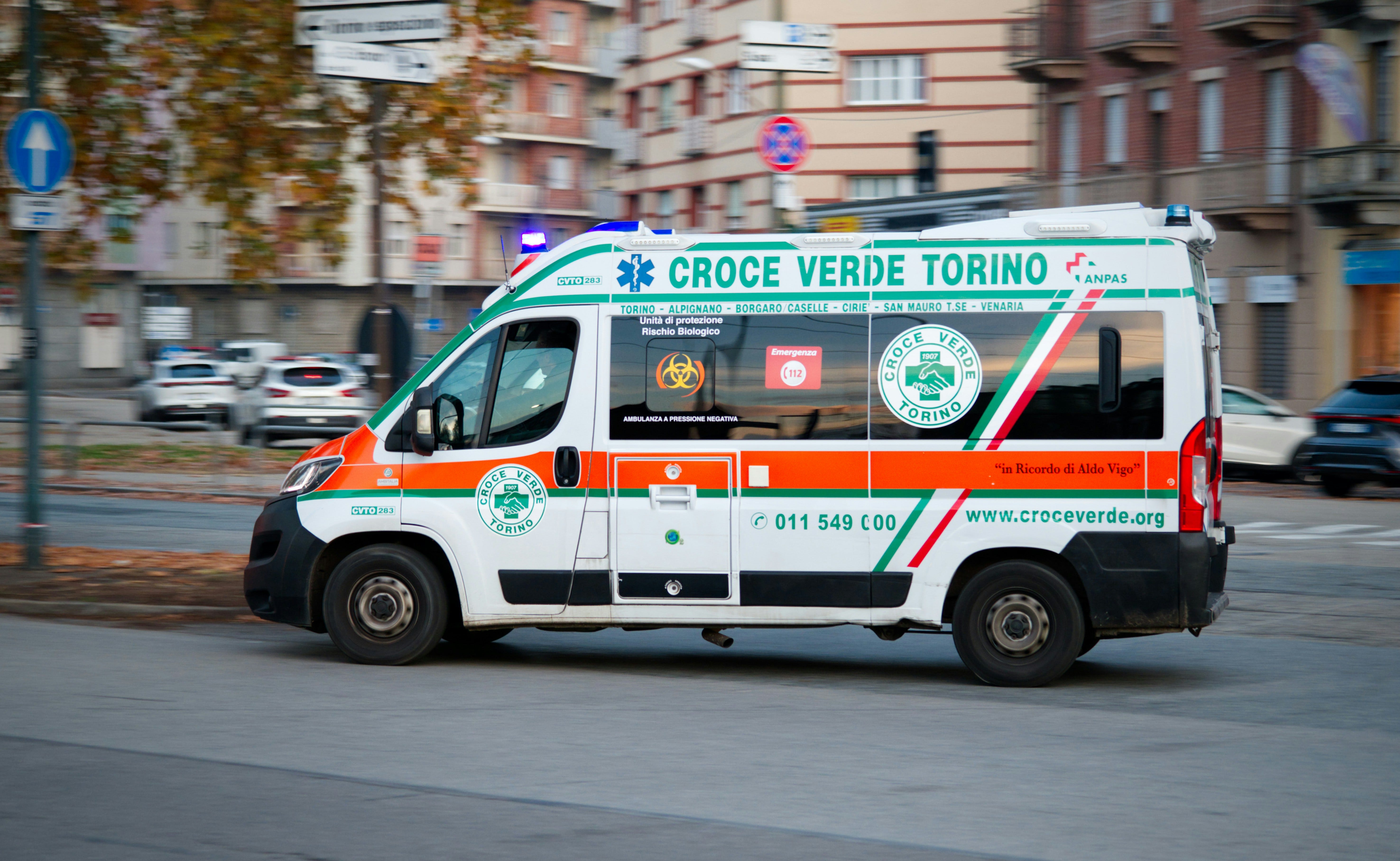
In Italy, you’d also wait. Let’s not pretend otherwise. The public system has long lists for non-urgent specialist visits, and Italians complain about it loudly. You might still wait months. But not without a Plan B.
For around 80-150 euros, you’d see a private dermatologist within 2-3 weeks. Often in a matter of a few days. With no referral needed, since you are paying. Frequently it’s the same specialist doctor who works in the public hospital across town, just off their regular shift.
My late father once complained to me about waiting a whole week for an MRI. A week. From here in Canada, that sounds like science fiction.
There’s another thing that Canada has trained me to dread. Ten-minute appointments. “One issue only, please.” For someone with a few medical conditions, that’s a meaningful limitation.
In British Columbia, the “one issue per visit” rule feels like an assembly line for the soul. It forces a fragmentation of your own health, where a physical symptom is divorced from the mental stress or chronic context surrounding it.
Italian GPs might be a little too direct about your weight, but they don’t put a stopwatch on chronic illness.
There is a fundamental respect for human dignity in allowing a patient to explain how their back pain affects their sleep, which in turn affects their mood, without being cut off. It’s the difference between being a “case to be processed” and a human being to be healed.
So how does the Italian system work? Two systems stacked on top of each other. One you’re enrolled in by default, one you can pay for when the queue feels too long. Most Italians use both. That’s the part that gets lost in translation.
What the SSN Actually Is
Italy’s public health service is the Servizio Sanitario Nazionale (SSN), the National Health Service. Founded in 1978, modeled loosely on the British NHS, funded by taxes, run on a regional basis.
It covers every Italian citizen and every legal resident automatically. Not a private insurance market. Not employer-tied. You can lose your job and you don’t lose your doctor. You can be 75, broke, and have a hip replaced without selling anything.
The fact that confuses outsiders most: there is no opt-out. Italian residents are in the public system whether they like it or not. Any private care they buy sits on top, never instead.
The system runs on three layers. The Ministry of Health in Rome sets the rules and defines what every region must guarantee, called the Livelli Essenziali di Assistenza (LEA, the Essential Levels of Care).
The 20 regions run the hospitals, with Trentino-Alto Adige delegating to its two autonomous provinces, Trento and Bolzano. The local Aziende Sanitarie Locali (ASL, the regional health authorities) are the offices where you register, pick your family doctor, and book appointments.
Three layers, twenty-one different implementations. That’s where it gets messy.
What Healthcare in Italy Costs
Free at the point of use, mostly.
Walk into a public hospital with chest pain and nobody asks for your insurance card. Emergency care is free for everyone. Tourists, residents, undocumented immigrants. The constitution treats it as a right, and so does the system.
Beyond emergencies, you pay something called il ticket, a small co-pay for specialist visits, lab tests, and certain medications. Amount varies by region and income. A specialist consultation is capped nationally at around 36 euros.
Children under 6 pay nothing. Low-income earners and retirees over 65 below the income threshold are fully exempt. Pregnant women and people with chronic conditions pay nothing for care related to the pregnancy or condition.
On paper, the Italian system shouldn’t work. It’s significantly cheaper than its neighbors, yet Italians live longer than almost anyone else.
Italy spent 8.4% of GDP on health in 2024, under the OECD average of 9.3%. Per capita, that’s about 5,164 USD in purchasing power, well below the OECD average of 5,967. Life expectancy: 83.5 years, more than two years above OECD average.
That’s a hell of a trade. First-world health outcomes on a tighter budget than France, Germany, or Switzerland. The strain shows up somewhere, of course. It shows up mostly in waiting lists.
How You Actually Get Seen
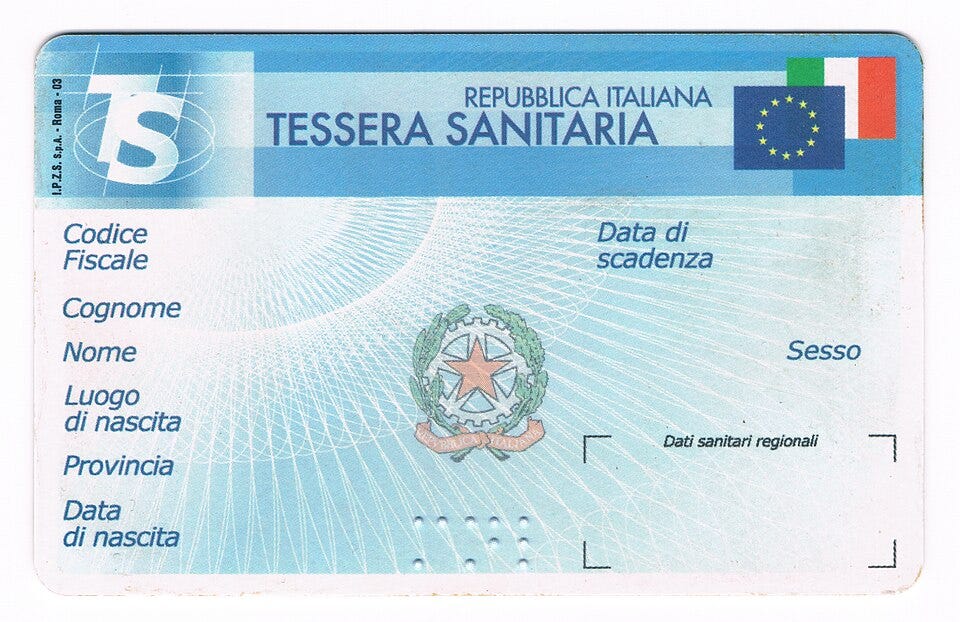
When you register with your local ASL, you receive the tessera sanitaria, the plastic health card that doubles as your tax code (codice fiscale) and as your European Health Insurance Card on the back. You’ll show it at every pharmacy, every public hospital, every specialist visit.
You also pick a medico di base, a general practitioner who acts as your gatekeeper. Each one is capped at around 1,500 patients, paid by the SSN per name on the list, and most practice in small neighborhood offices.
How you book varies by doctor. Walk-in used to be the default and still exists, especially with older solo practitioners in smaller towns. Post-COVID, most GPs have moved to appointment systems, often via a phone call in a narrow morning window, sometimes via an app. Group practices almost always run on appointments. Unlike Canada, your next available appointment will be today or tomorrow, not three weeks from now.
Many doctors still do house calls if you are too sick to go to the appointment but not sick enough to go to the ER. And if you need help at night, there is guardia medica, a special number (i.e., 116117) you call to see a doctor after office hours and on festivities.
Need a specialist or a diagnostic test? Your medico di base writes you an impegnativa (also known as the ricetta rossa) the red prescription form that lets you book through the regional Centro Unico di Prenotazione (CUP). Waits can be long for certain specialties in certain provinces. This is where the private option comes to the rescue per un pugno di euro.
The pharmacy on duty
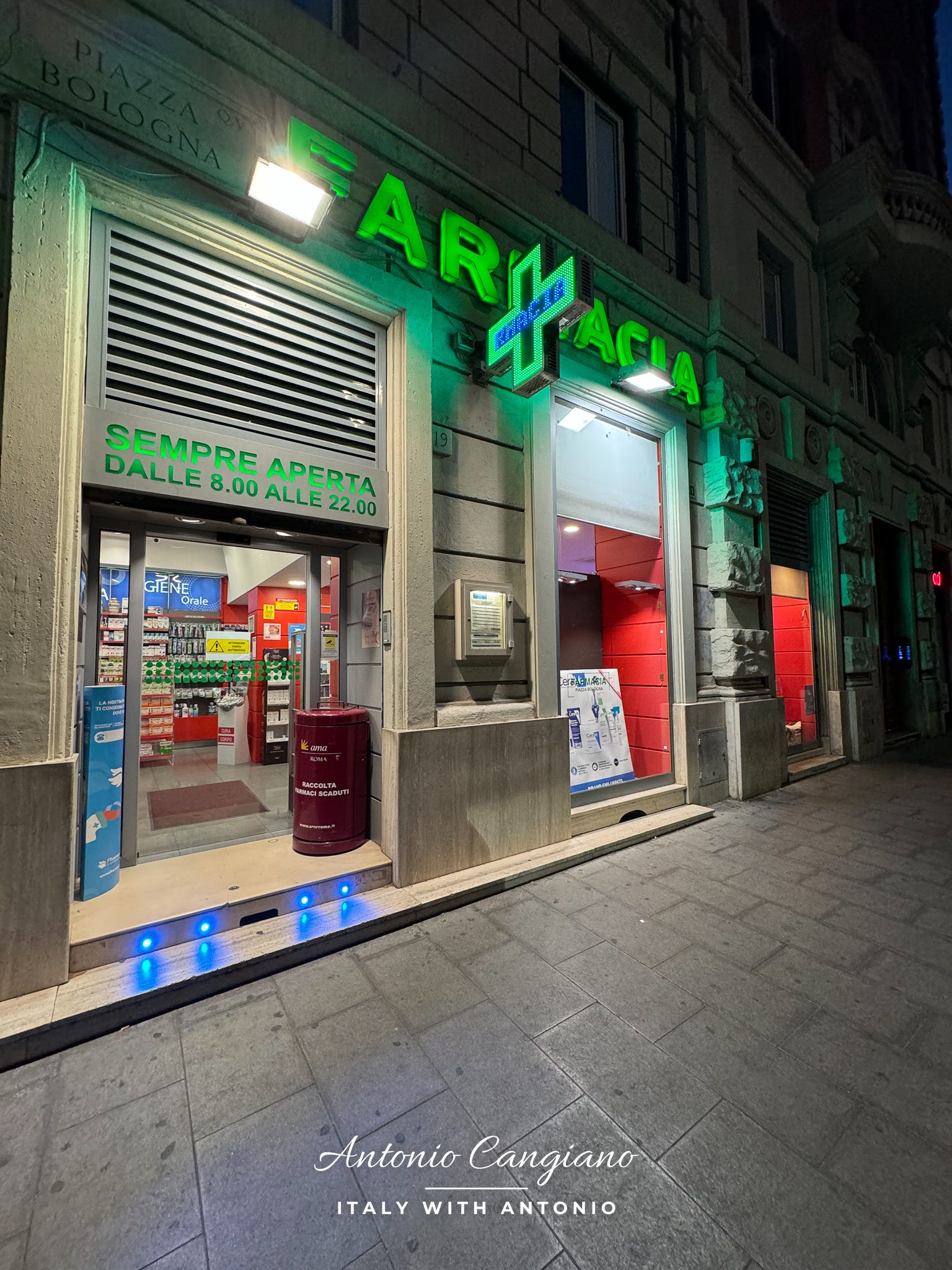
In Italy, the law guarantees that you have access to a pharmacy at any hour of the day.
