


A Substack bestseller, Italy with Antonio offers honest guides for moving to, traveling in, and understanding Italy from a native Italian. A paid article every Monday and a free one every Thursday, with deeper resources for paid members, including print-ready PDF and ePub downloads. Join over 2,000 subscribers!
For a child growing up in Italy, coffee was a milestone, like alcohol is for North American kids. We mimicked the adults by having caffè d’orzo (a caffeine-free coffee substitute made from barley), or they’d humor us with a caffellatte version made from 99% milk and just a few drops of actual coffee.
Then, around the age of 14, most of us started drinking coffee like the adults did. Actual coffee was a rite of passage, a coming of age.
Interestingly, I had wine before I had actual coffee, and perhaps it acted as a “vaccine,” as alcohol was never a forbidden fruit for me, and to this day I don’t drink.
In hindsight, coffee is much more than that. It’s a big deal in Italy, and it’s not because our taste buds are particularly prone to craving it.
What we are prone to crave is social interaction, and coffee acts as the perfect social bonding agent. All food and drinks do to some extent, but coffee doesn’t require much preparation and has the advantage of promising a quick rendezvous that can be extended if the interaction is going well.
Back in the day, we didn’t have coffee pods, and we weren’t rich enough to have the somewhat uncommon espresso machine at home. So coffee really meant one of three things:
The moka pot, the most common way to make coffee in Italy.
The cuccumella, another stovetop option popular in Neapolitan households like mine.
Coffee at the local bar. (Nowadays €1.29, but back in the 80s, the equivalent of €0.20.)
For most Italian families, it really came down to moka at home or espresso at the bar. It was cheap enough that you didn’t need a justification to opt for the latter.
Coffee is the central part of the Italian breakfast, whether taken as an espresso or in its milky variants like cappuccino, caffellatte, or latte macchiato.
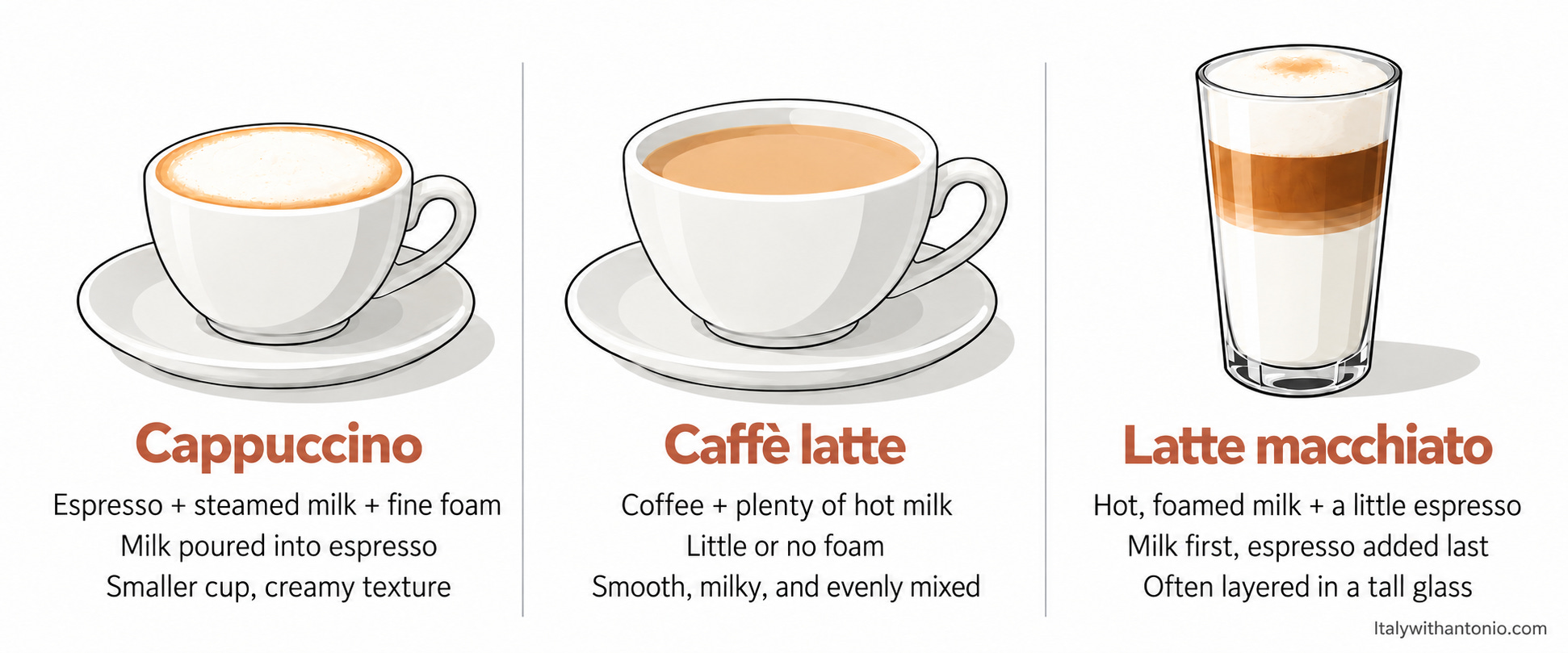
At home, in the morning, it is a social event for the family. At the bar, it’s the routine that weaves you into the fabric of the local community.
At home, at other times of the day, coffee often meant company. My mother’s friends would come over, she would put the coffee on, and they would sit and talk.
The cups were small, but the visits weren’t necessarily short. People caught up, exchanged news, and talked through whatever was happening in their lives. It was a proper social occasion.
That’s the Italian coffee culture I experienced for the first twenty-three years of my life. I’m a lifelong coffee lover, but when I think about coffee, I think about family and friends: the social component that comes with it.
So, alright, coffee is important in Italy, and it’s social. How do we make a good cup?
Start with the right coffee
There are three components to making coffee:
The machine/coffee brewing method. We’ll assume moka here.
The coffee type (arabica, cheaper and more intense robusta, or a mix). They have different strengths and aroma profiles, but all are fine.
The grind. Fine for espresso, medium-fine for the moka, and coarser for filter coffee.
Look for a packet marked moka or suitable for stovetop coffee makers.
Illy is my favorite, and here in Canada I can generally buy a 250g can for CA$15-$20 or so. You don’t need to buy the most expensive coffee on the shelf. These are sensible options to start:
Illy Classico, ground for moka: a medium roast and a good first choice if you want something relatively gentle and aromatic. It’s a 100% arabica blend.
Lavazza Qualità Rossa: an arabica and robusta blend with more body. A useful everyday option, particularly if you like your coffee with milk.
Lavazza Qualità Oro: another 100% arabica option, with a more aromatic profile than Rossa.
Lavazza Crema e Gusto: worth trying if you prefer a darker, fuller cup. My favorite of the Lavazza blends.
Taste a couple before buying in bulk.
Don’t assume that 100% arabica automatically means you’ll enjoy it more. Plenty of Italian blends include robusta deliberately. Try them and decide for yourself.
A local roaster is another good option. Tell them you’re using a moka and ask them to grind the coffee for it.
If you get yourself a nice grinder (electric or manual), the world opens up to you, as you can choose from a much wider range of beans and then grind the coffee for whichever preparation method you choose that morning.
Buy small quantities, ideally beans roasted within the last few weeks, and close the packet or tin properly, keeping it away from heat and moisture.
Making coffee with a moka
If you don’t have a moka, get one. You can opt for plain ones, colorful ones, Italian-themed ones, or even fancy Dolce&Gabbana ones. Just get Bialetti. It’s the best you can get at an affordable price.
Check your stove first: the standard aluminum model doesn’t work directly on induction, so buy a model explicitly marked as compatible if that’s the stove you have.
One warning about the size. You might think “wow, six cups, I’ll make coffee for the whole family.” Don’t be fooled. A moka’s “cups” are small Italian coffee servings, not 250ml mugs.
A three-cup pot makes a tiny amount of coffee, but if you are a single person, three cups works. If you have teenagers who will drink it as well, opt for nine cups or simply put two six-cup mokas on the stove. My wife and I split a six-cup one in the morning. My estimate is that we each end up with about 175 mg of caffeine on average.
Buy a size you’ll normally finish, because a standard moka works best with its intended water level and a full, loosely filled basket.
Despite the name “stovetop espresso maker,” a moka makes its own kind of strong, concentrated coffee. But it’s not espresso by any means. Espresso requires about 9 bar of pressure, and the moka simply never reaches those levels. Expecting it to taste exactly like a bar espresso would be a rookie mistake.
Before using a new Bialetti, wash the parts as instructed and discard the first three brews. It feels wasteful but it’s actually what the manufacturer recommends to ensure the best taste.
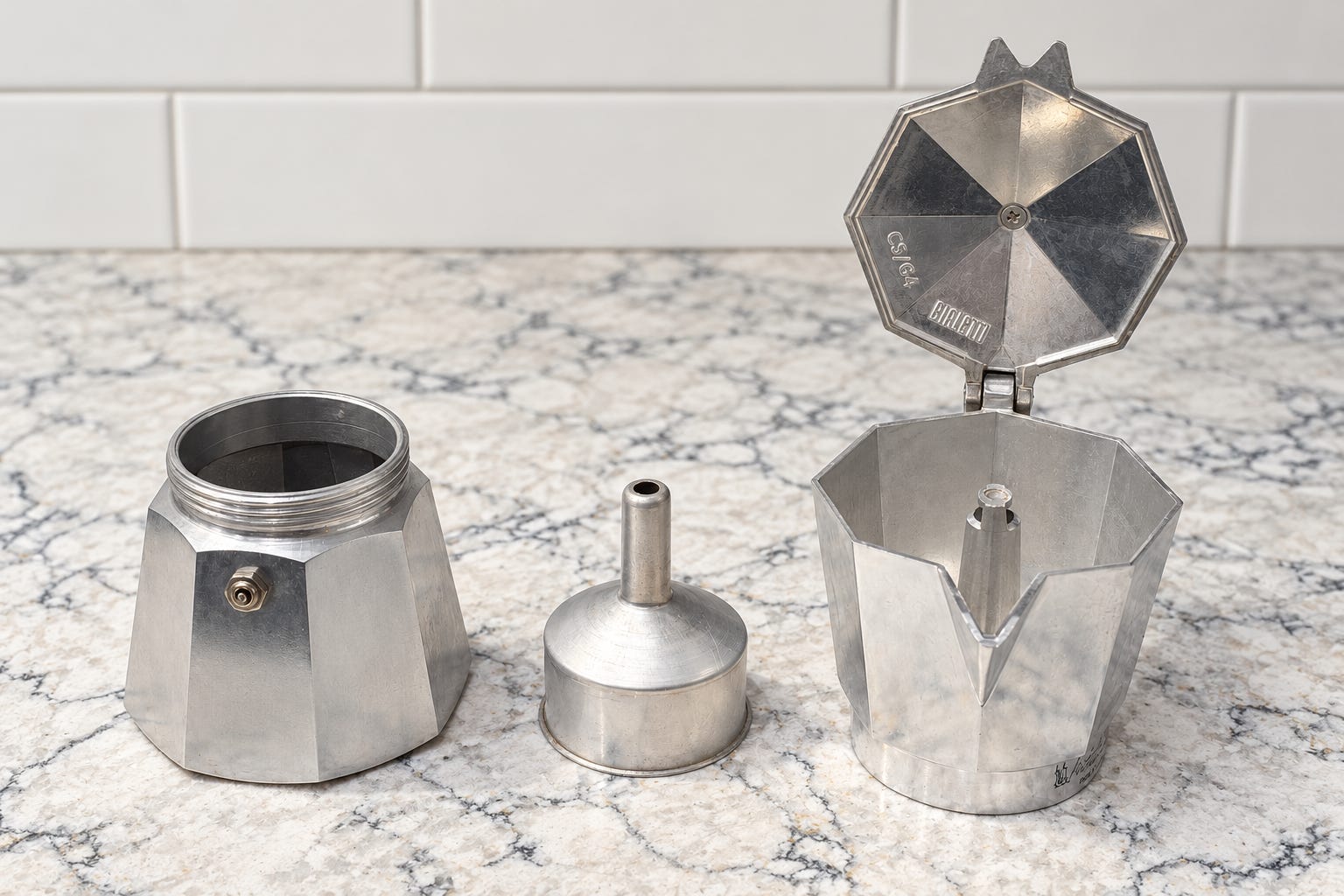
Here are the steps to make a good coffee (safely) with your moka:
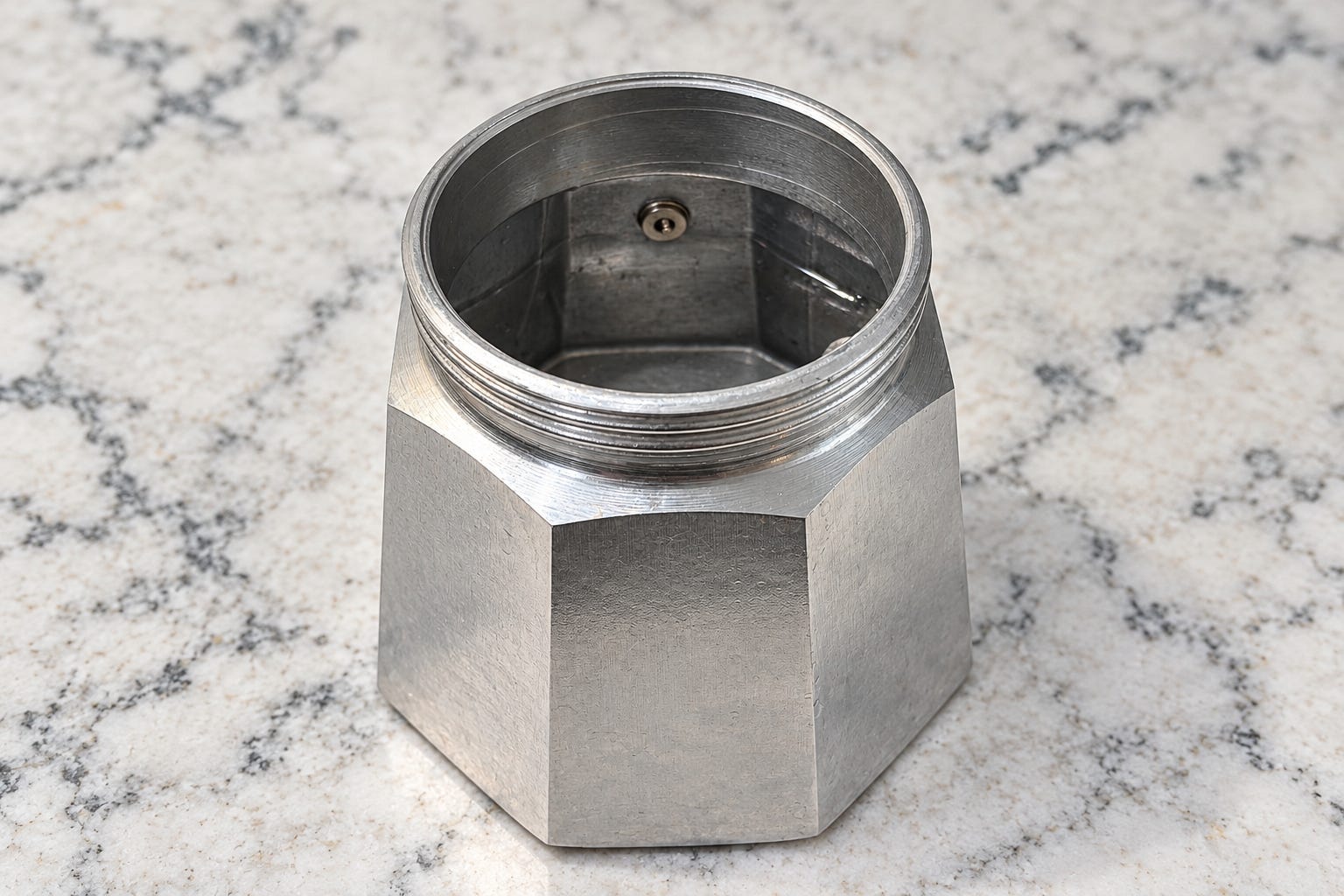
Step 1: Add water to the bottom chamber. Start with cold water, stopping just below the safety valve. Don’t cover it. It can literally blow up if you cover it.
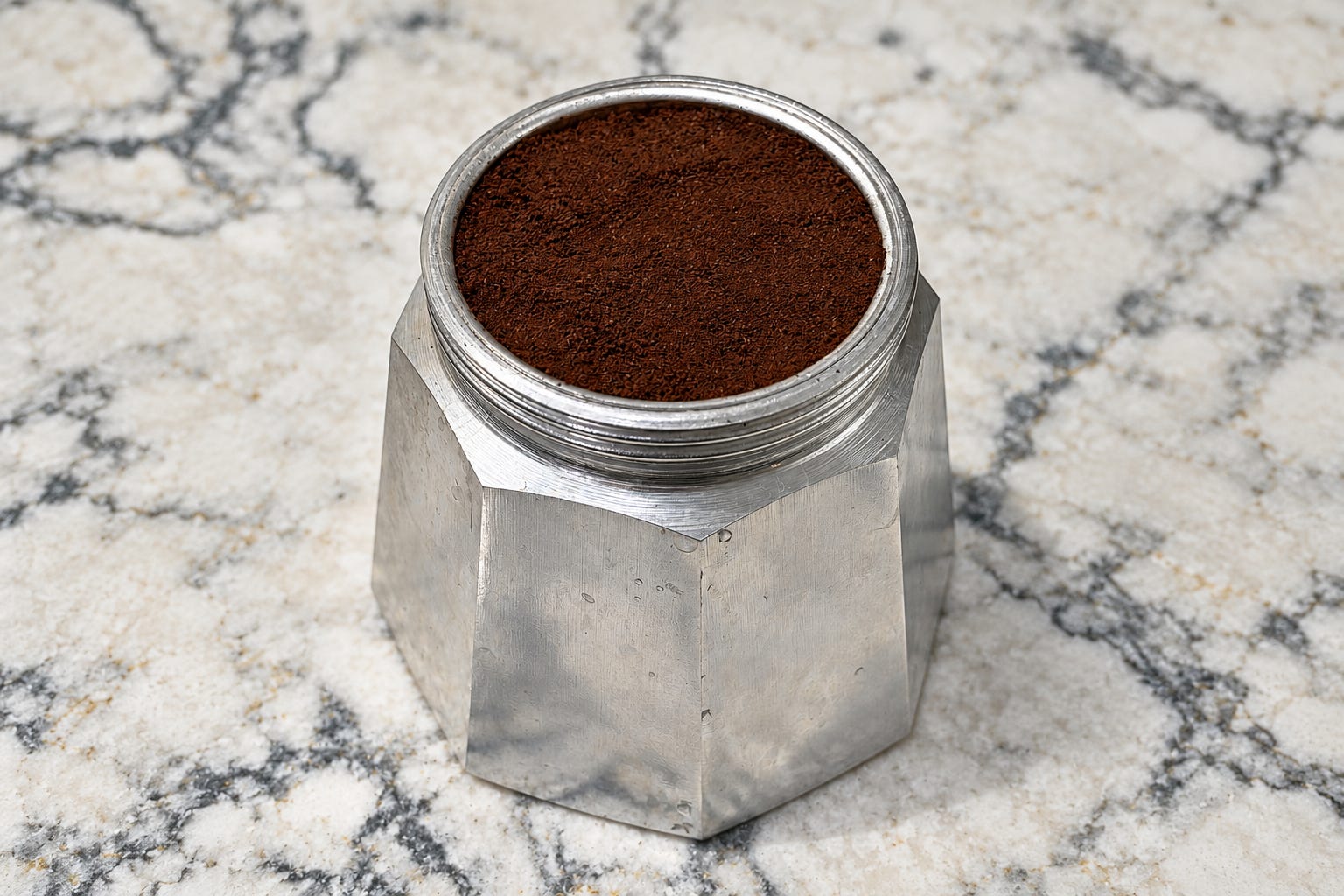
Step 2: Fill the coffee basket loosely. Level the grounds with your finger, without pressing them down. Don’t tamp them as you would for espresso. Then place the basket into the bottom of the moka.
Step 3: Assemble the pot. Brush stray grounds off the rim and screw the chambers together firmly. Hold the body, rather than using the handle for leverage.
Step 4: Use low to medium heat. On gas, keep the flame beneath the base. A larger flame won’t improve the coffee.
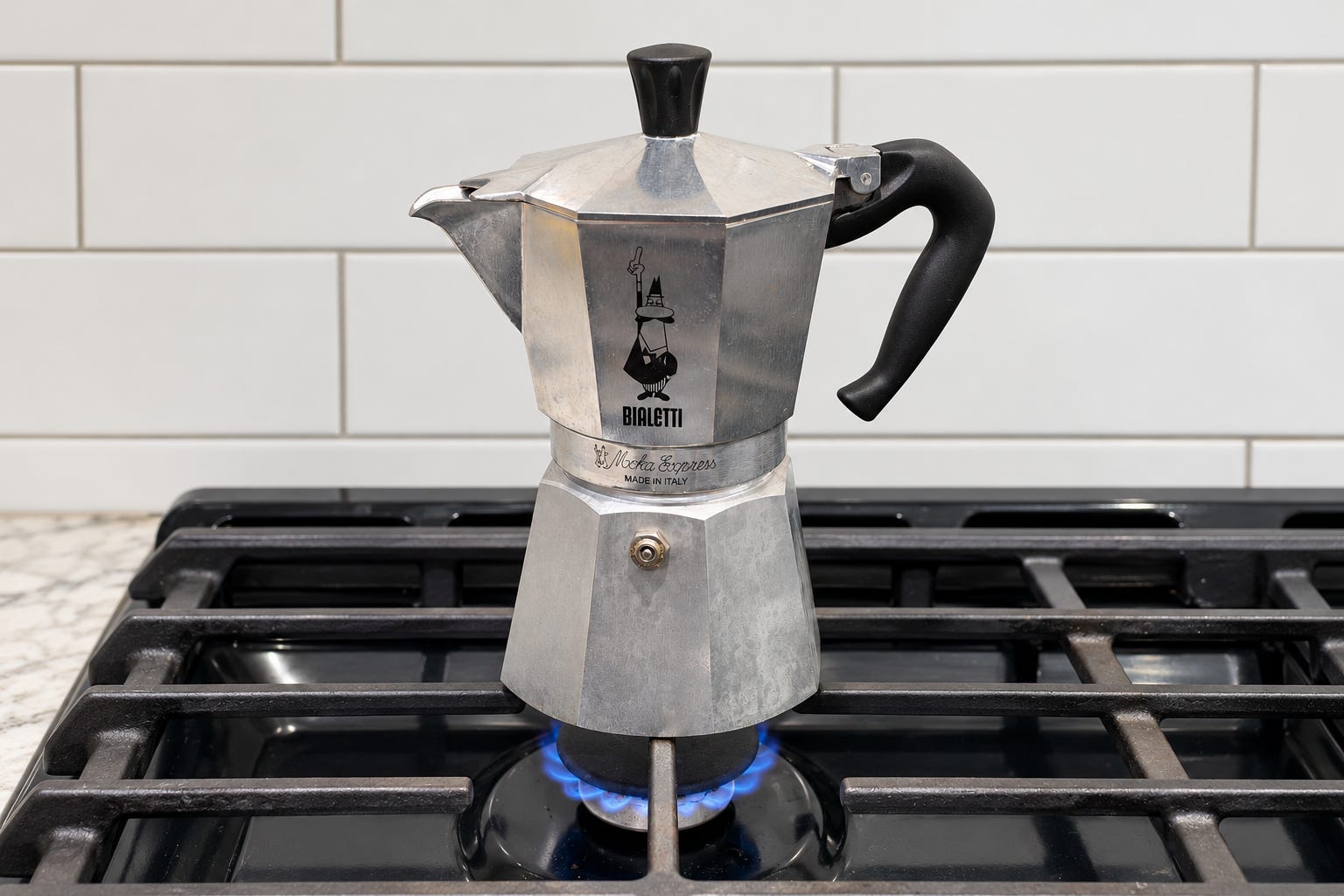
Step 5: Stay nearby. When the flow becomes pale and starts to sputter, or you hear the first gurgle, take the pot off the heat. Move it off a hot electric burner completely.
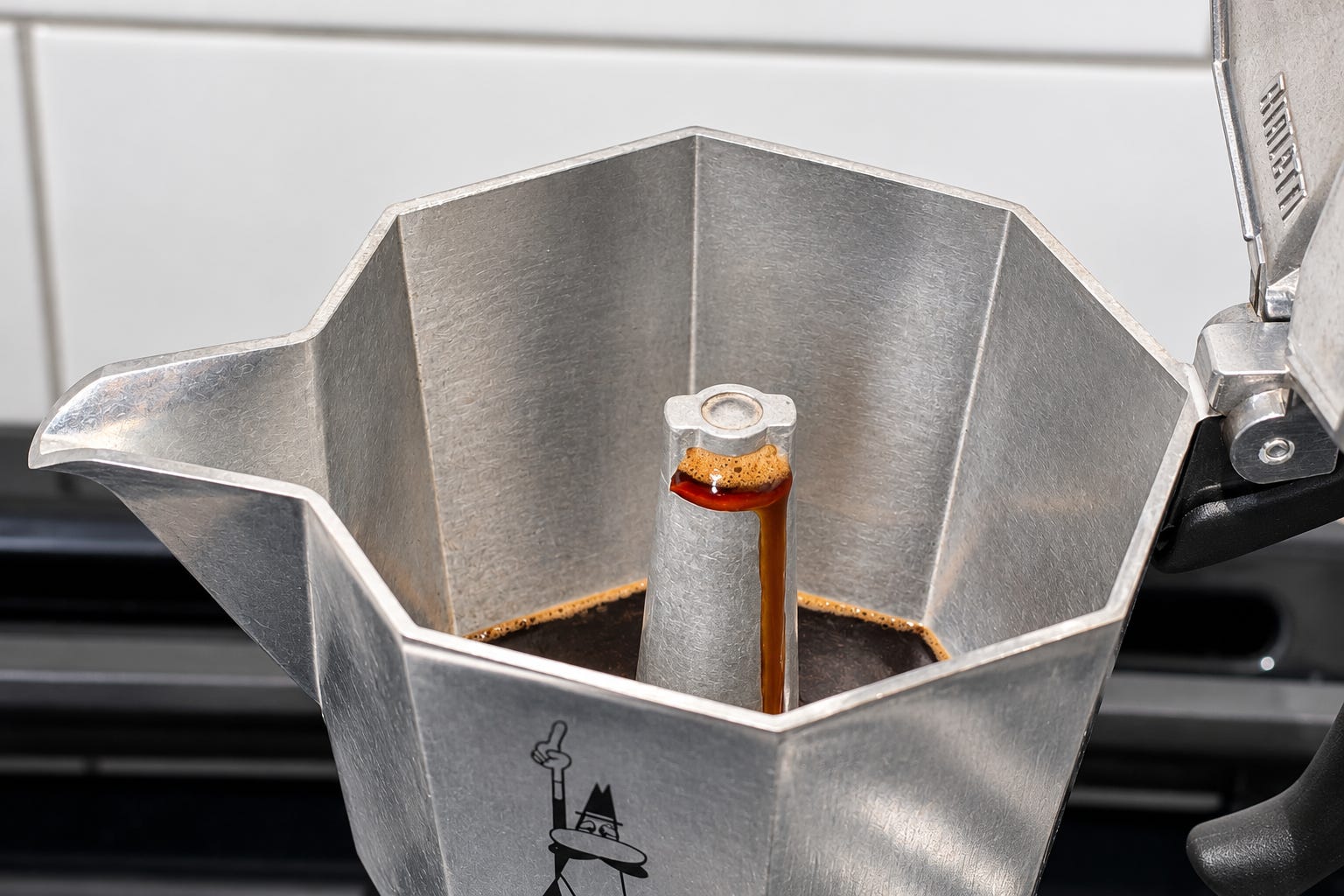
Step 6: Stir and serve. Gently mix the coffee in the upper part of the moka before dividing it between cups, so the first person doesn’t get a much stronger serving than the last.
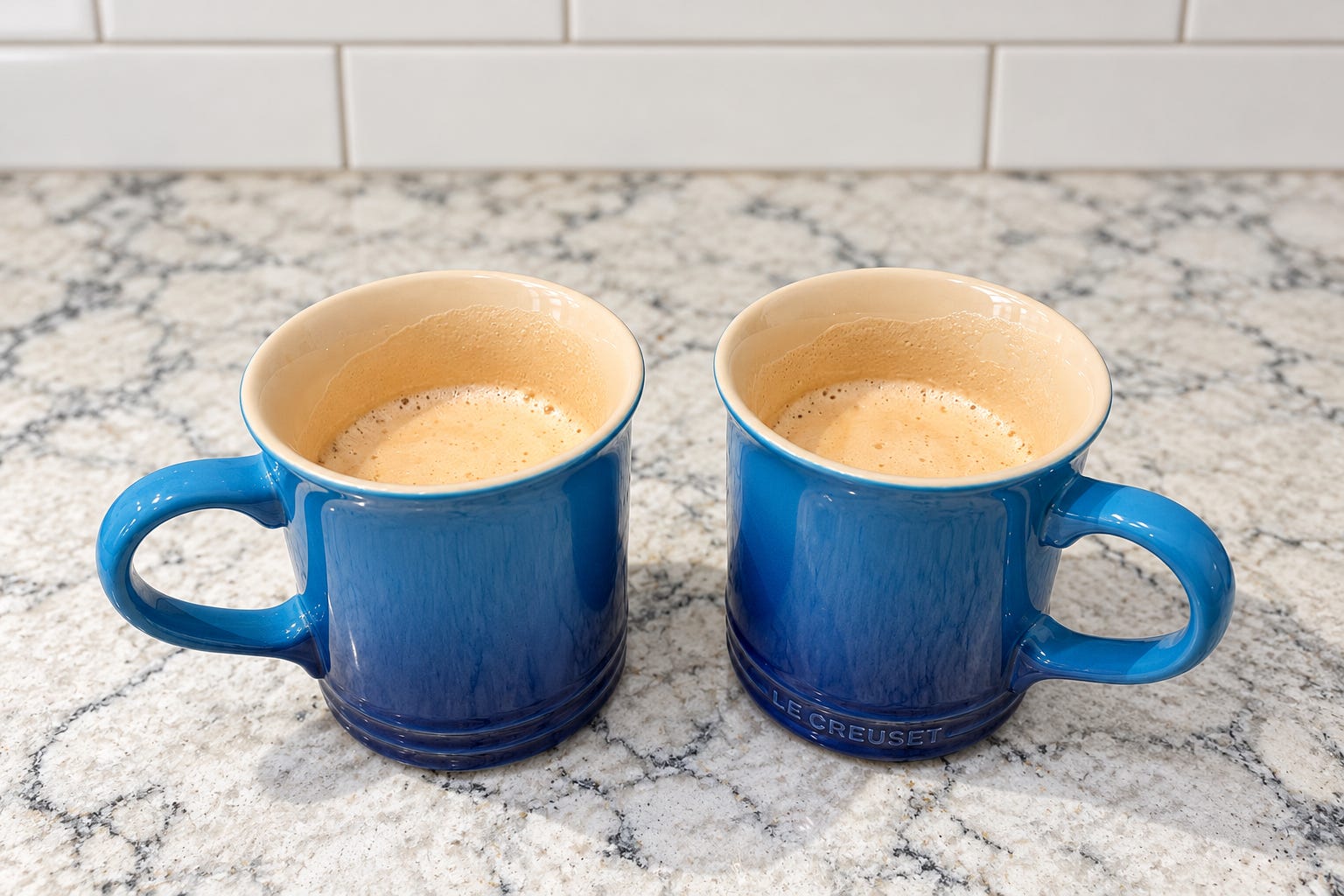
Yes, the image shows the coffee after I added frothed milk to it.
If your coffee tastes harsh or burnt, try less heat and an earlier finish before buying a different pot. If it barely flows, don’t keep increasing the heat. Turn it off, let it cool completely, and check for grounds that are too fine, a packed basket, or a blocked filter.
Once it’s cool, empty and clean it. For the aluminum Moka Express, follow Bialetti’s instructions: warm water, no detergent or dishwasher, and no abrasive sponges. Keep the filter and coffee outlet clear, and let the parts dry thoroughly before storing them.
And don’t deliberately preserve a layer of old coffee inside it, either. Whatever you’ve heard about “seasoning” a moka, accumulated residue isn’t something to cultivate.
If you like your coffee sweet, you can also try cremina. Put a little sugar in a cup, add a few of the first drops of coffee, and beat them together with a spoon until pale and creamy. Divide that between the cups before pouring the rest. It makes a sweet foam, though it still isn’t espresso crema.
Ordering coffee at an Italian bar
The bar offers another version of the same habit. If you’re in Italy, you could stop for an inexpensive espresso, have a brief conversation, and get on with your day. Coffee at home might turn into a visit. Coffee at the counter fits between errands.
“Un caffè, per favore” will get you an espresso. There’s no need to make ordering more complicated than that.
These are the other useful terms:
Caffè macchiato: espresso with a little milk, usually foamed. Sort of the reverse of a latte macchiato, which is a lot of milk with a little coffee.
Ristretto: a shorter, more concentrated extraction.
Lungo: a longer extraction. Less concentrated doesn’t necessarily mean less caffeine or less bitterness.
Americano: espresso diluted with hot water.
Caffè corretto: espresso with a little spirit, often grappa or sambuca. This is okay, even at 9 am.
Some bars want you to pay at the register first and bring the receipt to the counter. Others let you order and pay afterward. Watch what people are doing, or ask. Even within Italy, the routine varies widely.
If price matters, check before sitting down. Table service can cost more than drinking at the counter, especially in a tourist spot. But coffee in Italy is usually cheap either way, especially if you’re used to North American prices.
And yes, cappuccino is traditionally a breakfast drink, rarely ordered after 11 am or noon. But I wouldn’t spend a holiday worrying about whether an afternoon coffee order was sufficiently Italian. Order what you like. Knowing the custom is useful, but there’s no reason to feel embarrassed about your coffee.
Brikka, espresso machines, and capsules
If you like the moka but want even stronger coffee with a slightly foamier top, consider Bialetti’s Brikka. Its valve changes the way the coffee is released, producing a crema-like layer. It still won’t turn a stovetop pot into an espresso machine, so curb your expectations.
The important practical detail is the water quantity. Follow the instructions for your exact Brikka model instead of automatically filling it as you would a Moka Express, for both safety and taste reasons.
A home espresso machine makes sense if espresso is what you really want and you’re willing to learn a little. Budget for a grinder capable of fine, repeatable adjustments as well as the machine. (I own this espresso machine and this grinder. Both well worth it.)
Capsules are reasonable if convenience matters more to you than adjusting the brew. I highly recommend Nespresso over Keurig for this. Check compatibility before buying: Nespresso Original and Vertuo use different capsules, and they aren’t interchangeable.
My advice is to start with the moka unless you already know you want something else. Make it regularly, find a coffee you like, and then decide whether another machine would give you something you’re missing.
That said, I own almost every coffee maker used in Italy, and then some: a moka, a Brikka, a French press (actually Italian), an espresso machine, a Nespresso machine, and, somewhere around the house, the more esoteric Japanese pour-over one (a Hario V60).
Plus, and don’t tell fellow Italians, a North American drip coffee maker!
Acqua sporca and dessert in a cup
Ask most Italians about American drip coffee and you’ll hear the same two words: acqua sporca, dirty water. An Italian caffè is about 25 milliliters. A Starbucks grande is about 470, so you can see where the difference in expectations comes from.
Starbucks gets teased even harder, which is a little unfair, since there are now more than 50 stores there.
Still, to me and many Italians Starbucks is dessert in a cup. A grande Pumpkin Spice Latte has 390 calories and 50 grams of sugar, about 32 of them added. That’s a grande, not even a venti. The World Health Organization’s stricter target for free sugars is about 25 grams for the entire day. But I do indulge on occasion because I’m a sugar addict.
The Italian habit revised
I like strong Italian coffee, but I don’t think enjoying it requires dismissing every other way of brewing. A well-made filter coffee or French press can be excellent. Sometimes you want a small cup after a meal. Sometimes you want something to sip while you work.
What I value most from growing up is how readily coffee brought people together. My mother’s friends didn’t need a special occasion to come over. Putting the coffee on was enough.
So learn to make a cup you enjoy, then offer one to somebody. In Naples, the caffè sospeso even extends the tradition to strangers at the bar. You can worry about upgrading the equipment later.
Just remember that in an Italian household, “a quick coffee” only ever describes the brewing time.
Disclaimer: As an Amazon Associate I earn from qualifying purchases.
How I write: I choose the topics, do the research and analysis, and bring the Italian perspective. AI helps me turn that into polished drafts faster and assists with data and charts. I review and edit everything, verify every source, and take responsibility for what I publish. This lets me bring you more (and better) articles. Grazie for reading!
Fantastic article, and hope you are enjoying wedded bliss! I wish our Airbnb hosts would always supply a Moka pot. I use one at home, but normally pour through a cone every morning to start. We love ordering coffee in Italy, mainly machiati, even the special one with the panna in Perugia that came with the maritozzi! But the hosts seem to prefer pods, which are so much more expensive. I don’t know how many boxes of Lavazza we bought at the Umbro in Perugia (highly recommend!), because the host left so free from time to time. Since our travels to Italy have also allowed me to develop a taste for grappa, a corretto is always a great idea (I decided at 09:00 because I saw locals doing it, so why not?). We do enjoy our coffee and are fortunate to have reasonably priced arabica beans here in Ecuador ❤️☕️🇪🇨🇮🇹