

Illegal Things Tourists Do in Italy, From €50 Fines to Jail
Nearly every illegal thing tourists do in Italy, ranked by severity: fines, city bans, and the common beach souvenir that almost always ends in criminal charges.

Italy with Antonio. Honest guides for moving to, traveling in, and understanding Italy from a native Italian. Three articles a week, with deeper resources for paid members. Join 1,500+ subscribers.
Picture yourself in line at the Cagliari airport waiting to get through customs. Ahead of you, an officer is pulling a bottle from a suitcase with a look of suspicion. He holds it up to the light, examining the white sand inside. His unamused expression makes you think he has found contraband. Legally speaking, he has.
Many illegal things tourists do in Italy happen innocently enough, as they do not feel overtly illegal. Sitting on the Spanish Steps for a photo and a rest, buying an inexpensive bag, enjoying a drive through a medieval centro storico, or even pocketing a souvenir the beach was giving away free of charge.
The vast majority of tourists have no intention of breaking the law on vacation. Italy just tends to do things its own way, including the law, and then enforces it with creativity.
To save you that potentially embarrassing, or even financially punitive, moment during your vacation, I have created a ranking of fines based on severity. Hopefully, this will save you from having to practice your Italian with a no-nonsense officer.
How tourist fines in Italy actually work:
In Italy, fines have three layers, and knowing which one you’re in is key to understanding the severity of the infraction.
At the top of the hierarchy sit national criminal law and the cultural heritage code. Monuments, archaeology, counterfeits. At this level, lawyers will get involved.
In the middle, you are dealing with national administrative rules. These include traffic and transit. These are typically automated. Think speeding or driving through a ZTL. They are annoying but easily survivable.
At the bottom of the hierarchy lies the ordinanza comunale (municipal ordinance). It can be fairly random and unique to a city or town, as any Italian mayor can sign one. Which is why the rules change every time you enter a new city: things like smoking, loitering, etcetera.
Cities also carry a particularly severe enforcement weapon: the daspo urbano, a banishment order barring you from a city or selected areas within it. Venice issued roughly 1,300 banishment orders in 2024, though nearly half were for begging, rough sleeping, and drug use, not tourists in swimwear. Italian cities don’t just fine you; they can outright ban you for up to three years.
One key thing to remember: most administrative fines can be settled within 60 days for double the minimum (or a third of the maximum), whichever is the lesser. So the number on the receipt will rarely match the number in the headline that talks about you. Don’t want to be in the headlines? Read on.
Tier 1: The illegal things in Italy that will follow you home.
Putting graffiti on, or carving anything, into a monument.
A Russian tourist paid approximately €20,000 and took a four-month suspended sentence for carving the initial K into the Colosseum. The man behind 2023’s “Ivan + Hayley 23” risked five years’ jail time.
Since 2024, defacing any cultural site carries fines of €20,000 to €60,000, plus any required restoration costs. It’s simply not worth it and is very disrespectful in general.

Collecting sand, shells, or pebbles from Sardinia.
A regional law since 2017: €500 to €3,000. Airport scanners at Cagliari, Olbia, and Alghero are equipped to screen for it the way other airports will screen for narcotics. One sweep in 2021 fined 41 people and seized about 100 kg of beach. If you take enough, it quickly becomes a penal charge.
A famous example of this is the French couple who were caught with 40 kg in plastic bottles and faced one to six years. The beloved pink beach of Budelli has been closed since the 1990s because the pink sand was routinely being stolen, which has sadly diminished its pink colour. Biologists are hopeful this ban will help it recover.
Buying a fake bag with a “designer” label.
In Italy, the buyer shares in the offense too, not just the seller: up to €7,000 for purchasing any counterfeit goods. That €20 “Prada” being sold on a bedsheet outside the train station will end up being the most expensive bag you have ever purchased.
And, of course, this is not limited to bags. Watches, perfumes, and other designer items are all subject to protective counterfeit laws.
Freelance and amateur archaeology.
Everything old found in Italian ground belongs to the State. As any Italian metal detectorist will tell you, digging without a concession means arrest and a fine of €310 to €3,099. And ever since 2022, merely being caught holding a metal detector in an archaeological area is now a crime in its own right: up to 2 years. If you happen to find something by accident, you have 24 hours to report it, and the authorities will tell you what to do.
Public nudity (and public urination).
Italian law splits this into two categories.
Obscene acts (the explicitly sexual kind) carry administrative fines starting at €5,000 and remain a crime (up to four and a half years) when near schools or any minor persons.
Simple indecency, like nudity and public urination, used to cost nearly as much. For example, two Czech fans caught skinny-dipping behind St. Mark's in 2019 paid €3,000 each.
Later on, the Constitutional Court called these types of fines disproportionate and cut them to €51-309, possibly the only tourist fine in Italy that actually decreased.
Tier 2: The national rules accidentally broken by tourists.
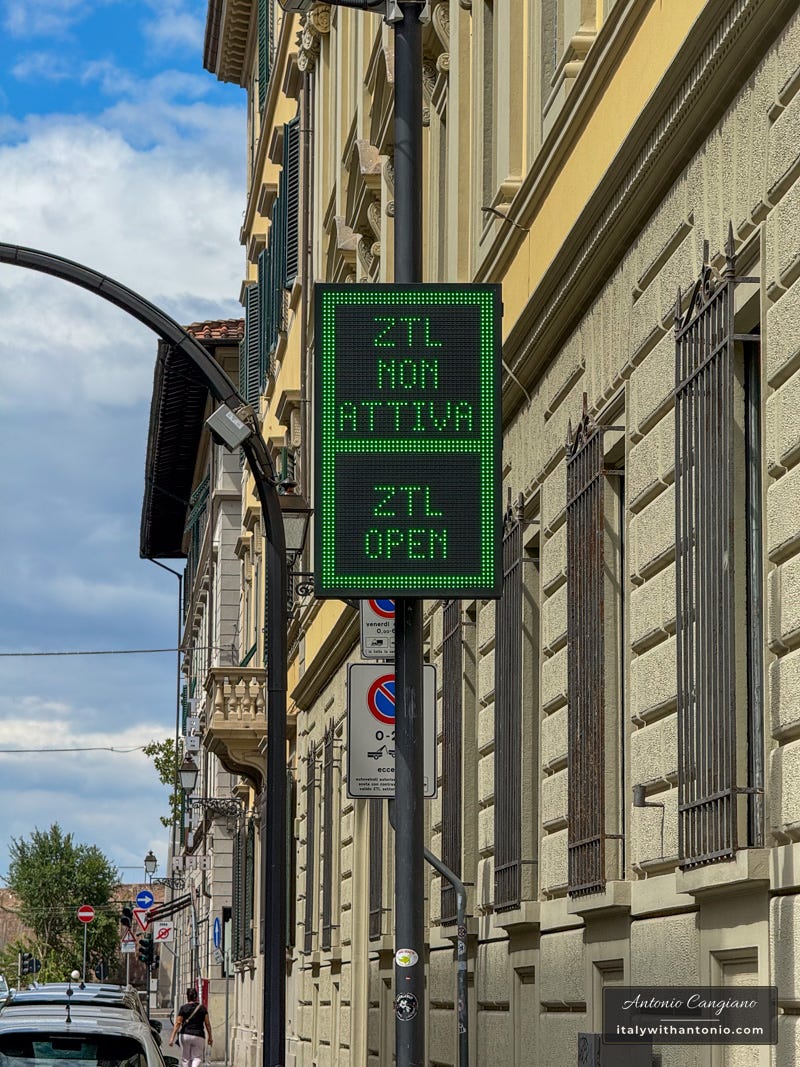
Driving in ZTL zones.
A Zona a Traffico Limitato is a camera-enforced area found in many historic centers. Each pass under a camera is a separate fine of approximately €80 to €100. Your rental company will likely also add an admin fee of €30 to €70 per violation, and the letters can legally arrive up to a year later.
One absent-minded afternoon circling in search of your hotel can lead to four tickets. Florence collected €61.6 million in traffic fines in 2024, in a city of 380,000 people. If ZTLs are around, park outside the walls and historic city centres. Don’t chance it.
As painful as this rule can be, it is also why you can wander these centers on foot with almost no traffic.
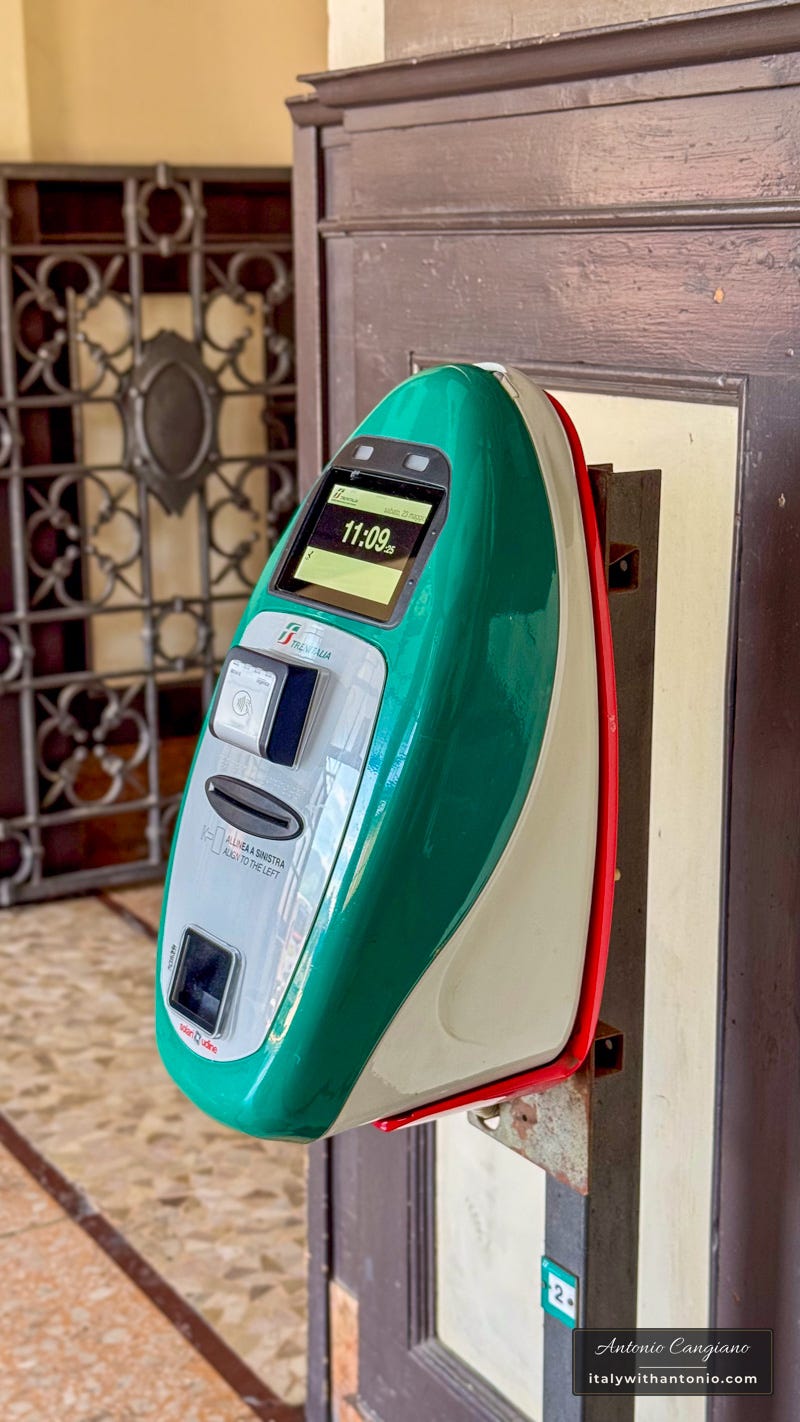
The unvalidated train ticket.
Regional train tickets (note the emphasis on the word regional) purchased on paper need stamping in the validation machine (which, if you look closely, is shaped like the front of a train). You will see these machines all over the station.
If you skip it, the ticket is legally worthless, and you will owe €50 on the spot. This is a lesson many tourists learn on the slow train to their next destination.
The trap is that high-speed trains don’t require validation. Neither do regional tickets bought online. Read my article about Italian trains to avoid this and other pitfalls.
Driving solely with your home license.
Any non-EU licenses must travel with an International Driving Permit (IDP) or a sworn translation. They don’t cost much (less than $50) and allow you to avoid a fine of approximately €400 to over €1,600.
The rental desk may or may not check and refuse you the rental without it. The Carabinieri or Polizia di Stato will definitely check.
Foraging for mushrooms without papers.
Mushrooms and truffles require a regional permit called the tesserino. It comes with limits on quantity and even specifies the basket type. Fines will vary by region. The fines can range from the double digits to the thousands. Even porcini come with paperwork in Italy, but it is understandable due to the economic, environmental, and cultural importance of foraging.
Tier 3: The city-by-city variables.
This is the tier of the hierarchy focused on local ordinances. Differs in every comune (municipality), enforced by the local police, and can change seasonally.
Rome
The Spanish Steps are not a place to relax. Sitting on them can cost anywhere from €250 to €400 if you damage or stain them. Enforcement varies, but police routinely patrol with whistles and monitor the area daily.
This may seem obvious, but sadly, it’s a common problem. At any fountain (the Trevi included), wading, swimming, sitting on the edge, or eating there runs up to €450.
Fishing coins out of the Trevi is plain theft, as the money is collected by the city for charity.
There is also a midnight curfew for drinking outdoors: no glass on the street after 10 pm, no open-air alcohol at all after midnight, with fines around €150 to €280.
As romantic as it may seem to attach a “love lock” to Ponte Milvio, where the whole trend started, it will cost you up to €250. Rome has recently been at war with the trend since a lamppost collapsed under the cumulative weight of these locks in 2007. Florence charges €160 on the Ponte Vecchio, and Venice has an outright ban.
There is an urban legend that the fine is €50,000, but Italy is not that draconian for simple bylaw violations.
Venice
Eating or sitting on bridges, steps, and monuments will result in fines of approximately €100 to €200. Two backpackers who famously brewed coffee on the Rialto steps with a camp stove paid a whopping €950 and were promptly escorted out of Venice.
Swimming in a canal is not allowed. This fine is approximately €350 plus a 48-hour expulsion (the famous daspo from above). In 2025, a couple was spotted by gondoliers who reported them. They paid €450 each in fines.
Walking around in swimwear is a violation, too. It does not matter if it is hot: €250. Feeding pigeons or seagulls: €25 to €500, banned in Piazza San Marco since 2008. Bicycles: €100, even if being walked by the rider.
There is also an entry fee, introduced to fight overtourism. On 60 peak dates between April and July 2026, day-trippers pay €5 (or €10 if booked late), and arriving without the QR code can cost roughly €50 to €300.
Florence
Beyond the Ponte Vecchio locks, Florence bans eating at mealtimes on four streets, Via de' Neri, Piazzale degli Uffizi, Piazza del Grano, and Via della Ninna, from noon to 3 pm and 6 to 10 pm, with fines up to €500.
Via de’ Neri also happens to be where the city’s infamous schiacciata (flatbread sandwich) line forms. This means you cannot eat the sandwich where you bought it and will have to walk two minutes to a bench in another area.
Liguria
Hiking Cinque Terre in flip-flops is not only hazardous but draws fines ranging from €50 to €2,500, depending on what your mountain rescue ends up costing. The paths are mountain trails with a sea view and not a flat seaside boardwalk.
In Portofino, stopping in the marked “red zones” between 10:30 am and 6 pm in season costs €68 to €275. Portofino is a village of 400 residents with 10,000 daily visitors. The selfies were causing a traffic problem, so the red zones were put in place.
Campania
Sorrento does not allow bikinis and bare chests away from the beach, with fines of €25 to €500. Always bring a cover-up if you plan on leaving the beach area.
Capri’s famous “noisy clogs ban” is actually real, signed in 1960, and never repealed. The fine on the books is listed as up to 5,000 lire (about €2.58) in a currency that was replaced by the euro a quarter of a century ago.
The Capri ordinance that actually bites is the 1988 one against swimwear in town. Meanwhile, the island’s newest rule is a welcome one. Those who pester visitors (with flyers, menus, etc) now face fines up to €694. (Thank God!)
On the Amalfi Coast, the SS163 runs on alternate plates in high season: odd plates on odd days, even on even, 10 am to 6 pm on summer weekends and every day in August. It applies to rental, and hotel guests can get arrival and departure exemptions, but only with proof. If you get it wrong, you will pay a traffic fine.
Milan
Smoking outdoors has been banned almost everywhere since January 2025, unless you’re 10 meters from other people. This fine ranges from €40 to €240. E-cigarettes are exempt, for the time being.
The local trams run on trust plus roving inspectors. Thus, the €50 unstamped-ticket rule from Tier 2 applies to trams through Milan too.
Tier 4: not illegal, just strictly enforced at the door.
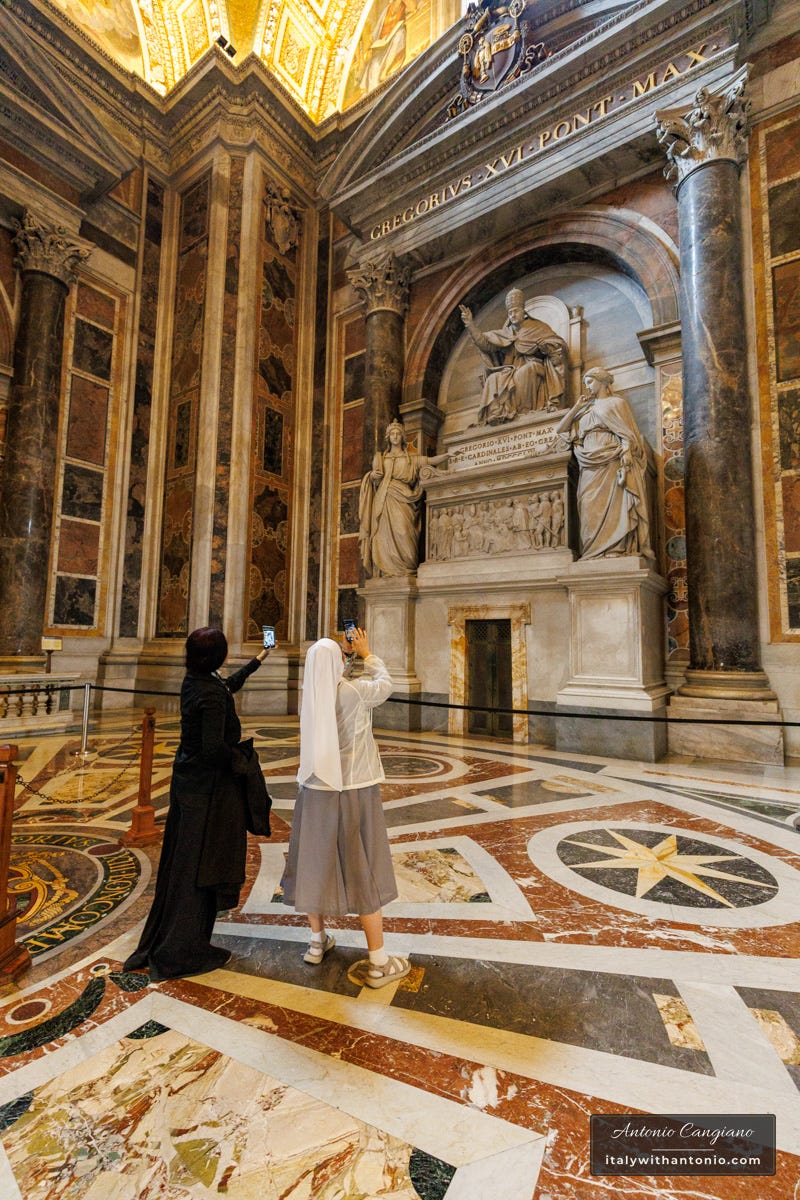
Churches will not fine you, but they can refuse you. You must dress modestly as these are often active places of worship. Shoulders and knees must be covered, no cleavage, no beachwear, and no bare feet.
St. Peter’s will check after security when you’ve already queued for an hour. Carry a scarf, wrap, or some kind of covering.
Things tourists think are illegal in Italy but aren’t
Driving in flip-flops or barefoot.
This has been legal since 1993, as confirmed by a Polizia di Stato circular. You can only be fined (about €42) if your footwear actually causes you to lose control of the car. There is a rumour of a €300 flip-flop fine, which doesn’t exist.
Cappuccino after 11 am.
Not a law or even a rule. Just a social faux pas that has been blown out of proportion by social media. The barista will slightly judge you, but still serve you the cappuccino.
None of this requires a law degree, as it is simply common sense and respect for the areas you are visiting. However, in some cases (like in particular cities and towns), it requires knowing the rules exist, so it’s worth searching for them before visiting.
In closing, the fines are Italy's way of saying it isn't a theme park. As well as asking you to respect the residents and the local history. And for once, I don’t think the country is being unreasonable.
Italy, minus the filters.
New posts every Monday, Wednesday, and Friday: cultural pieces and in-depth guides for people planning a move or simply in love with Italy.
Paid subscribers get every post; free subscribers get a large selection.
As a rule of thumb: Italy is an open air museum, not a Disney park. Be polite, do not litter, make it also pleasant for others, respect the millennia old sites and buildings - they are so amazing because others before you also respected them.
Benvenuto a Italia!
I hope the seagull feeding law doesn’t apply if (and when) they rob you in Venice. they are some aggressive birds 😅