

Pastina: The Comfort Food Italian Mothers Make When You’re Sick
Pastina is Italian penicillin: little pasta in broth that cures whatever’s wrong. Here’s what it actually means in Italy and how to make it right.

Italy with Antonio. Honest guides for moving to, traveling in, and understanding Italy from a native Italian. Three articles a week, with deeper resources for paid subscribers. Join 1,000+ subscribers.
Italians believe a gust of wind can make you sick. We call it colpo d’aria.
We also believe swimming within three hours of eating might kill you. Walking around barefoot on tiles can give you a cold. And don’t get me started on going out with wet hair (a problem for my fiancée Alicia, not for me).
Scientifically, it’s all nonsense. Culturally, it’s non-negotiable.
Here’s one belief I’m keeping anyway, science be damned: when you’re sick, pastina heals you.
Growing up, pastina was the cure for all ailments. Cold? Pastina. Flu? Pastina. Upset stomach? Pastina. Pulmonary embolism? Pasti… well, no, pronto soccorso (ER) for that.
But pastina was always there, like a prescription medicine somehow kept among other pasta shapes. Just in case.
It was your mother’s language when you felt helpless and weak. Her love contracted to one warm bowl until you felt human again.
There was no further discussion, no “cosa vuoi per cena?” You were sick. Of course, pastina was for dinner. It was what the doctor ordered.
Let me start with a clarification that trips up a lot of people: pastina isn’t one shape.
In North American kitchens, the word came to mean stelline (the tiny stars). Especially among Italian-American families.
In Italy, pastina just means “little pasta.” It’s a large category. It contains multitudes.
What Italians actually mean by pastina
Walk into any Italian grocery store, a Coop or a Conad, and you’ll find entire aisles of pasta. Shapes you’ve never seen before, in formats you didn’t know existed. Tucked among them is a whole shelf of pasta cut into tiny pieces. That’s the pastina section.
Stelline (little stars), risoni (which look like fat grains of rice), anellini (little rings), acini di pepe (peppercorns), ditalini (little thimbles), semini (little seeds), filini (thin threads, basically broken-up spaghettini), and more.
Every major brand stocks several formats: Barilla, De Cecco, Divella, La Molisana, Rummo, and Granoro.
There’s no strict cutoff. If it’s tiny, it’s pastina. If you tear a sheet of fresh pasta into rough fragments and toss them in broth, that’s pastina, too.
Italians have a name for the homemade version, grattini, from grattugiare, to grate. It’s one of the oldest types of pastina there is, predating the commercial versions by centuries.
So when an Italian mother makes pastina for a sick kid, the shape depends on what’s in the cupboard and personal preference. The love with which she makes it is the only irreplaceable constant.
My aunt swore by stelline. My mom, accommodating my preferences, favored risoni. Some friends grew up with anellini. There isn’t a correct answer, no matter what your nonna said.
If you grew up in central Italy, your default was probably stars. Italian-American kitchens in New Jersey opted for the same shape, which is why Ronzoni’s stelline (i.e., Pastina Nº 155) became iconic over there.
Italian regional cuisine differs more for big dishes than for sick-day pastina. Brodo and stelline are roughly the same in Marche as they are in Rome or Brooklyn.
Risoni vs orzo: same shape, different word
In North America, the rice-shaped pasta is sold as orzo. In Italy, orzo mostly means barley, the grain.
Order an “orzo” at a Roman bar, and you might get caffè d’orzo, the barley-based coffee substitute that became popular when real coffee was scarce after WWII. (It’s delicious by the way.)
The pasta is risoni, which means “big rice.”
Knowing which is which matters if you ever cook from an Italian cookbook. Orzo on that ingredient list most likely means barley, and not the pastina shape.
The traditional sick-day recipe (Italian penicillin)
Pastina in brodo is the original cure-all. Italian-Americans called it “Italian penicillin,” and the joke captures the reverence sick Italians have for the dish.
It might not cure a virus, but a hot bowl of pastina when you’re shivering does more than any commercial cold remedy.
The recipe doesn’t need creativity.
A good chicken or vegetable broth, salted properly. A handful of pastina (any small shape) boiled in the broth for 4 to 8 minutes, depending on the type. A grating of Parmigiano Reggiano on top.
If you want to get fancy, add a beaten egg stirred in at the end. It’s called pastina all’uovo, and it adds protein while turning the broth silky.
That’s it. An easy remedy you can make even if you’re sick, though nothing beats having your mamma make it for you.
The pasta is small enough to swallow without chewing. The broth keeps you hydrated and your throat warm. The salt replaces the electrolytes you sweated off.
One trick worth stealing from any Italian grandmother is dropping a Parmesan rind into the broth while the pastina cooks. It melts slowly, releases umami into the liquid, and turns a basic stock into something that tastes like it took an afternoon. Save the rinds in your freezer. They’re free added flavor.
In Italy, this is also literally how kids first meet pasta. The baby food brand Plasmon, founded in 1902, makes a whole line of pastine designed for svezzamento (weaning). Boxes labeled Sabbiolina (little sand), Bebiriso (rice-based), Anellini, all formulated for tiny mouths starting at six months.
Amusingly, for many Italians, their first bite of solid food isn’t cereal or mush. It’s pastina.
How I actually eat it
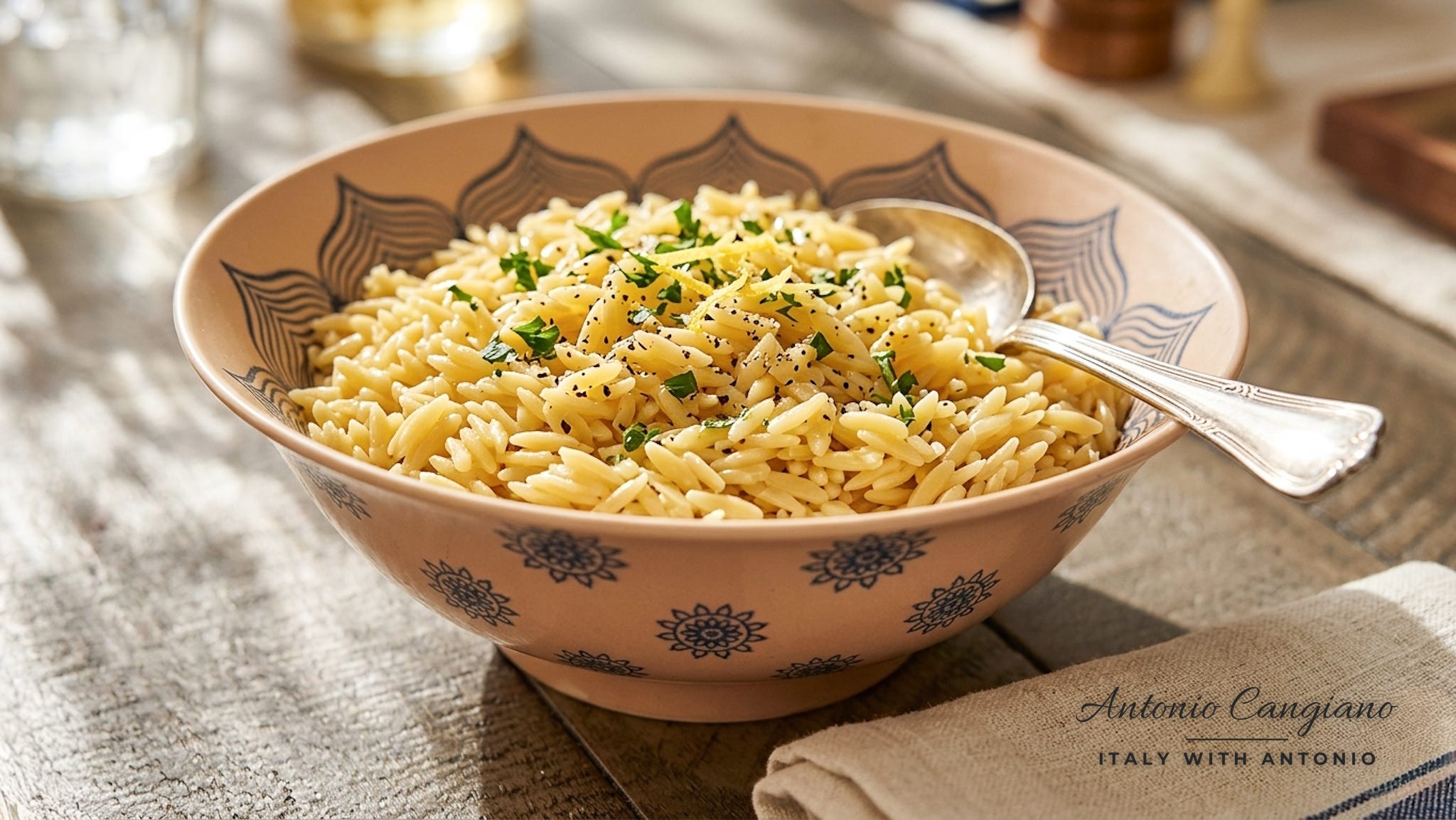
Tradition is a starting point, not a cage. Which brings me to my version.
When I’m not sick, I cook the pastina in salted water, drain it but keep a couple of spoonfuls of cooking liquid, and then add butter and Parmigiano. The result is barely wet.
Alicia thinks it defeats the purpose of having soup, but plenty of Italians eat it this way, too. Drained pastina with butter and cheese is the unsexy weeknight version that a lot of nonne actually serve when nobody’s running a fever.
A separate technique worth knowing is pastina risottata, where you cook the pastina directly in a smaller amount of broth, stirring like risotto, and finish with butter, cheese, and pepper. Same dryness as my drained version, different path to get there.
The brodo version is what I grew up with and what tradition says you eat when you’re sick. The drained version is what I crave when I’m fine and just want comfort. Both are real.
Italian food culture is much weirder and more personal than the foreign idea of it.
Where to buy pastina (and the Ronzoni saga)
In North America, the supply is thinner than it should be. In January 2023, Ronzoni announced it was discontinuing its iconic pastina.
The internet briefly lost its mind. Italian-Americans were grieving on Facebook. Boxes were going for twenty times their original price on eBay.
Two years later, they brought it back. Ronzoni pastina is on the shelves again, with the company confirming it’s a permanent return rather than a limited run.
Plenty of other brands never went anywhere. Barilla pastina is widely stocked, including on Amazon. De Cecco’s Acini di Pepe, though not labeled “pastina,” is another commonly available option. San Giorgio, Granoro, and La Molisana all make solid versions, too.
If you have access to an Italian deli, go there. The selection is wider and the staff will know which shape goes with what.
Italians believe a lot of things that aren’t true. This isn’t one of them. The chicken noodle soup version of this story exists in a hundred cultures. The Italian one happens to come with smaller pasta and stronger opinions about wind.
Italy, minus the filters.
New posts every Monday, Wednesday, and Friday: cultural pieces and in-depth guides for people planning a move.
Paid subscribers get every post; free subscribers get a large selection.
Oh joy! A fellow risoni lover!
I grew up on the stars in chicken broth for colds, or acini de pepe —which we considered the real pastina in Queens—as lunch on a rainy day “to take the chill out.” Exactly.
The echoes of “don’t go out with wet hair!” and “don’t swim on a full stomach!” Had me rolling 😂
Yes, orzo is indeed my dream noodle name here in New York. I do the dry version in a lightly sautéed garlic in olive oil and butter stirring in a watered down tomato sauce which keeps it creamy and zesty at the same time, adding fresh chopped oregano and shaved Locatelli at the end. It’s exactly like risotto with noodles and no one where I now live has ever had it before.
For me, the magic of pastina continues as an adult as the comfort food bringing people together around a fire on a cold mountain evening.
This essay is such a gift, deciphering what I could not figure out as a child—regarding the debate over stars or little pepper corn shapes as the ‘it’ noodle depending upon which borough of New York the particular aunt had grown up in. My large Italian family was separated during the Depression when a parent died. As a result part of the family calls it sauce and the other, gravy, depending which relative they went to live with. The same for whether the eggplant is floured or breaded. I’m a proud descendant of ‘sauce’ and ‘floured’, still making my grandmother’s recipes today.
The stars definitely won for babies in any family, however. And at least now I don’t feel like such a butcher breaking up extra lasagna noodles into my pasta e fagioli! You have freed me!
I love this article! It brought me right back to my youth. I felt like I was wrapped in a warm hug
I also just generally enjoy your page. As an Italian American it helps me remember the traditions from my youth.