

Hidden Gems of Italy: A Rustic Restaurant the Michelin Guide Missed
In the hills above Civitanova Marche, a rustic restaurant called Mangia provided a dining experience as good as half the Michelin-starred restaurants I’ve tried. For a third the price.

Italy with Antonio. Honest guides for moving to, traveling in, and understanding Italy from a native Italian. Three articles a week, with deeper resources for paid members. Join 1,000+ subscribers.
We took a FlixBus from Rome to Civitanova Marche. My high-school best friend Fabio was waiting at the bus stop by the shopping center. Our car rental, the only one we could book on a Saturday, wasn’t ready until 3 PM.
Two hungry people, one patient Italian, and two hours to kill. If you know how Italians treat meals, you already see the lunch-shaped solution.
We started calling our favorite restaurants in Civitanova. Fully booked, every one of them. In late May, the first tourists are already back, and every well-reviewed table on Google was gone.
Even in a region most foreigners can’t place on a map, in Italy, it is wise to make reservations.
Running out of options, we did what any reasonable local would do. We drove out into the hills, ten minutes inland, searching for a rustic restaurant off the beaten path.
That place was Mangia. I've thought about that meal several times since, and I still struggle to identify what a Michelin-starred restaurant could have done better.
Meet Mangia
The name means “Eat!” After a half-day of travel on an empty stomach, we didn’t need to be told twice.
The restaurant sits on a hillside by Civitanova Marche Alta, the old town. Civitanova Marche itself, the one with fully booked restaurants, sits by the sea.
As you drive up to Mangia, you’ll see a villa that doesn’t even look like a restaurant from the outside. The back has ample space for parking.
We entered from the beautiful garden full of fruit trees. The owner, Antonella, warmly welcomed us herself, dispelling the suspicion that we had accidentally wandered into a neighbor's villa.
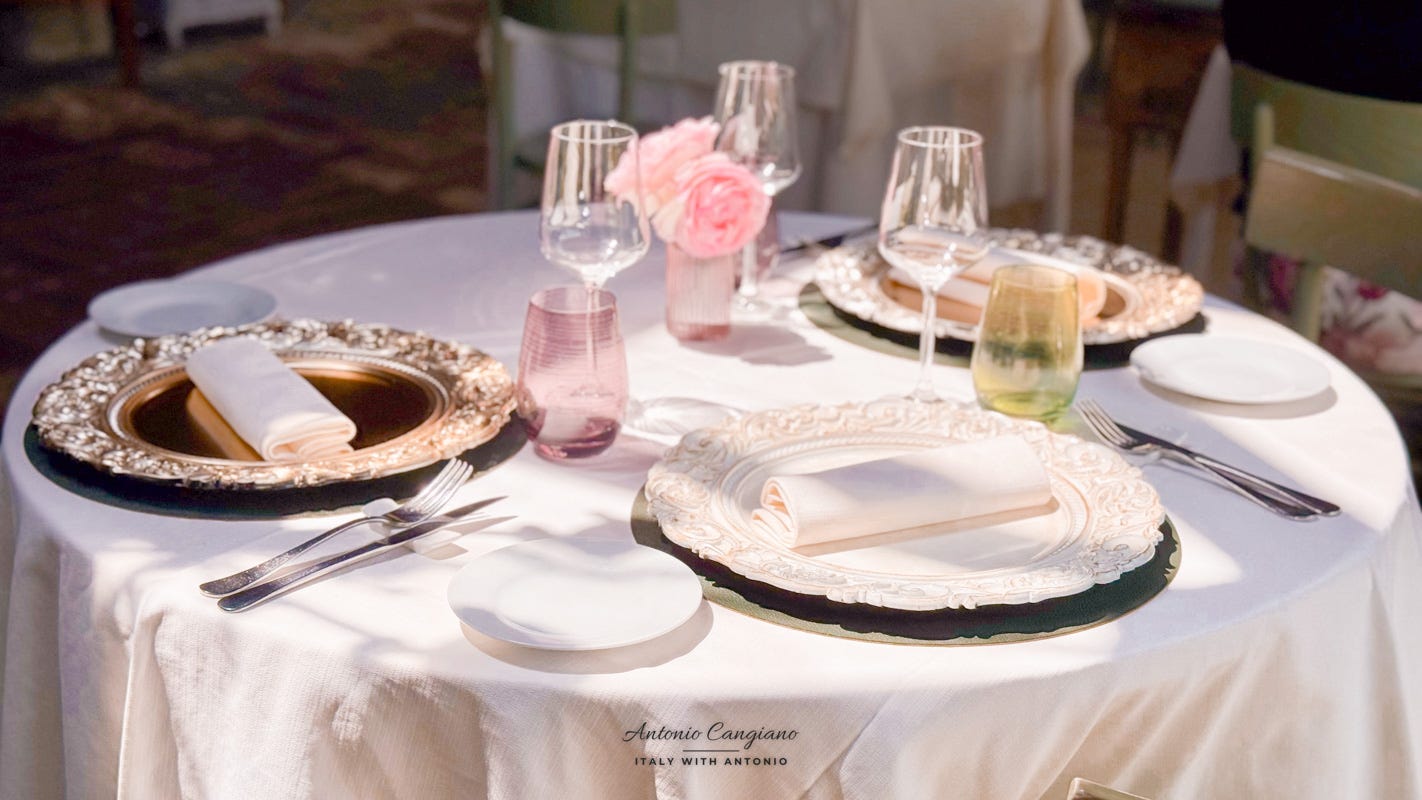
It’s a rustic setting, but in a refined way. The kind of countryside venue you’d book for a fancy wedding. Think stone walls with beautiful decor, among a green garden. A real slice of Marche’s quiet and relaxation.
Rustic, yes. But someone put real thought and money into making it look elegant. That someone is Paolo (the Chef) and Antonella (his wife, who by the way, speaks some English).
A reassuring menu
You can usually get a sense for the restaurant you’re in before food is even served. Mangia sent all the right signals from the beginning.
They brought us menus, took our drink orders, and brought us bread. Service wasn’t just polite. It was warm. As if the owner invited you to their villa and was genuinely happy that you were dining there.
The bread, typically an afterthought, set the tone for the kind of dining experience we would have.
It wasn’t your typical sliced-up loaf. There were multiple kinds of bread. They even brought us onion-flavored handmade grissini (thin breadsticks), which melted in your mouth. The spread was so impressive that I jokingly said, “That’s our meal right there.”
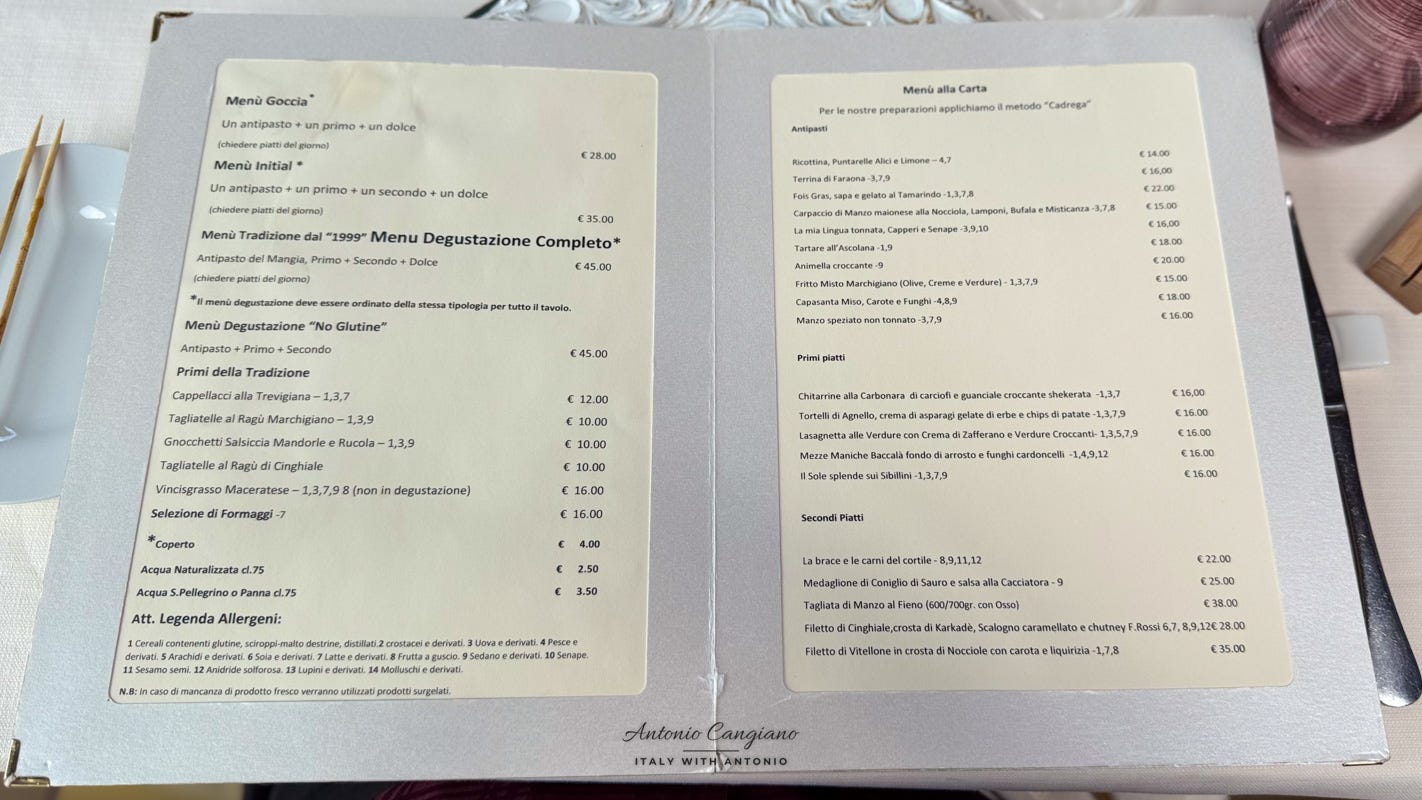
The menu itself was a tell. Two pages. A handful of primi (first courses) and secondi (second courses), not fifty. Reasonable, though not low prices. A set tasting menu (menù degustazione): appetizer, primo, secondo, and dessert, for 45 euros. Both pages strictly in Italian.
This is the kind of restaurant you want: located off the beaten path, short menu in Italian only, no pictures of the dishes, serving local seasonal food. The opposite of a tourist trap.
Authentic delicious food
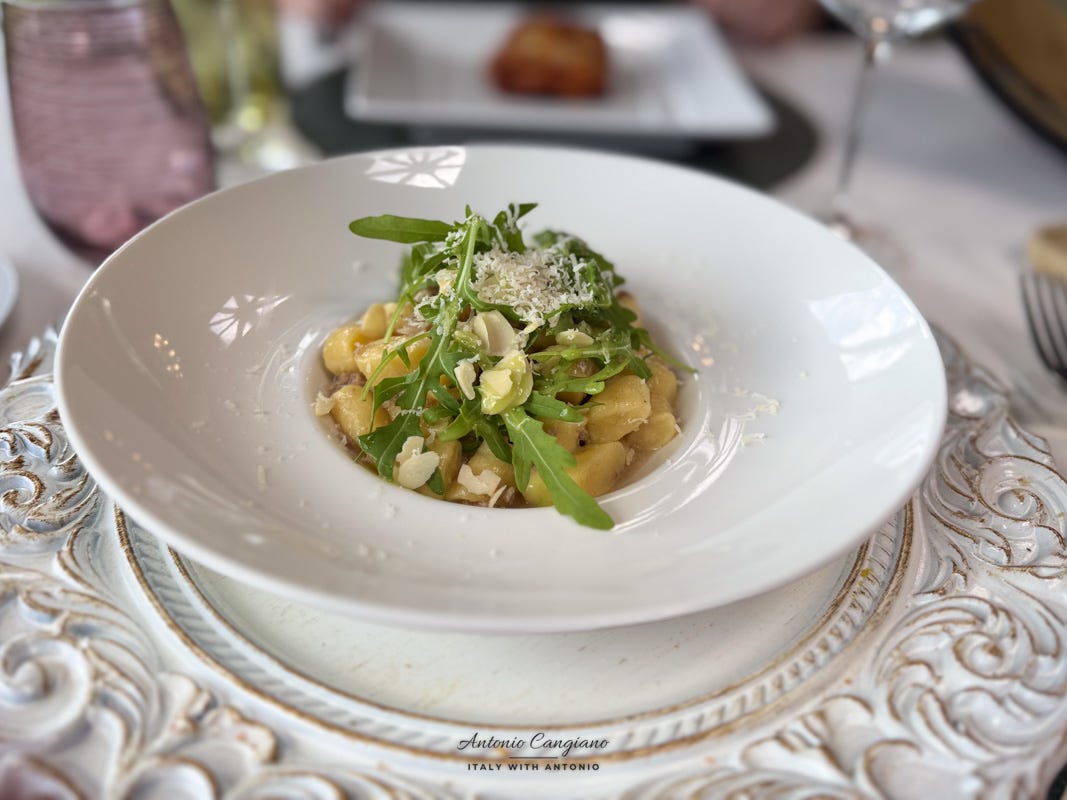
I ordered the gnocchetti with sausage, almonds, and rucola (arugula). Fabio went for the grill.
Alicia ordered her first vincisgrassi, Marche’s signature lasagna-like dish, made with a ragù of pork, veal, and chicken giblets rather than the ground beef common in standard lasagna. The kitchen warned her about the organ meat, which can be an acquired taste.
She tried it anyway, but didn’t like the texture of the giblets. Nevertheless, she loved the rest of the dish and finished it without complaints.
Try it at Mangia or elsewhere, when you’re in the region, but do try it. It’s a genuinely old dish, originating in Macerata (Civitanova’s province) since the 1700s. As of 2022, it carries EU protected status as a Specialità Tradizionale Garantita (Traditional Specialty Guaranteed), joining the likes of Neapolitan pizza and amatriciana.
Fabio and I both enjoyed our respective meals, which were authentic and delicious. Had we ordered the vincisgrassi, I’m confident we would have loved them too, since, unlike Alicia, we grew up eating it.
What followed was unusual. We ordered lunch for three people. The kitchen seemed determined to feed six.
The meal we mostly didn’t order
The food didn’t stop there. And here’s the thing: we didn’t order them.
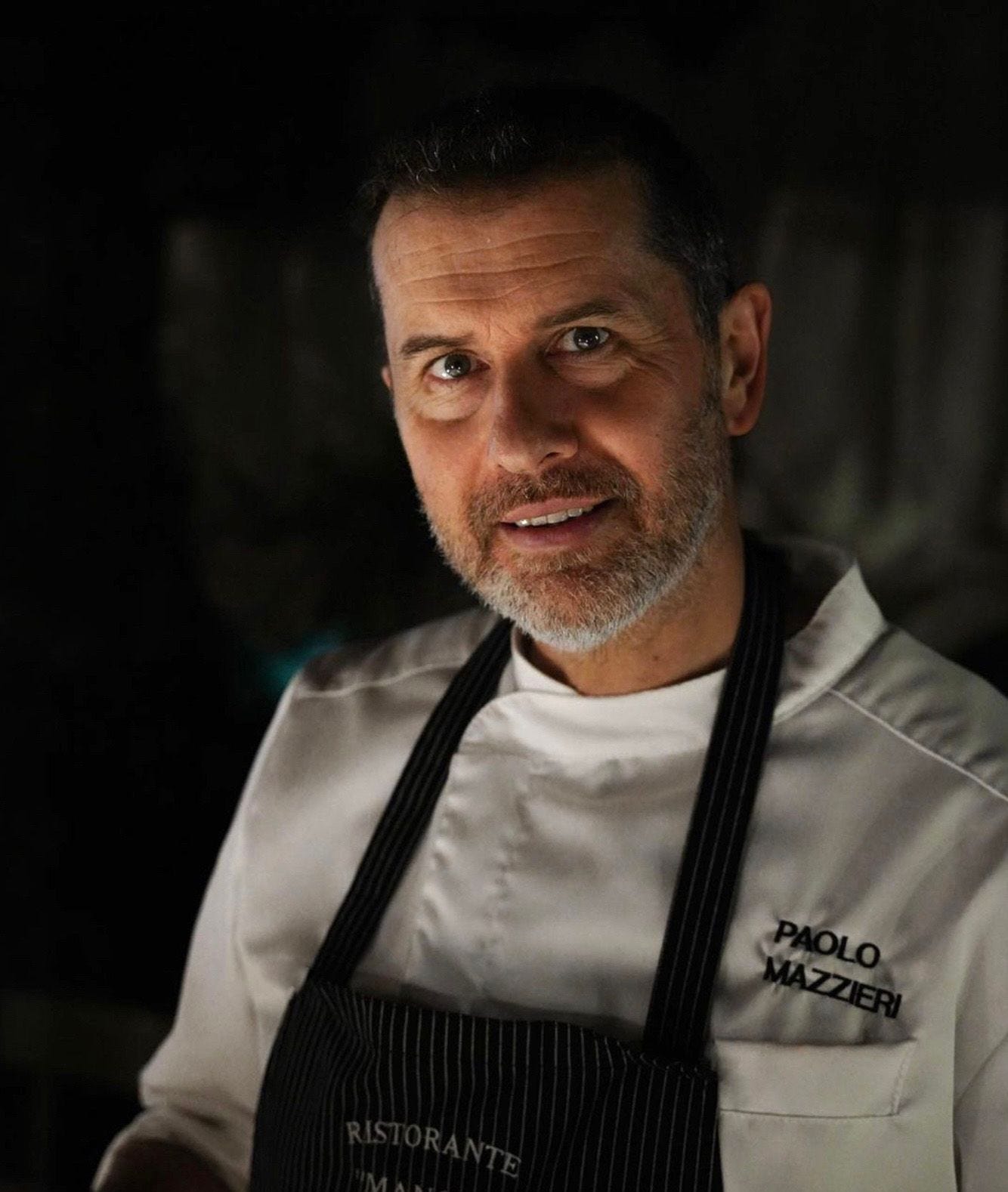
Paolo and Antonella kept showing up at the table with small morsels of food they wanted us to try, explaining each time what they prepared for us, sourcing the food from local farmers or their own land.
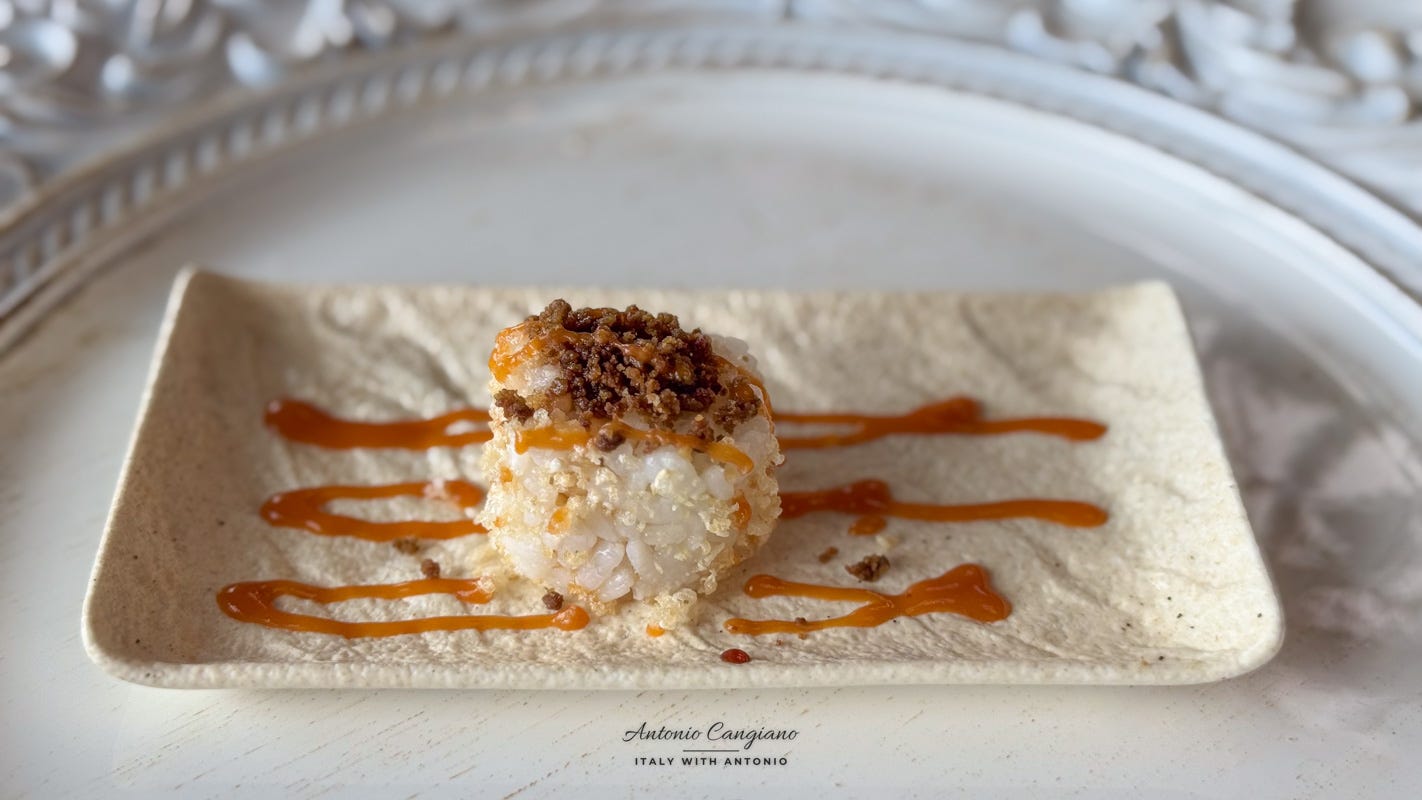
Olive oil, smoked over carbon, made in-house. A sushi roll built around ciauscolo, the soft, spreadable salame the Marche is known for. (Alicia and I were big fans.) Fried veggies. Grilled wild boar sausages in a marinade with unmistakable Asian notes. Chocolates filled with a mousse of berries from their own garden.
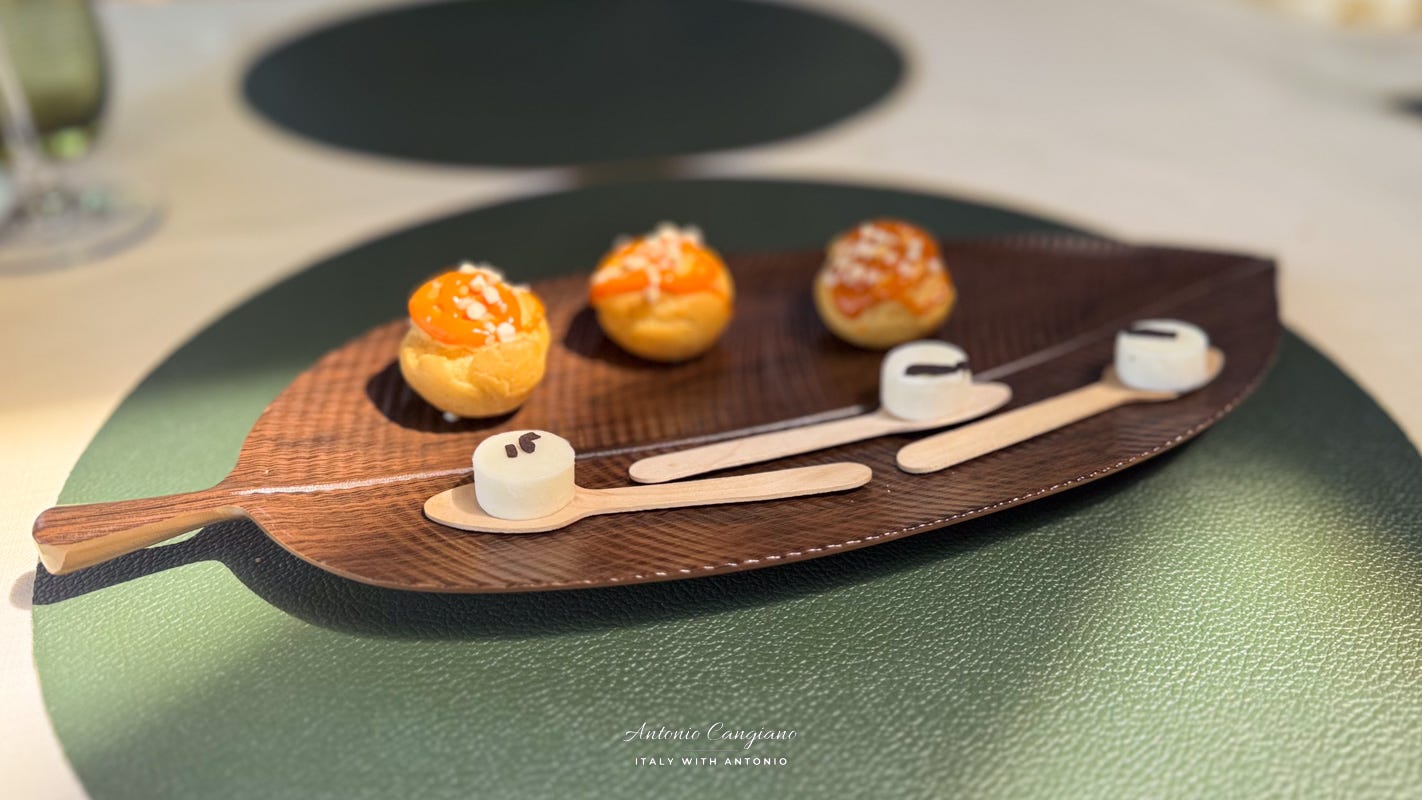

It felt like half of what we ate at that meal was never billed. All of it was researched and had a unique twist on something traditional. All delicious.
For the record, at the time, nobody there knew I wrote about Italy, and Fabio had no history with the place. This was just how they treat a table of three random people walking in on a Saturday.
Michelin-like on a budget
The entire dining experience was superb and reminiscent of one-star Michelin restaurants I’ve dined at before.
So, did the Michelin guide try the place and pass it? I don’t know. Michelin’s presence in Marche is relatively limited compared with regions such as Lombardy, and most of the region’s starred restaurants are concentrated in the center-north of the region, along its coastline.
Inland, up in these hills, the Michelin inspector’s presence is anyone’s guess. So it’s not that Mangia is hidden from the locals in Civitanova. Fabio mentioned a friend having a baptism party there once. A few locals were chatting in dialect within earshot of us. It’s just hidden from English-speaking visitors and tourists. Whether it’s hidden from Michelin, too, I can’t say. What I can say is it has no star, and over a long lunch, I never once felt the absence of one.
I’ve eaten at quite a few starred restaurants. The kind of places where the meal is the first event and the bill is the second one. The authentic, local, and tasty food was the only event here.
Mangia might not have a Michelin star, but it’s a hidden gem worth visiting for authentic Marchigiano food. The drive into the hills is the price of admission, and a small one at that.
Getting there
Where: Mangia, Via Pitignano 50, Civitanova Marche Alta (MC). About ten minutes inland from seaside Civitanova Marche.
What to order: The menù degustazione (appetizer, primo, secondo, dessert) at 45 euros is the right choice if hungry. The vincisgrassi, if you have never had it, is worth trying.
Reservations: Book the table. Don’t chance it on the day of. Even off-season.
Parking: Ample space behind the villa.
Contact: +39 0733 890053
Italy, minus the filters.
New posts every Monday, Wednesday, and Friday: cultural pieces and in-depth guides for people planning a move or simply in love with Italy.
Paid subscribers get every post; free subscribers get a large selection.
Love the sound of this one and as Le Marche is my neighbouring region, its not too far! If you are ever in my region of Abruzzo, may I recommend Taverna 58 in the old town of Pescara
Well that sounds worth the time and map reading to experience! Since I'll be in Italy in October I guess the tourist trade will have settled. The only problem is that my Italian is still in the no-man's-land stage so it will be a challenging time but I'm sure well worth it!
Thanks for the recommendation!