


A Substack bestseller, Italy with Antonio offers honest guides for moving to, traveling in, and understanding Italy from a native Italian. A paid article every Monday and a free one every Thursday, with deeper resources for paid members, including print-ready PDF and ePub downloads. Join over 2,000 subscribers!
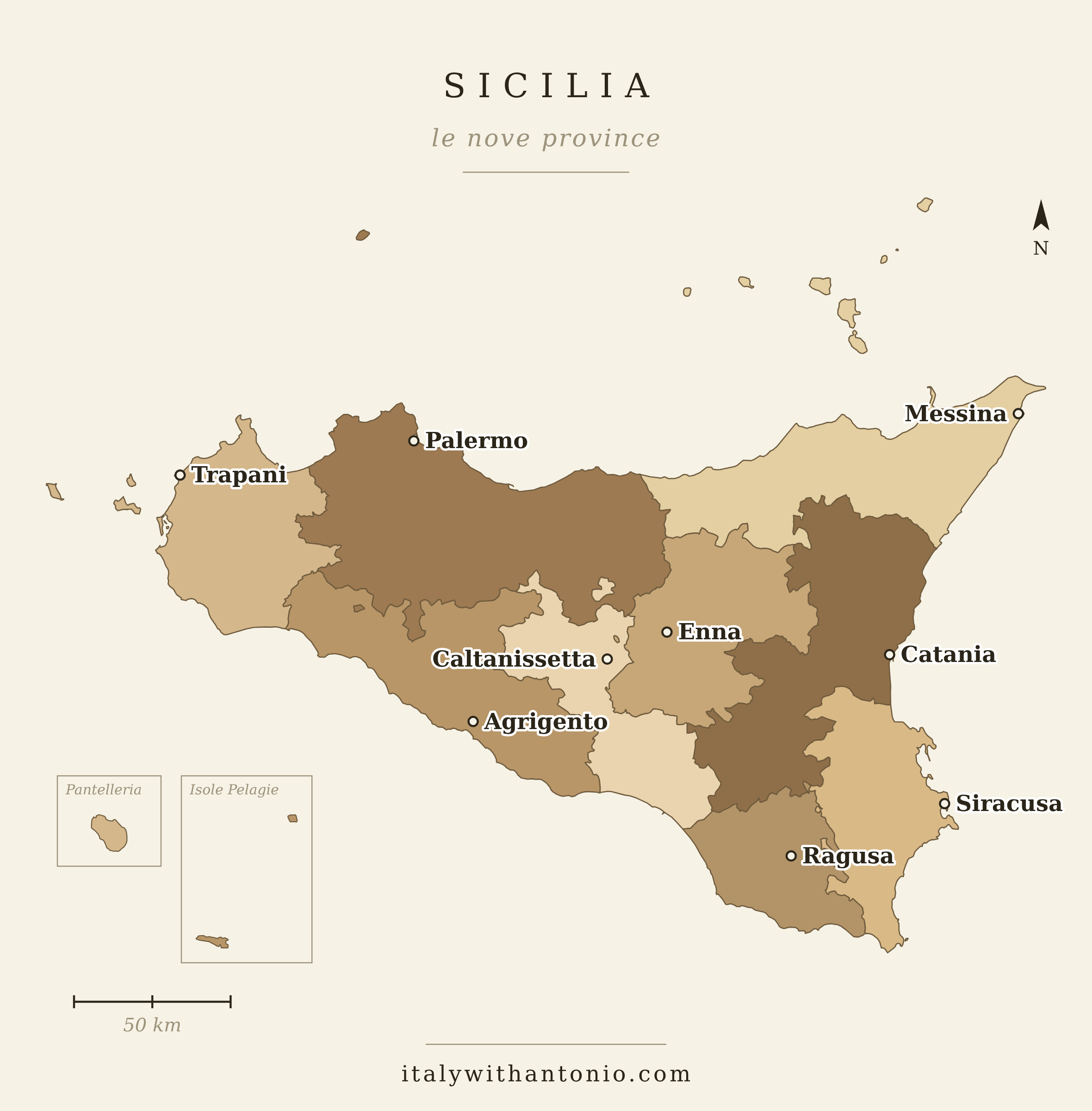
I ran Sicily through a series of livability criteria, as I do with each region, and all nine of its provincial capitals fail. Palermo, Catania, Messina and Siracusa are too big. Ragusa sits in the most dangerous seismic zone (so does Messina, but it’s already out due to its size). Trapani, Agrigento, Caltanissetta and Enna are emptying.
The desire to live in Sicily is easy to understand. Amazing food, great weather, art and culture, friendly people, and half the Italian-American readers here likely have roots on the island. But you need to be strategic if you plan to move there.
The good news is that despite the nine capitals all failing the framework, a whopping 28 towns passed, giving you plenty of choice around said capitals.
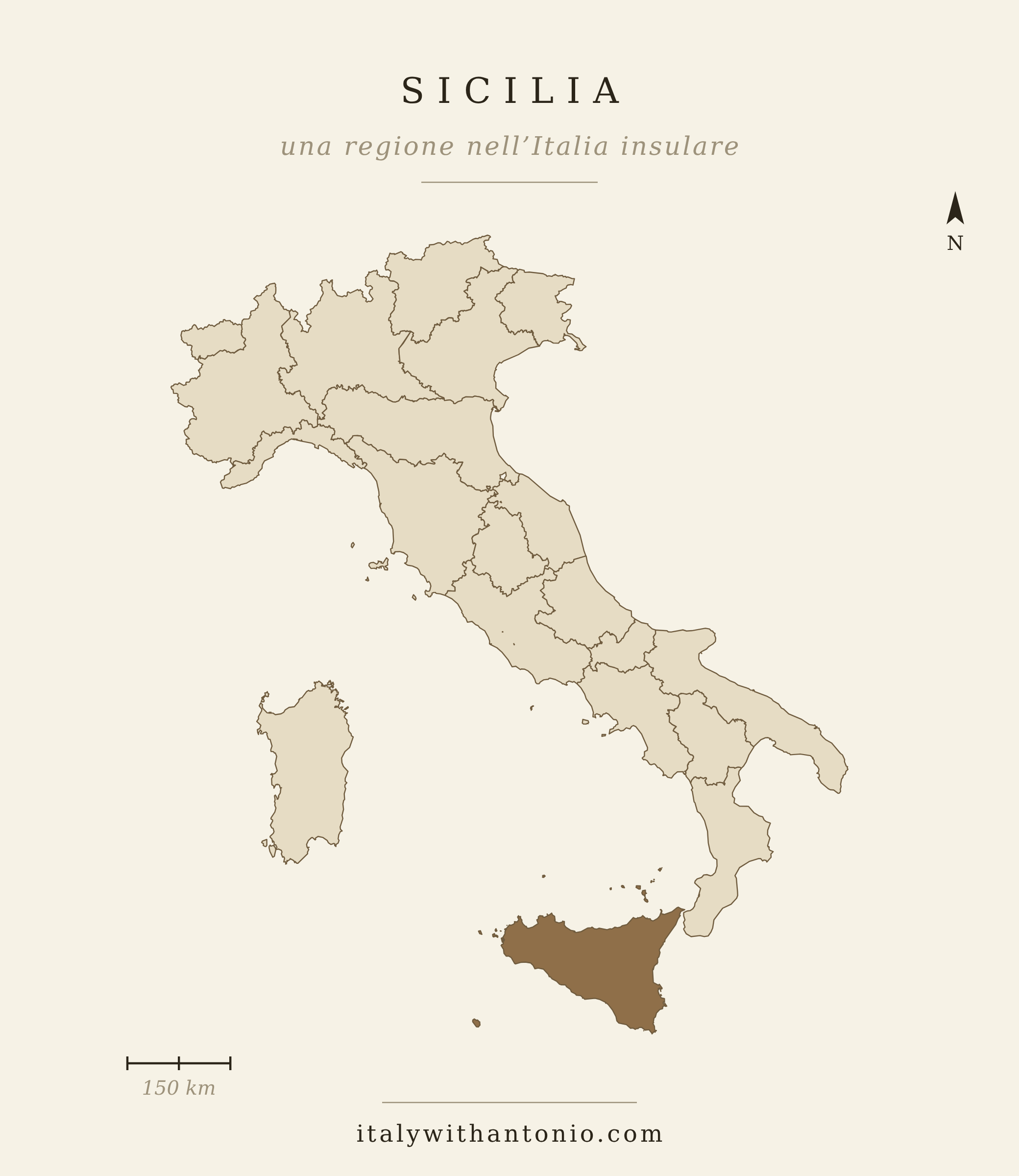
If you’re new to the series, here’s how the framework works: towns of 15,000 to 100,000 people (not too small, not too big), outside the worst seismic zone, with a full ER within 25 minutes, a high school, a real supermarket, fiber, and a population that isn’t draining away too fast.
What is living in Sicily actually like?
Sicily had 4,775,194 residents at the end of 2025. Ten years earlier, it had 229,206 more. That’s more people than live in Messina today.
Only 60 of Sicily’s comuni grew over that decade, and Ragusa is the only one of the nine provinces that did.
Sicily scrapped its provinces in 2015 and replaced them with six liberi consorzi (free municipal consortia) and three metropolitan cities, on the same borders. Commissioners ran them for a decade, until the first indirect elections in April 2025.
For a foreign newcomer, it changes little: each old capital still has a Questura (the police headquarters where you renew a residence permit).
Much like in Puglia, jobs are the weak point. Unemployment was 12.2% in 2025, against 6.1% nationally, and fewer than half of working-age Sicilians have a job. If you’re bringing a pension or a remote salary, this barely matters to you. If you need a Sicilian employer, it’s a big problem.
No Sicilian province makes the top 80 of Il Sole 24 Ore’s Qualità della vita ranking. Ragusa is the island’s best, at 82nd of 107. Palermo is 97th, Caltanissetta 103rd and Siracusa 106th. Out of 107, so second from the bottom.
Organized crime is a major part of the issue: Cosa Nostra in the west, the Catania clans in the east, the Stidda around Gela and Vittoria. Councils still get dissolved for mafia infiltration. A pensioner buying a flat might never see it. A newcomer opening a business or chasing public contracts will.
English only works in small tourist pockets (e.g., Taormina, Ortigia, and Cefalù). You’ll need Italian everywhere else (older folks on the island often struggle even with that).
Property is quite cheap until you pick a place that is well known. Immobiliare.it’s September 2026 regional average is €1,185/m². Taormina asks €4,072, Favignana €3,418 and Santa Marina Salina €3,027. Of course, there are also dirt-cheap areas. Bompietro, a hill village in the province of Palermo, costs €212/m².
The 28 towns that pass run from under €500 to about €1,700. All relatively affordable, and some downright inexpensive.
Sicily is also one of the eight southern regions with the 7% flat tax for foreign pensioners.
13 of the 28 towns qualify since they have fewer than 30,000 residents, and four more miss the cap by fewer than 1,200 residents. So the sweet spot, as for other southern regions, is 15,000 to 30,000 people.
The weather is why most people fall for Sicily. The coast gets sunshine most of the year and mild winters: Palermo averages January highs of 15.1°C, and the sea stays warm enough to swim into October. And if summer on the coast gets too hot, go up: Enna, 931 meters up in the middle of the island, averages 13.7°C over the year, an hour from Catania.
The honest catch? In August, the water may be rationed, and the volcano may close the airport. The 2024 drought put about a million Sicilians on rationed supply, so buy a house with a storage tank and a pump (autoclave). And Etna’s ash kept Catania’s airport shut for days in August 2026 (Palermo is the more reliable airport if you’ll fly home often).
Earthquakes are the other thing to plan around. The 1693 quake flattened the Val di Noto, which is why Noto, Modica, Ragusa and Scicli are baroque. In 1908, the Messina earthquake killed 80,000 people (most in minutes). Essentially, the entire city was leveled.
In 2022, Sicily redrew its seismic map, and Zone 1, the highest hazard, went from 27 comuni to 53, taking in Siracusa, Ragusa, Modica, Noto and Messina. If that list reads like a Sicily itinerary, that’s the problem: my framework rules them all out.
Etna adds quakes of its own. In December 2018, a magnitude 4.9 shock damaged nine comuni on its eastern flank, Acireale among them, but INGV’s damage survey put the worst of it in hamlets along one fault, not in the town centers. Zone 2 is lower hazard, not no hazard, so ask for a building’s seismic paperwork before considering a property.
Applying the filter to Sicily
Here’s the funnel. ISTAT counts 391 comuni in Sicily. 324 have fewer than 15,000 residents, and Palermo, Catania, Messina and Siracusa have more than 100,000. That leaves 63.
The case against moving to a tiny village does its usual heavy lifting. Sicily’s own problems do the rest.
The seismic map removes eight: Ragusa, Modica, Noto, Augusta, Lentini, Floridia, Carlentini and Scordia, all in Zone 1.
Depopulation removes 21 more. Enna has lost 10.13% of its residents in ten years, Agrigento 7.30%, Gela 7.06%. Trapani is down 7.34%, and that’s after adding back Misiliscemi, the village that split off in 2021 and would otherwise make Trapani’s drop look like 20%.
The ER filter takes three. Pachino is 35 minutes from the nearest full ER, in Avola, and Rosolini is 28. Noto’s hospital sits between them, but its ER opens only 12 hours a day, and heart attacks can come at night. Carini, on Palermo’s airport side, is 27 minutes from the nearest one.
Three Catania suburbs fall at the high-school filter: Aci Castello, Aci Sant’Antonio and Misterbianco have nothing after middle school.
Each of the 28 survivors has a full-range supermarket and fiber.
The best places to live in Sicily
1. Acireale

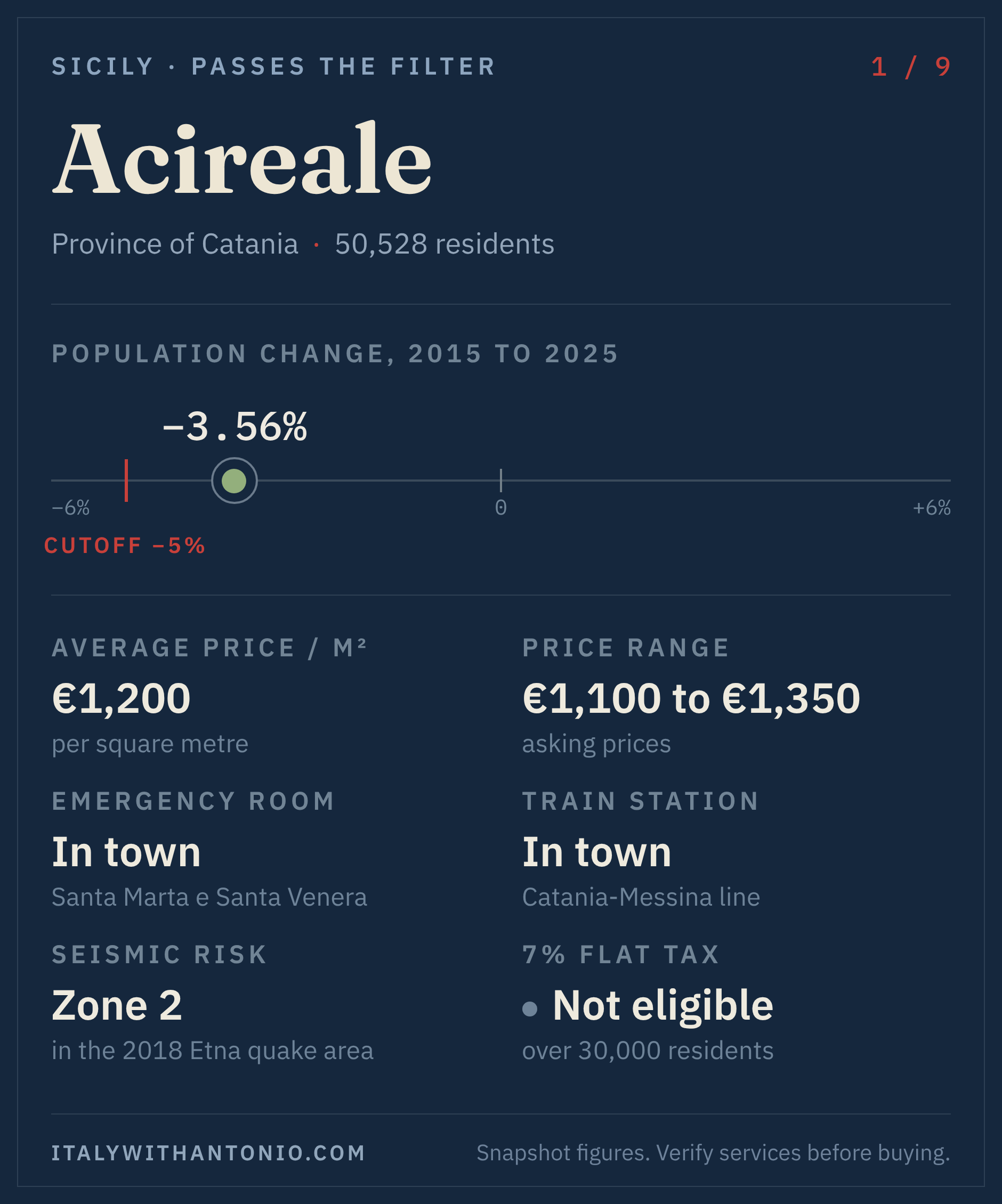
Acireale is a baroque town on lava cliffs between Etna and the sea, a short drive up the coast from Catania. Sicilians know it for its Carnival, one of the biggest on the island.
It has its own hospital ER, a station on the Catania-Messina line, and homes at around €1,200/m², less than in Catania itself (€1,334).
The downside is the 2018 quake. Its worst damage hit Acireale’s hamlets on the fault, such as Pennisi and Fiandaca, and rebuilding there isn’t finished. It’s classified as Zone 2, not Zone 1. Still, double-check the seismic measures of any house there.
It’s for anyone who wants a real town with the sea, the volcano, and a city on the doorstep. If you look at only one town in Sicily, make it this one.
