


Italy with Antonio. Honest guides for moving to, traveling in, and understanding Italy from a native Italian. Three articles a week, with deeper resources for paid members (including the print-ready PDF and ePub downloads of this article). A Substack Bestseller. Join nearly 2,000 subscribers.
“Che figata essere italiani!” How cool it is to be Italian!
I sent it to my friend Claudio on WhatsApp a while ago. It wasn’t in response to the discovery of a long-lost ancient Roman basilica in Fano. It wasn’t because of Italy’s recent athletic success in track and field, swimming, and tennis, either.
It was in response to a meme he sent me. Somebody had used AI to animate an anthropomorphic capybara to the sound of a Neapolitan guy flirting with a girl and, amid all the cheesiness and tackiness, destroying the Italian language in the process.
Layers of Italian culture, stereotypes, and localized lived experience, all captured in an untranslatable 15-second clip.
And how fortunate indeed it is to immediately and instinctively get it by virtue of being raised in Italy.
No matter where I am, I’ll always be grateful to be Italian. When I think about it, a smile forms on my face. A bittersweet one, as I left after all.
There was a time when I took Italy too much for granted. I saw the problems clearly. Problems are easy to see. It’s everything else that hides in plain sight. I was unaware of the blessing because it was ambience.
In one of my favorite songs, Both Sides, Now by Joni Mitchell, she moves from illusion to disillusionment, from enchantment to clouds just getting in the way.
She concludes that seeing something from both sides doesn’t amount to certainty.

In my case, the song gets it half right. I don’t have certainties either. But having seen Italy from both sides now, I can observe things that were actually there the whole time, invisible because ordinary, and so easy to take for granted. There is an element of nostalgia, sure, but it’s mostly calibration.
So here are fifteen things I only fully started appreciating once I left. They are not in order of importance. Rather, they’re sorted by the order they popped up in my head.
1. Healthcare. Italian healthcare actually works well. Public healthcare is “free,” if slow, and a much faster private option exists for not much money (think 100 euros for a specialist visit).
There is always a pharmacy not too far away, even at night (the so-called farmacia di turno), and the people behind the counter are actually medically qualified to dispense advice and do so with a palpable sense of care.
I was experiencing some constipation due to dehydration while visiting in May, and a pharmacist spent 30 minutes discussing my medical history and coming up with a plan.
There is a service to talk to a doctor and even receive a visit at home if necessary in the middle of the night (what we used to call Guardia Medica), so that you don’t have to wait for hours at an ER if it isn’t necessary.
Far fewer people are without a GP, though Italy has its own worsening shortage. In parts of Canada, the waitlists run into years. And doctors still do house calls. Perhaps less so than in the past, especially in larger cities. But for large swaths of the country, the old-fashioned house call while you’re sick is still an option.
My late father had a nurse coming to his house to take care of him during his cancer treatments. For free. One time, she came during a storm.
Italian healthcare is not perfect, and there is a north-south gap, but overall it’s much better than in many other countries, including Canada.
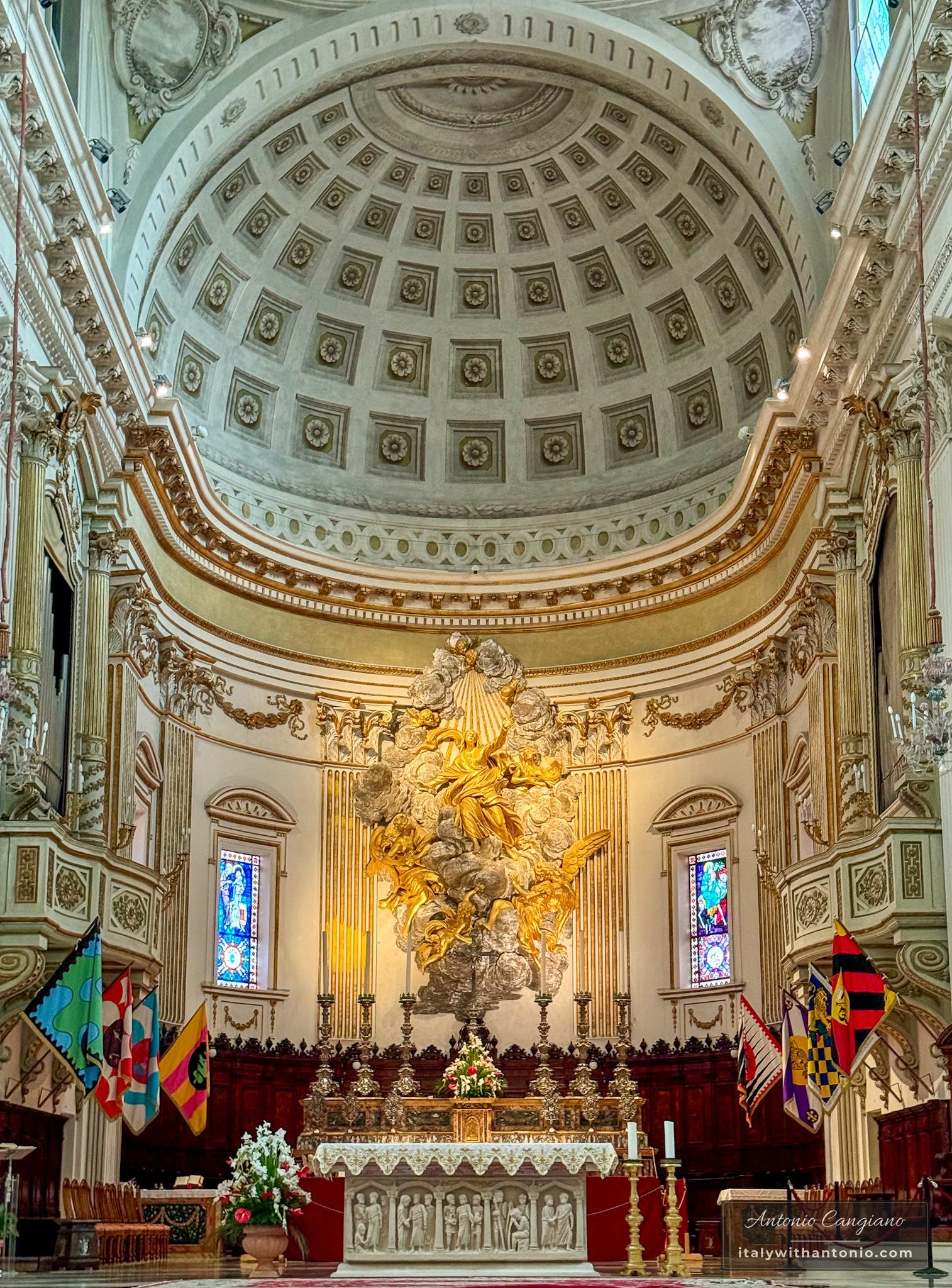
2. Art and history everywhere. Italy is chock full of art and history. It’s everywhere. It’s the wallpaper. The background you get so used to seeing that it becomes invisible.
Of course the building you walk past on your way to work was built in 1408. Of course a town of 35,000 people has a magnificent cathedral with important medieval and neoclassical frescoes.
On the whole, Italy is an open-air museum, and you can spend your entire life trying to see all of its art and history. All of its 61 UNESCO World Heritage Sites (more than any other country in the world). And you’ll fail, because 100 years is not enough for that.
3. Socialization over food. Italy really loves food. But it’s not mindless snacking around the clock in isolation. There is a culture of socializing over meals for hours. The meal is the epicenter of social connections and the resulting conversations.
Friends socialize over meals abroad as well, but in Canada at least, dinners are fairly short and often a prequel to an actual event. In Italy, more often than not, that’s the event. Slow is the keyword. Even at restaurants, you won’t be pressured to get out quickly as soon as you’re done eating, the way most North American restaurants tend to.
4. Fruit and vegetables that taste incredible. Speaking of food, it’s remarkable how much better fruit and vegetables taste in Italy, and it’s something I really miss.
The first time I tried strawberries in Canada, I noticed they had a white center instead of red. And they were almost tasteless in comparison. I immediately understood why people put whipped cream on them.
I have a sweet tooth. I readily admit it, but at some point I had to use a packet of Splenda on them because they were not sweet enough. Even tomatoes straight off the vine are sweet enough to be eaten on their own in Italy.
5. Eating out is not a gamble. Italy doesn’t have much variety when it comes to eating out. Few other cuisines are generally available outside of large cities. But the narrow range also applies to quality. It lives in a band that goes from good to exceptional.
Good food is the default mode, so eating out is not a gamble the way it is in Ireland, Canada, or the US (the other three countries I’ve lived in). In general, worst case, the food is still good.
Here in Canada, I have many more options, but the variance in quality is off the charts. You have to be very careful in reading the reviews, because the average restaurant is actually fairly bad (and you’re charged much more for it, but that’s another issue altogether).
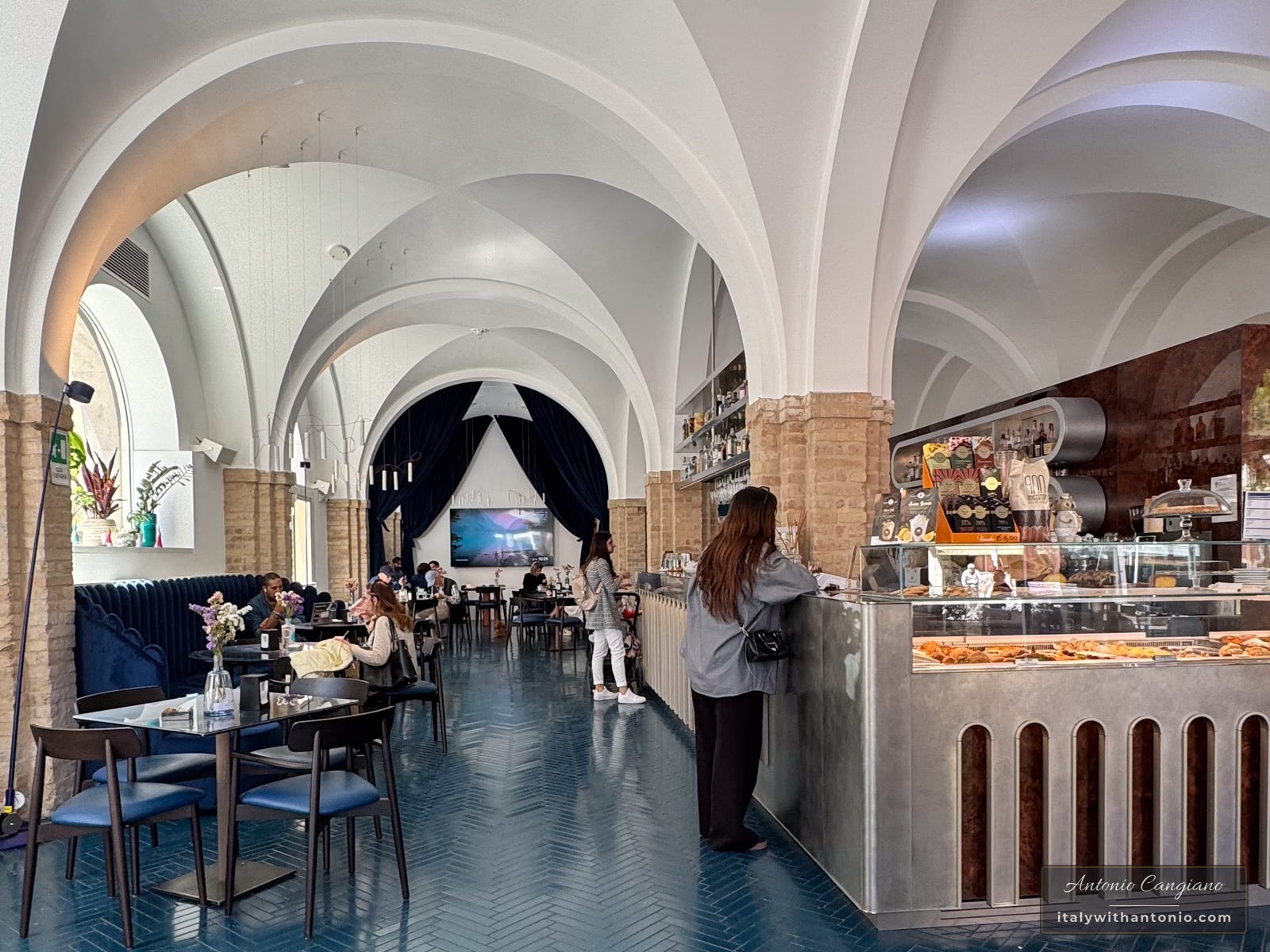
6. Coffee as infrastructure. For the most part, in North America we don’t have a coffee culture. We have a coffee-flavored dessert-in-a-cup culture. Bars (i.e., cafes) are everywhere in Italy, and I love the fact that you can walk into any of them for the same ritual, fully understood by every resident.
You approach the barista, have your espresso standing right at the counter, pay your €1.29 (OK, €1.51 in Bolzano), and a minute later you’re out. Make it a $6, 20 fl. oz. iced latte and the twice-a-day ritual no longer survives.
Even at home, coffee is a means to socialize and to see friends. Having someone over for coffee is normal and doesn’t need Outlook calendar invites. It’s a spontaneous tool in the arsenal of making and keeping friends.
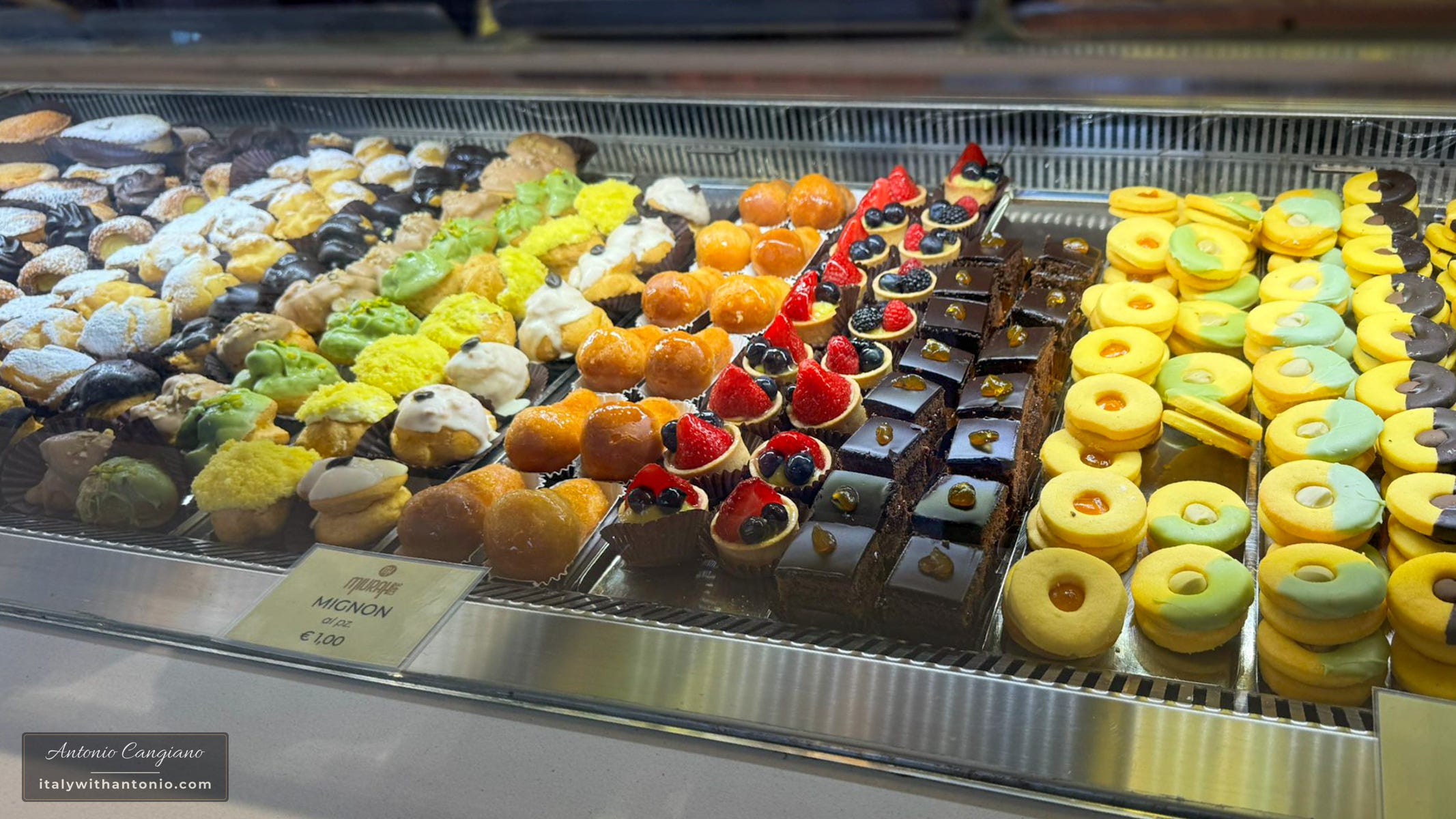
7. Pastries everywhere. Every country does pastries. Few make them as well, or make them as available at 7 a.m., as Italy does. Any bar, even an Autogrill service station on the highway, has a selection that in most of the world would take a specialty bakery to match. Pasticcini, little pastries sometimes bought by the tray as a gift when visiting someone, are something UNESCO should take a closer look at.
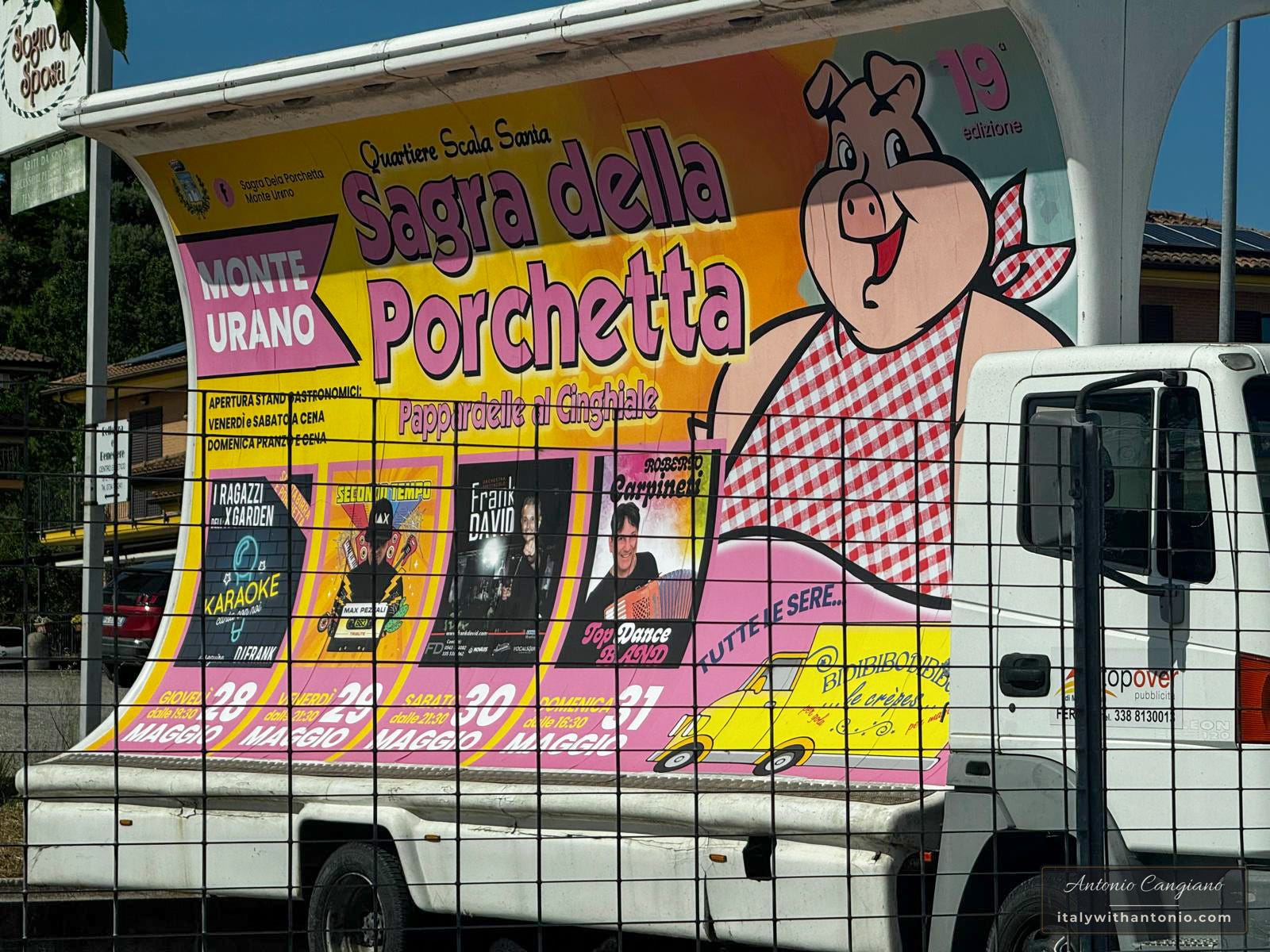
8. The sagre and feste di paese. This will be my last point about food, I promise, but I really miss Italy’s 20,000+ yearly sagre and feste di paese (town celebrations).
The whole town gets together to party with music, games, and delicious thematic food like porchetta, specific pasta shapes, and other typical dishes.
It’s an event that satisfies your need for company as much as your hunger. If you’re visiting Italy in the summer, don’t deny yourself the experience. Chances are you’ll love it.
9. Walking everywhere. Italy really does have a culture of walking wherever possible. I’ve spoken about this before in my post about Italy being inconvenient. The consequences of being sedentary and no longer walking everywhere have been devastating for my health.
Culturally, here in North America we are much more car-dependent, and in many places it’s genuinely not safe to walk. Of course, you can use a treadmill, go to the gym, or drive to the one spot where people go jogging. But it’s not the same as living in a place where walking is the default assumption.
10. The evening passeggiata. Speaking of walking, I really miss the spontaneous ritual of the evening passeggiata.
Walking in the evening and seeing familiar faces in the piazza (town square). It’s not about exercise, and it’s not about going anywhere in particular. It’s a stroll to get some fresh air, people-watch, window-shop, and feel part of the community.
I have not quite found that feeling outside of Italy.
11. Cheap, fast trains. Italian trains are cheap, fast, and for the most part reliable. It’s an amazing method of transportation to explore most of the country on a budget, and it’s essentially absent in North America.
Coach services like FlixBus and regional buses further extend that range for just a few euros. I wish it were available in Canada, as I miss seeing the landscape fly by or escaping to a nearby city when bored.
12. Cheap flights to Europe. Along the same lines, it’s amazing how accessible Europe is from Italy thanks to cheap airlines à la Ryanair. I pay more in gas to drive to Vancouver, a city in my own province, than someone living in Italy pays to fly to Copenhagen.
I wish I had visited far more European capitals while I had the chance to do it on the cheap. Nothing genuinely comparable exists in Canada. Flights within the same province are often several times the cost of a flight between Milan and London.
13. Openness to chat with strangers. Italians are friendly and chatty people (provided you speak Italian). It can come across as intrusive and too inquisitive, shocking even. Yet in Italy it’s normal, and I wish it were part of my daily experience in Canada as well. I even made friends that way. Those little spontaneous encounters generally enrich your day, and I never thought much of them growing up in Italy.
14. Dialects and micro-cultures within a country. Italy is one country, but it’s really a fusion of local micro-cultures with their own dialects and traditions. This creates a deeply rooted diversity that gives you endless opportunities to explore different peoples, languages, music, foods, and cultural practices.
15. Working to live, not living to work. La dolce vita is a myth. What is true, however, is the stereotype that Italians tend to embrace a lifestyle with a much better work-life balance. Italians genuinely work to live, not live to work. Milan excluded. There, it’s much closer to the workaholic culture we have in North America. Amusingly, I’ve acquired that workaholic ethos myself, but I wish I were much more stereotypically Italian in this respect. The slow life has many health benefits.
I realize six out of 15 are about food. In Italy, it is that important. Also, there is a small chance it’s just me being a fat ass. But then again, no; it’s definitely Italy.
Perhaps I should write the counterpart to this and tell you the things Italy gets wrong and I don’t really miss at all. Even an extraordinary place like Italy isn’t without its many flaws.
Very solid list.
I love everything you mentioned about Italy especially the ability to walk everywhere