


Italy with Antonio. Honest guides for moving to, traveling in, and understanding Italy from a native Italian. Three articles a week, with deeper resources for paid members. Join 1,500+ subscribers.
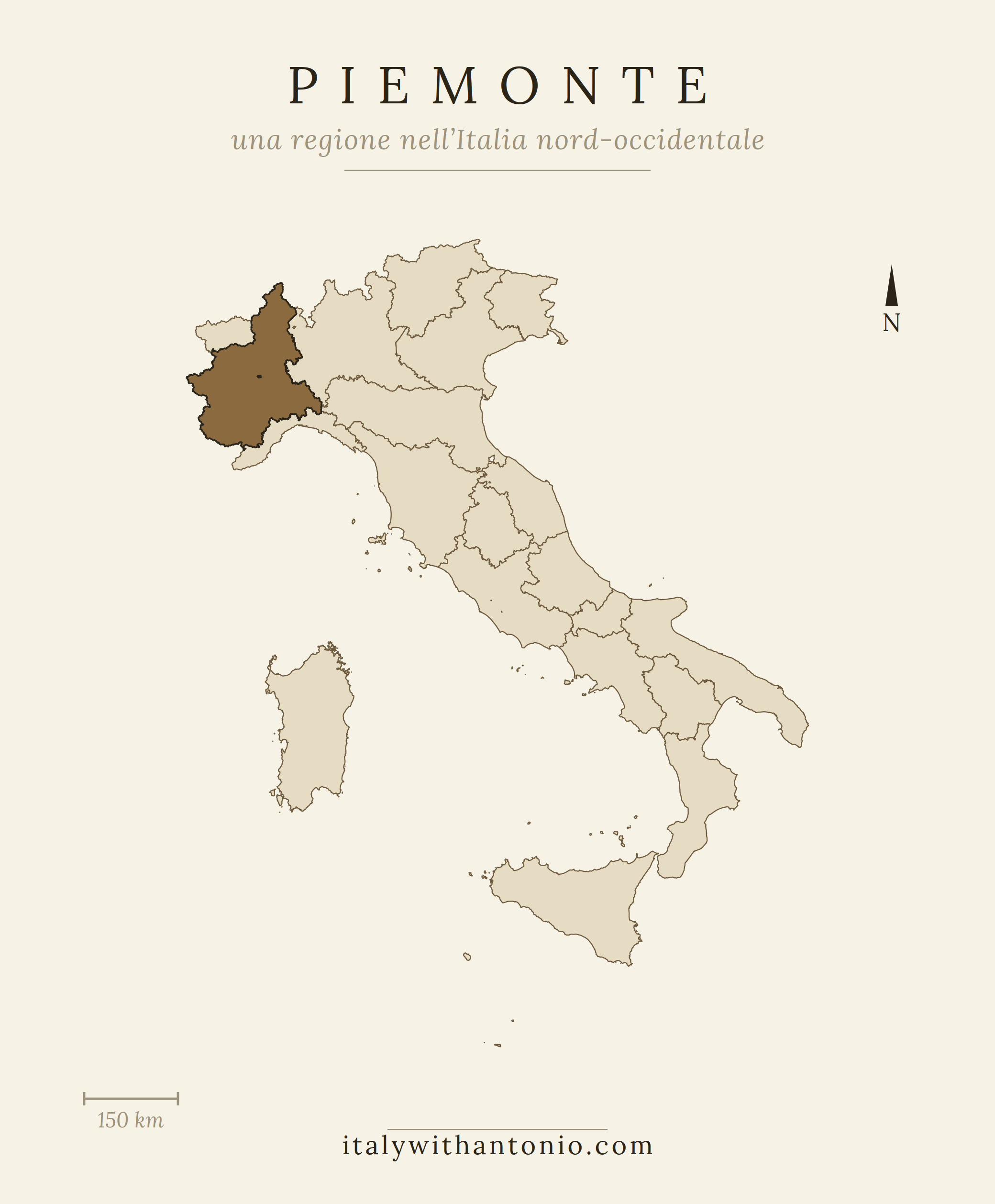
After Marche, Tuscany, Veneto, Campania, and Abruzzo, today I’m covering Piedmont.
For those unfamiliar with this series, I analyze each region looking for towns that are good candidates for relocation.
I do so by applying a framework I designed to screen out towns that would be problematic or at least suboptimal for most people.
Too big, too small, depopulating, in a seriously dangerous seismic zone, no ER nearby, and so on. We want to end up with città di provincia, cities that are livable, human-sized, and have all the key services we need.
For generous regions with many surviving candidates, we narrow it further with additional filters that affect quality of life. For regions with few comuni (municipalities), I don’t apply these additional filters and, in extreme cases, even relax the core criteria.
Piemonte (Piedmont) is very generous with its 1180 comuni. Being strict, I was able to screen it down to 20 viable towns worthy of consideration.
Torino, the first capital of unified Italy, has incredible appeal to me personally. When I think of culture and elegance, I think of Torino. But it’s an ill fit for what this series is meant to surface. It’s just too big.
The beautiful, and somewhat famous, Langhe region is mostly out as well due to the opposite end of the population filter. Its towns are often too small to qualify, outstanding wine and hills notwithstanding.
So Barolo, La Morra, Neive, Monforte, and Serralunga are all out. Two Langhe cities survive and are worth considering if wine and white truffle appeal to you.
So 20 it is, spread across almost every province, with a healthy concentration in the province of Cuneo in particular.
You likely never heard of most of them, which is where the value of this exercise lies. I’m finding places you wouldn’t have thought of yourself and ensuring they are hidden gems rather than hidden nightmares.
What Piemonte is actually like to live in
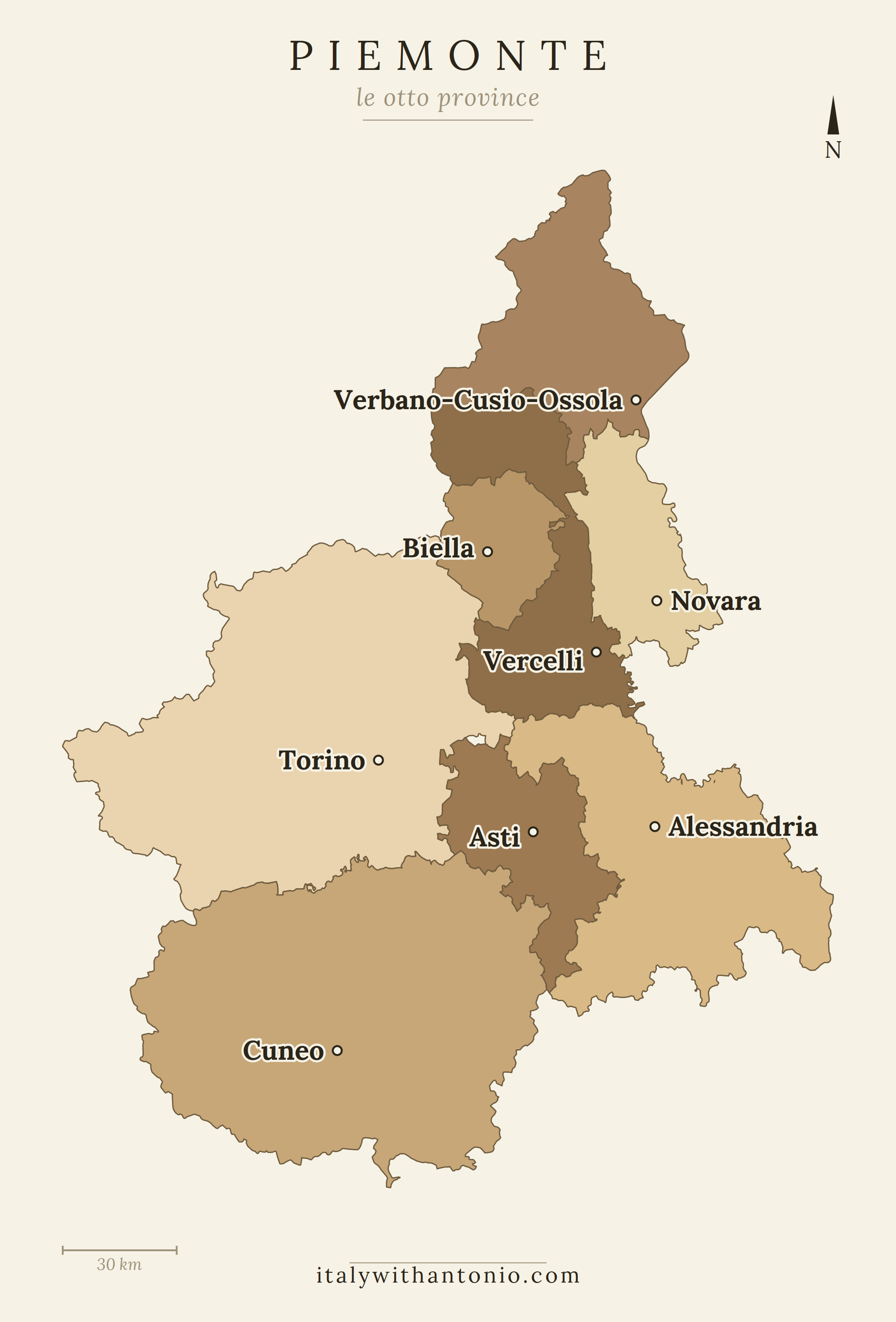
Piemonte has 4.26 million people spread across seven provinces plus the Città Metropolitana di Torino, which replaced the old province in 2015. In practice, it works like a regular province as far as a resident is concerned.
The economy
Piemonte is industrious, with its economy largely divided into three sectors.
Post-industrial Torino is the huge one. With its hinterland, it employs two million people, many of whom are still in the aerospace and auto industries.
The province of Cuneo to the south has a strong agro-industrial economy. Think fruit and wine, the Italian capital of white truffle, and where Ferrero was founded.
The east is less prosperous but still has industry, including Biella’s wool, Casale’s cement, and Valenza’s gold.
The quality of life
The Il Sole 24 Ore and ItaliaOggi 2025 quality of life indexes agree that most of Piemonte’s provinces are middling. They flip the verdict on two of them: Torino and Cuneo.
Il Sole 24 Ore places Torino at 57th out of 107 provinces. ItaliaOggi has it at 26th, in the top third. The opposite happens with Cuneo, placed 27th by Il Sole 24 Ore and only 41st by ItaliaOggi.
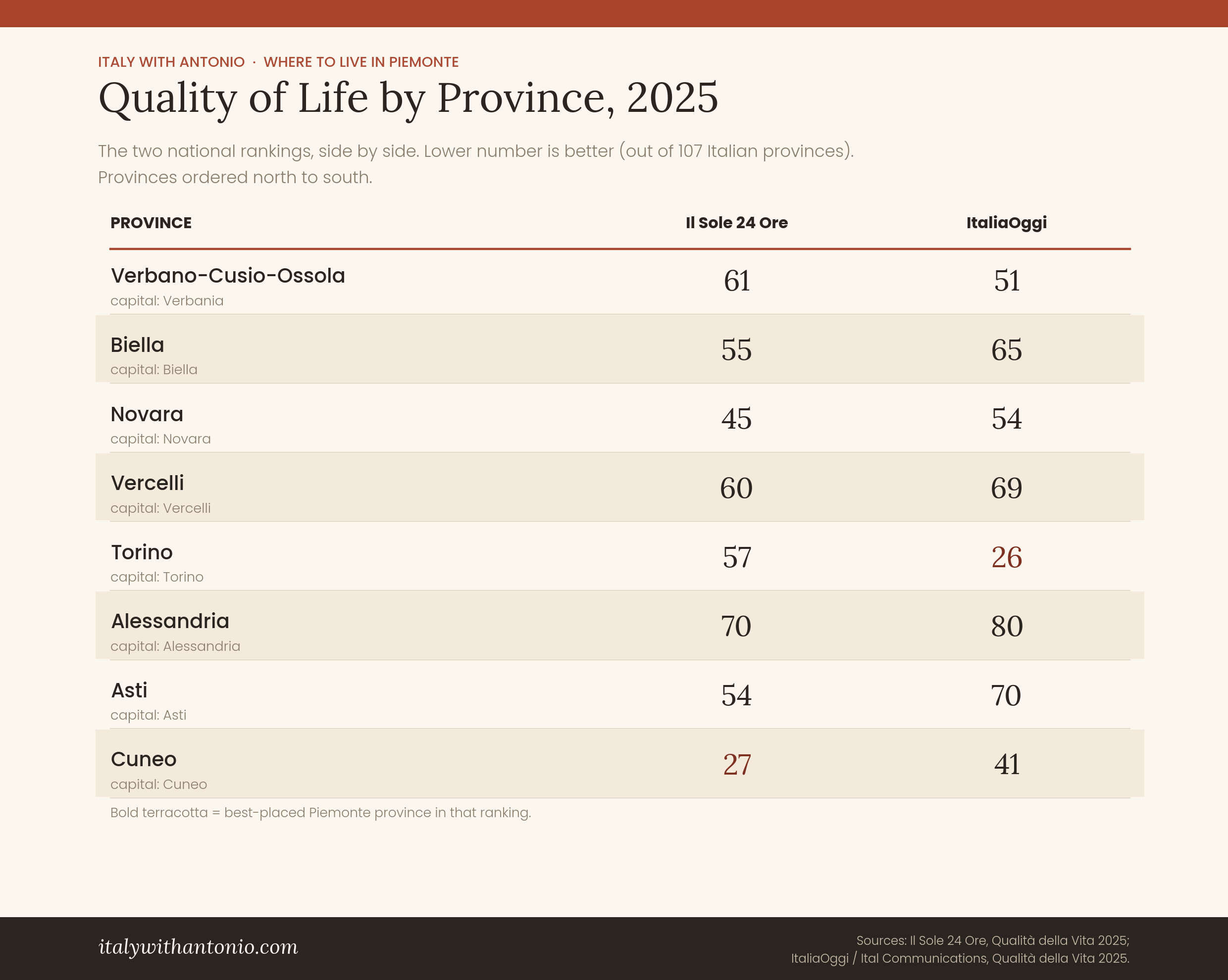
My read is simple: Torino and Cuneo are both viable cities but have different pros and cons mostly due to their sizes. Torino is the big city option. Cuneo, the quieter one.
Don’t expect to move to Piemonte and get by with English alone. Outside central Torino and the tourist areas around Lago Maggiore, you'll need Italian. (Linguetto can help.)
The air quality
Piemonte has two shortcomings: there is no sea, and the air quality can be genuinely bad. As it’s often the case in the Po Valley, the cities on the plain are affected the most.
Torino had 39 days over the PM10 daily limit in 2025. 35 is the legal allowance for exceeding days. And 2025 was a good year. Settimo Torinese, nearby, hit 48 days. Other cities on the plain, including Alessandria, Asti, and Vercelli, do generally better, and certainly did this year, but they are still not ideal for sensitive populations.
The solution is altitude and the edges. In fact, Piemonte also has fresh alpine air. Just not at sea level.
I don’t have a filter in place for air quality, due to lack of reliable data at municipality level. However, I’ll point out for you when a surviving comune has air quality concerns so that you can choose with your eyes open.
Applying the filter to Piemonte
To recap our core framework to screen towns, we have: a population between 15,000 and 100,000, no seismic Zone 1, a full pronto soccorso (ER) within a 25-minute drive, a high school, a real supermarket, fiber-optic Internet, and a population decline below 5% on the 2014-2024 ISTAT window.
With Piemonte, which has more comuni than any other region except Lombardia, the population filter does the heavy lifting for us. We quickly go from 1,180 towns down to 45.
Torino and Novara are too big, and the rest of the comuni filtered out were all too small. I explained why tiny towns are not ideal for most people before.
You’ll be happy to learn that the seismic filter is useless here. It doesn’t screen out any town. Earthquakes are not a major concern in this region.
The services filter is also not helpful here. This is the efficient north, and virtually every town that has at least 15,000 people will have supermarkets, a high school, fiber Internet, ERs within 25 minutes, and so on.
Depopulation, even for the right-sized comuni, is a concern mostly in the east of the region. Venaria Reale (-6.58%), Casale Monferrato (-6.56%), Valenza (-5.81%), Acqui Terme (-5.49%), and Ciriè (-5.14%) are all out because they are slowly but surely emptying.
We are down to 40 viable options. Far too many to recommend. So the bonus filter I’m applying is the so-called “conurbation” criterion. I treat Torino’s belt as one metropolitan orbit with no distinct identity. They are dorm towns for Torino commuters. So they are out. Twenty of them, from Moncalieri to Volpiano, are out on this judgment call. They get the same air quality as Torino without the fancy architecture and culture Torino offers.
As an aside, Piemonte is a region of the north and doesn’t qualify for the 7% flat rate for foreign pensioners.
This leaves us with 20 comuni, which is plenty to choose from. Here they are.
1. Cuneo
Province: Cuneo (CN)
Population: 55,747
Seismic risk: Zone 3S (low)
Stability: -0.65% (2014-2024)
Price range: €1,700-2,100/m²
ER: In town (Santa Croce e Carle)
Train station: In town
3S means Zone 3, low risk, but new buildings need to adopt measures as if it were Zone 2.
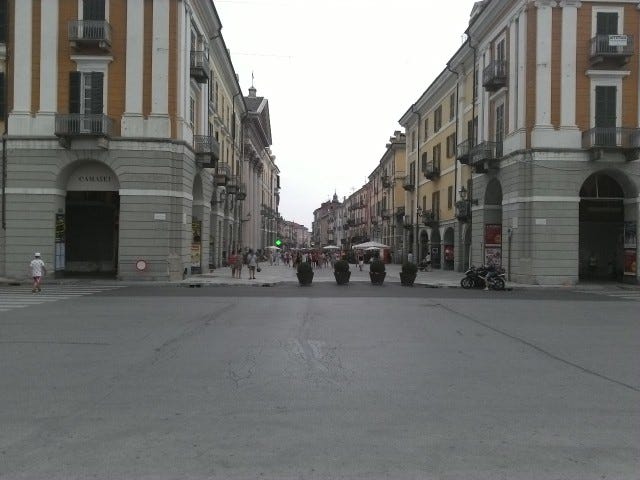
Cuneo is a great choice. The sensible one. It sits at 545 meters, which means the air quality is significantly better than Torino. It’s wedged between Alpine valleys (Cuneo means wedge in Italian), giving you access to literally 12 different valleys for hiking, fishing, and exploring nature.
The city itself has all the services you might expect in a medium Italian city of the north, and its porticoed streets allow you to walk the city under cover, rain or shine. Its square, Piazza Galimberti, is one of the largest in Italy.
Both quality of life indexes agree that Cuneo’s province is in the top half of Italy and its capital city is certainly a good representative of that. It even ranks third in Italy for young people’s quality of life.
What you get is an affordable, calm, tidy, and faintly Alpine city that can reach Torino by train in just a bit over an hour. It is also quite stable population-wise, so it’s not emptying.
The downside? Its winters are cold by Italian standards and quite snowy. If you’re okay with that, Cuneo will leave little to be desired.
