


Italy with Antonio. Honest guides for moving to, traveling in, and understanding Italy from a native Italian. Three articles a week, with deeper resources for paid members (including the print-ready PDF and ePub downloads of this article). Join 1,500+ subscribers.
Sardinia has 377 comuni (municipalities), spread across 24,090 square kilometers. Run a strict livability filter, and you’re left with five.
Not fifty. Not fifteen. Five.
This is part of my series evaluating Italian towns for relocation using objective filters. So far we’ve covered Marche, Tuscany, Veneto, Campania, Abruzzo, Piedmont, and Umbria. Today: Sardinia. The filters were brutal here.
The framework adopts simple filters. Boring questions, really. Is the town big enough to have basic services like a pharmacy, a high school, and a full ER within 25 minutes? Are people slowly but surely leaving, as if they know something we don’t?
We also ask a safety question. Is seismic activity a concern?
Good news and bad news. The good news is that you don’t have to worry about earthquakes in Sardinia. The bad news is that the boring filters alone are enough to make most of the map go dark.
Disclaimer
The numbers here are a snapshot of publicly available data at the time of writing and may change. Treat the figures I mention, and the list of towns itself, as a starting point. Always verify important factors like the ER, schools, and transport before you buy.
Demographically, Sardinia is kinda dying
Sardinia’s population is in a tough spot. It has the lowest fertility rate in Italy, the average age approaches 50, and nearly all provinces have residents leaving.
Sardinia has roughly three million sheep and 1.56 million people. About twice as many sheep, a ratio that should worry all but the most pecorino-obsessed readers.
Speaking of age, Sardinia does indeed have a reputation as a Blue Zone. The Ogliastra highlands genuinely produce an extraordinary number of centenarians. But longevity is not replacement via newborns, and sooner or later, inevitably, older people die.
Our filtering framework is apathetic about longevity, but does care about how alive a place is now and how likely it is to remain fifteen years from now. When a town loses a tenth of its people over ten years, services soon follow.
Work
Many Sardinian people will resist the label “south” applied to their region. However, when it comes to work, Sardinia is very much a region of the south.
The employment rate is around 57% versus the national average of 63%. Perhaps even more problematic for a would-be expat hoping for a local job, the work is mostly centered around tourism (so seasonal) and the public sector. The private industry that is not tourism-related is genuinely thin.
In other words, don’t plan to find local work. If you arrive with your own income or remote job, however, Sardinia is likely as close as it gets to the digital nomad fantasy of working on a beach from your laptop.
Language
In downtown Cagliari and along the tourist coast, English might be enough in a pinch, but you’ll need Italian to live here.
The locals also speak several varieties of Sardinian, which is a separate Romance language recognized by Italian law, rather than a simple dialect. Around Olbia and Sassari, though, the local speech is Gallurese and Sassarese, which are Corsican-derived rather than Sardinian. Italians, including myself, will not understand much of it unless they are from these parts.
In Alghero, the local language (i.e., Alguerès) is a dialect of Catalan, not Italian, so much so that a Catalan speaker can converse with a local with just a few adjustments.
Of course, Sardinians understand that you’re a foreign speaker, and will use Italian with you. It’s also worth noting that dialects are slowly disappearing among the younger generations. To put it in videogame terms, the ultimate language boss in Sardinia is a 100-year-old lady from the aforementioned Blue Zone.
The provinces are a mess
The provinces of Sardinia that I studied in school no longer exist. It’s almost a joke at this point, but Sardinia keeps changing them. The comune of Genoni changed province four times.
So here is the short version of it: Cagliari and Sassari are two città metropolitane (metropolitan cities). There are 15 in the whole country.
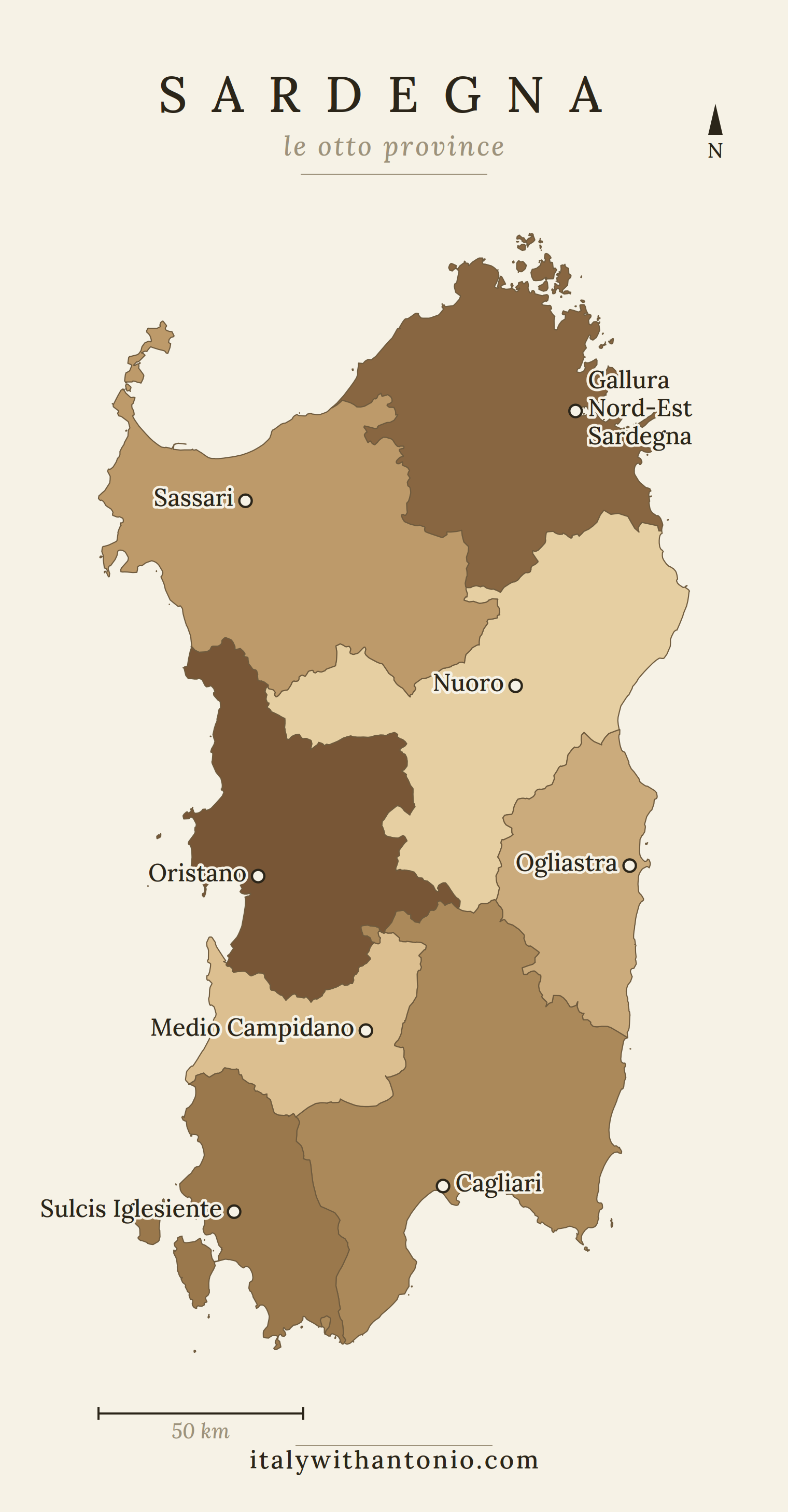
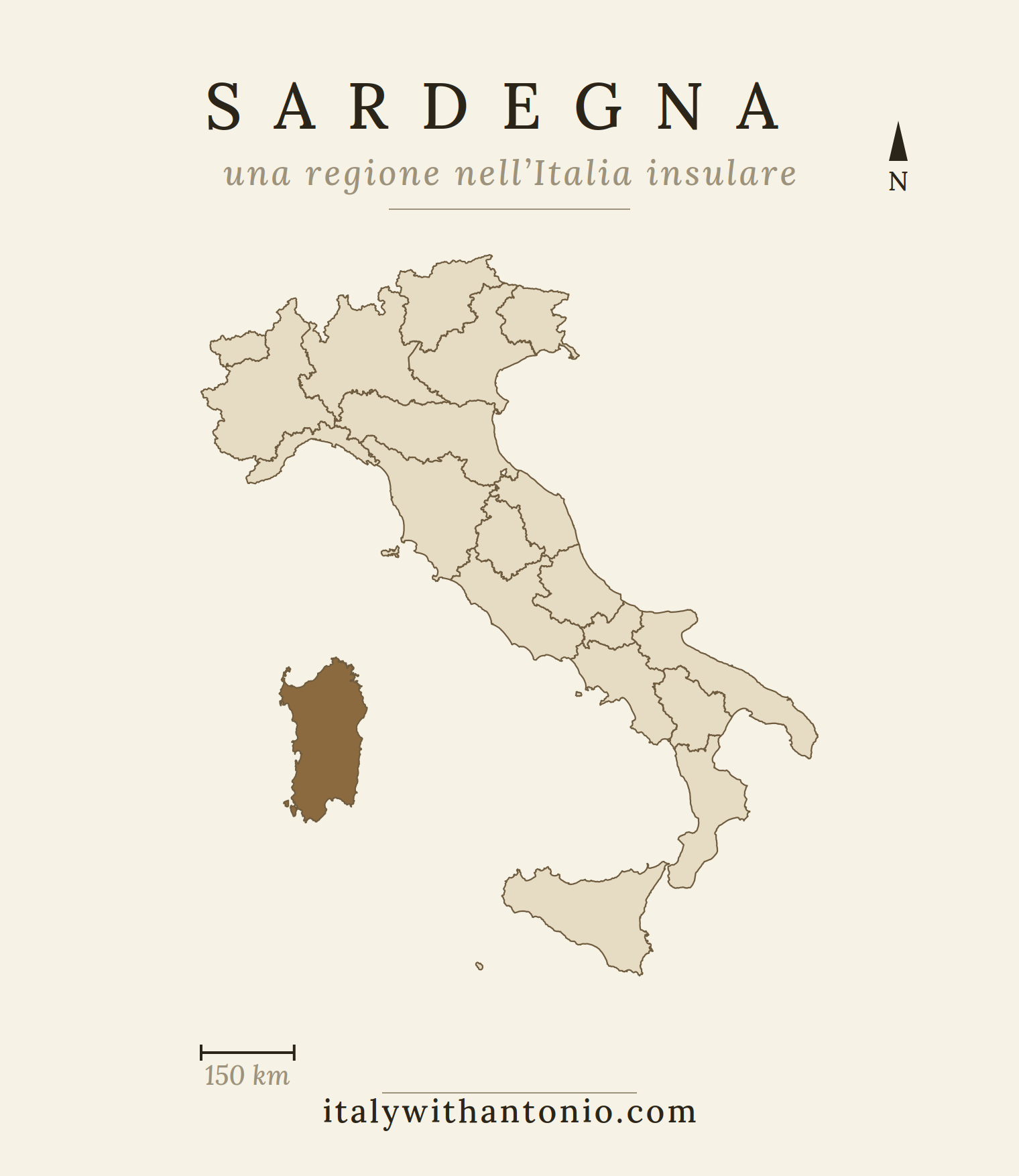
The rest of the region, at the time of writing, includes the provinces of: Gallura Nord-Est, Nuoro, Oristano, Ogliastra, Medio Campidano, and Sulcis Iglesiente.
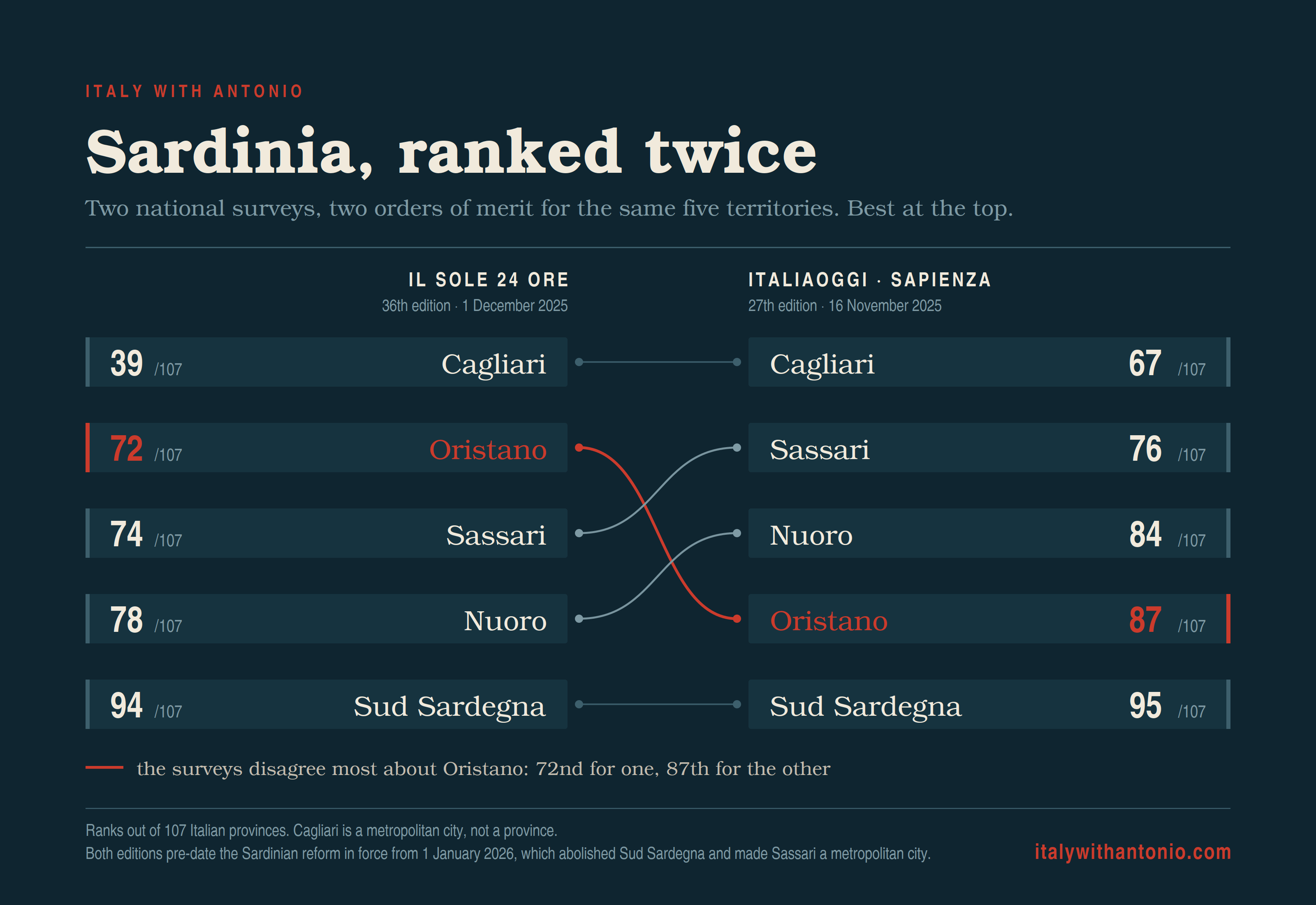
Below you’ll find a table with only five provinces whose quality of life is measured and ranked by Il Sole 24 Ore and ItaliaOggi for 2025. Five, not eight, because when they measured, those were the provinces in Sardinia.
The one ranking that sticks out
Regardless of the messy subdivision of the territories, it is clear that Cagliari comes out ahead of the rest of the island.

As you can see from the table, in Il Sole 24 Ore’s 2025 quality-of-life index, Cagliari came 39th nationally, the best result in the south. In ItaliaOggi’s ranking, its health system is 8th in Italy. For a place in the south, this is an outstanding result.
Statistically, Cagliari and the rest of Sardinia are practically two different countries.
Crime
Some good news: Sardinia doesn’t have an organized crime problem like the rest of the south.
It doesn’t have much petty crime either. For example, Oristano is the safest province in Italy on Il Sole 24 Ore’s rankings.
The one exception is the Barbagia interior. Nuoro leads Italy for homicides per capita. Before you get too scared, this is a historical pattern that wouldn’t affect an incoming resident.
Crime exists, but it is genuinely not a main concern when choosing to relocate to Sardinia.
Weather

Sardinia is often seen as paradise by Italians. It has some of the most beautiful beaches in the world, and the weather is stereotypically warm year-round. It’s where rich people from Milan go on vacation, and billionaires go to party. A true jewel of the Mediterranean.
In reality, things are a little more nuanced than that. Yes, the coast, particularly the south, has a Mediterranean climate. It’s hot and relatively dry in summer, and never really gets cold in winter. However, move north or to the interior, and winters can get cold and wet, particularly at altitude.
The Maestrale wind, blowing from the north-west, brings a cold breeze that can last for days, with Alghero and Oristano being particularly affected by it.
I might look silly pointing out the “cold” in Sardinia, typing this from Canada, where real cold was practically invented. However, Sardinia is an island and the weather report matters. The August paradise can quickly turn into isolation in February due to ferry cancellations.
What actually gets you here is fire and water
All 377 Sardinian comuni sit in seismic Zone 4, the lowest hazard tier. Crime is not a concern, and neither are earthquakes.
What you need to worry about in this part of Italy is fire and water. In July 2021, the Montiferru fires burned roughly 20,000 hectares in Oristano province, forcing massive evacuations.
In November 2013, Cyclone Cleopatra dumped a season’s worth of rain in a few hours and killed 18 people, mostly around Olbia and Arzachena.
When buying here, trust the past as a predictor of the future, and see if the property you’re considering was anywhere near wildfires or floods.
Running the filter on Sardinia
In Sardinia, our population filter does most of the cutting. With a band of 15K to 100K residents, we go from 377 comuni to 14. From the excluded list, Cagliari and Sassari are the ones that are too big. The rest of the municipalities are all too small.
Seismic risk removes none of them. Services, almost none. The two exceptions are Sestu and Sinnai, both without a high school of their own. Down to 12.
Population stability is where things get serious: we go from 12 to just five. Nuoro (down 11.4%), Carbonia (11.7%), Iglesias (9.8%), and so on. Oristano is the narrowest miss of the series so far. Down 5.08% against our 5% threshold. It missed the mark by so little that I won’t blame you for considering it.
Five towns remain, clustered in two parts of the island. The Cagliari area and two northern coastal cities. The interior gets entirely filtered out.
The 7% Flat Tax
Sardinia is considered a region of the south and, as such, offers the special 7% flat tax for up to ten years to foreign pensioners, covering all of their foreign income, including passive income such as rentals and dividends. The catch is that it only applies to comuni with fewer than 30,000 residents. The five towns listed below will indicate whether they are eligible or not.
The five that pass
1. Olbia

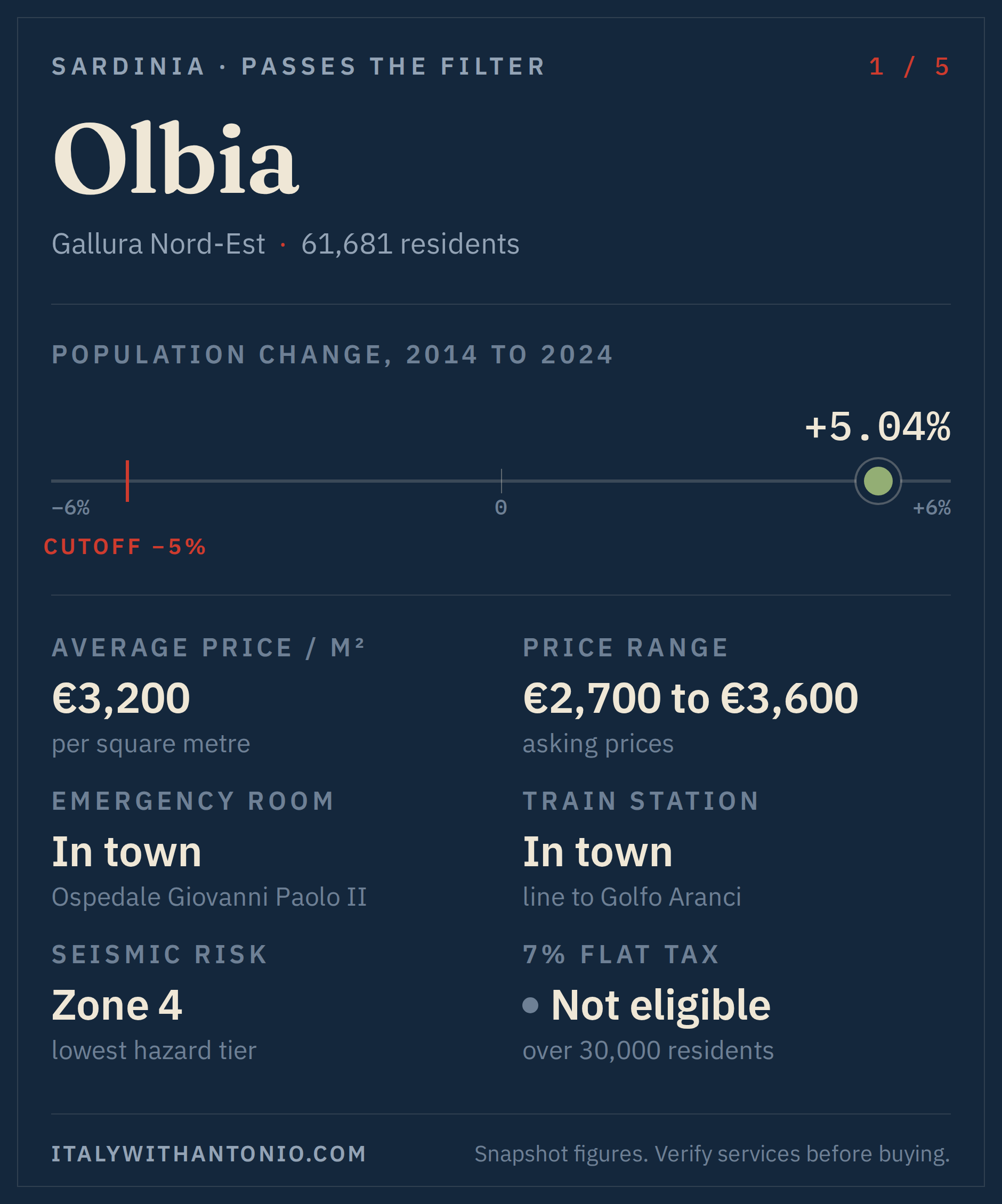
Olbia is a bit of an exception on the island. It’s the only city on this list that is actually growing aggressively, and it’s the demographically youngest in the whole region.
Its economy is powered by the port, the airport, and the money that trickles down from the nearby Costa Smeralda (the billionaires’ playground).
Olbia is also interesting for history buffs. It sits on top of a Roman fleet, dating to around 450 AD, that was discovered by a crew cutting a road tunnel by the seafront. The Museo Archeologico di Olbia holds the wrecks and is shaped like a moored ship.
Sounds lovely and it is. It’s also expensive. Gallura’s coast market is hot. In the summer, you’ll also have a constant stream of ferries and cruise ships dumping literal boatloads of tourists in the same streets you use to grab bread. Then October arrives, and the town breathes again.
Olbia is also where Cyclone Cleopatra did its worst damage in 2013. Make sure you check the flood history of the particular property you are considering.
Provided you have the budget, Olbia is a beautiful town with ancient history, a bustling port, great access to the rest of Italy, white sandy beaches nearby, actual jobs, and a pulse most of the year. Something quite rare on the island, which easily explains that +5.04% population growth over the past decade.
